
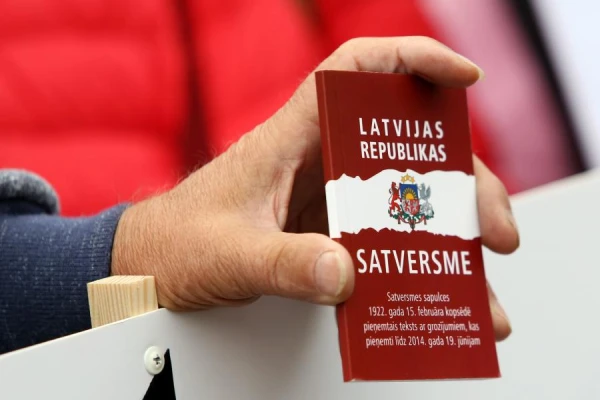
The Constitutional Court continued to consider the case initiated by the deputies of the National Alliance and the United List factions in the Saeima regarding the norms of the Law on Public Electronic Media concerning the use of national minority languages in public media.
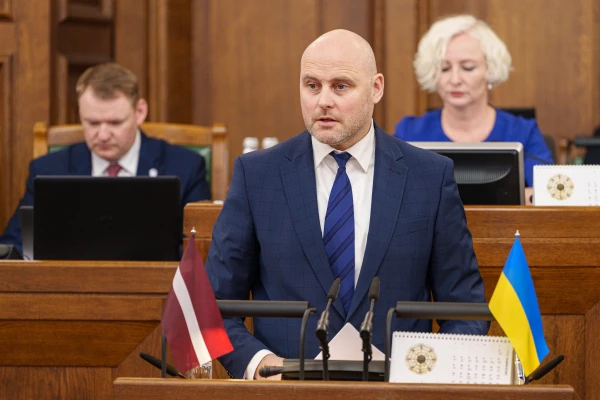
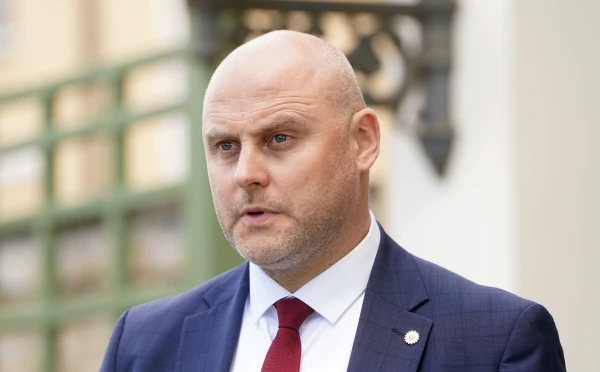
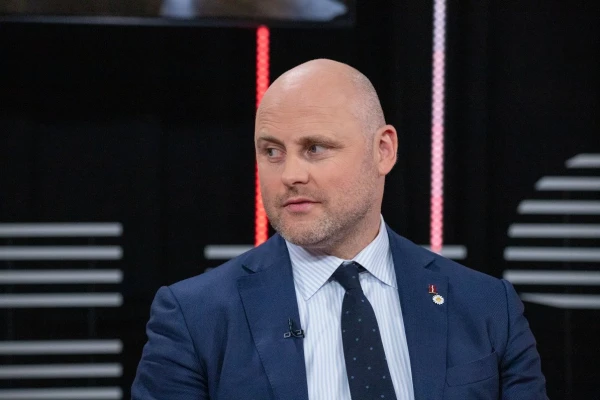
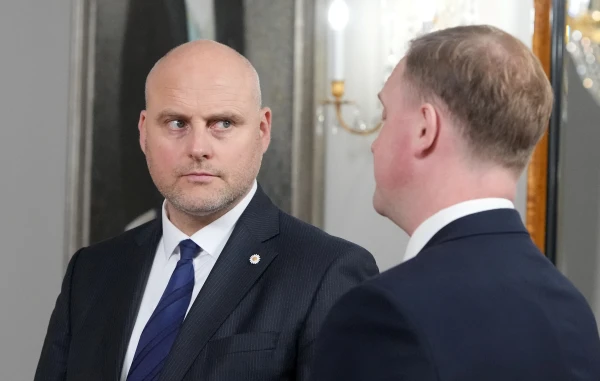
During the session, the position regarding the place of the Russian language in public media was expressed by Saeima deputy Edvards Smiltenš (United List).
"It is necessary to consider the so-called Russian world — an ideology, one of the most prominent representatives of which, Alexander Dugin, has repeatedly emphasized: the Russian language is not just a means of communication, but the foundation of Russian identity and geopolitical influence. The territories where a Russian-speaking information space is constantly maintained, within this ideology, shape the borders of Russia," Smiltenš emphasized.
The deputy noted that from this perspective, the constant presence of the Russian language in public media "is no longer a harmless issue of information accessibility for those who do not speak Latvian, but represents a manipulative tool for strengthening another identity and loyalty to Russia."
"This is a tool that undermines a unified value space and objectively creates a risk for the sovereignty of the Latvian state," Smiltenš added.
"And this is not an exaggeration. No one disputes that the contested norms indeed allow for a significant expansion of the presence of the Russian language in public media based solely on the positive vote of two members of the Council of Public Electronic Media. Decisions made by two individuals. Decisions that could potentially restore the influence of the Russian world ideology in Latvia — not through tanks and missiles, but through actions currently permitted by law. And that is why this issue is not formal. It is a matter of constitutional nature — about the self-determination of the state, about its information space, and about its future," Smiltenš stated.
According to the applicants, the contested norms, which establish the obligation for public electronic media to create radio and television programs of a certain volume in the languages of national minorities, diminish the significance of the Latvian language as the only state language in a democratic society and create a threat to state security.
Therefore, in their opinion, these norms do not comply with the provisions of the preamble of the Constitution regarding "the Latvian language as the only state language" and Article 4 of the Constitution.
In turn, the advisor of the Saeima Legal Bureau, Laura Jambusheva, stated in the Constitutional Court that the content of public media in the languages of national minorities is an important alternative to the Russian information space and helps reduce the influence of propaganda and disinformation.







Leave a comment