
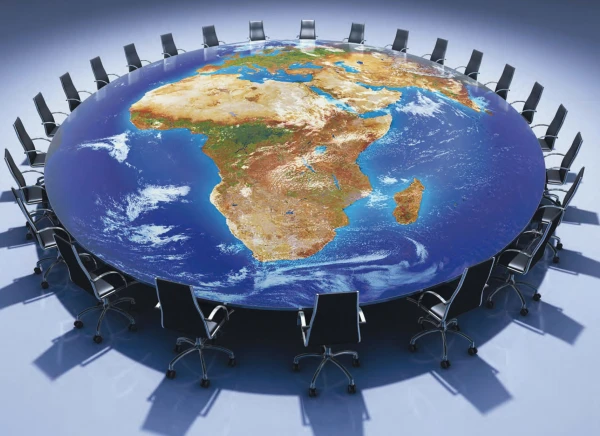
The release of the annual report from the Institute of Foreign Policy gathered the diplomatic elite. On the eve of the debates in the Saeima, representatives of the expert community – and invited VIPs – made their significant contributions to the voluminous book. Latvia welcomed the year 2026 in a new capacity – as a member of the UN Security Council. Although the essence of this organization has faded recently.
Baiba Braže: “The Familiar World Order Is Changing”
The Minister of Foreign Affairs from “New Unity” presented a programmatic article. She is concerned about trends in foreign policy:
“Close cooperation among authoritarian regimes, the use of armed force, increasing challenges to regional security, unstable relations between powers, and the rapid development of new technologies are defining the changes in the familiar world order. The effectiveness and meaning of international organizations are being challenged. Latvia has chosen not to play the role of a passive observer but to take an active participant's position – both regionally and globally. We have managed to forecast and quickly respond to international challenges, recognize the risks they pose, and purposefully create new partnerships to achieve our interests.”
It seems that the minister has forgotten that during the previous world order, institutions such as the UN, the Council of Europe, and the European Economic Community existed perfectly well without the independent states that emerged 35 years ago in the place of the former USSR. So, exaggerating the role of international structures, like her distant predecessor at the Ministry of Foreign Affairs V. Munters, is a costly mistake...
War and Peace
“The Russian war in Ukraine directly affects the security of Latvia, the development and sustainability of society,” continues B. Braže. “Therefore, Latvia has been one of the most active supporters of Ukraine politically and diplomatically, also providing military, financial, and humanitarian assistance. Latvia continues to provide annual, predictable military support to Ukraine at 0.25% of GDP.”
That is true; we indeed live next to the Russian Federation. Moreover, the historical experience, which is constantly interpreted exclusively in a negative light, knocks at the heart. Although, perhaps, it would be worth trying to think sometimes...
There is a state next to Russia that has a border of as much as 3485 km, which fully experienced the “export of revolution” in the 1920s and 1930s, and was later even referred to as the “16th republic of the USSR.” Yet, for some reason, it does not introduce NATO troops onto its territory to defend itself from Moscow. Perhaps, simply in Mongolia, they honor their Genghis Khan and therefore do not feel an inferiority complex?
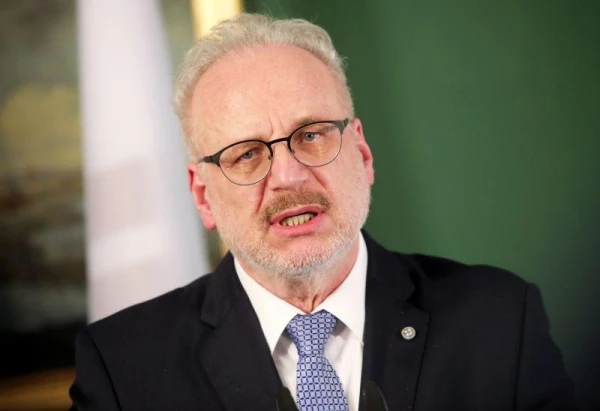
Valdis Zatlers: “It Will Be Very Difficult to Stop States Like Russia”
The President of Latvia from 2007 to 2011 marked his leadership of the republic with an official visit to Moscow, during which a package of bilateral, mutually beneficial agreements was signed. Today, almost all of them have been denounced at the initiative of the Latvian side. Well, V. Zatlers has become one of the heralds of the anti-Russian discourse.
“Russia, in its struggle for dominance, has chosen a military threat approach, and this poses a threat to the entire planet. No matter how much Russia tries to please third-world countries, its neo-colonialist essence will sooner or later be revealed. This situation can only be changed by global responsibility and collective action from all powers that consider themselves the foundations of a multipolar world.”
It would indeed be great for Mr. Zatlers and his ilk if everyone would unite against this, the very Krevia. But the situation is not that: “The world is shaken by uncertainty and unpredictability of international processes. National narcissism, especially in the performance of U.S. President Donald Trump, has significantly influenced our perceptions of diplomacy. Classical diplomacy, of course, continues to operate in its usual manner, but the diplomacy of sudden decisions by President Trump is a reality, and we have no other option but to be able to adapt to it.”
Global Majority
The former president warns: “Attention should be paid to how Russia has begun to use the term ‘global majority’ to denote the Global South. Western foreign policy needs to become more active, flexible, and focused on cooperation, as there is a geopolitical struggle for the resources of these states and influence on their economic growth.”
It is stated directly, without any circumlocution. Instead of considering – perhaps the peoples of Malawi, Honduras, and Papua New Guinea also have their own pains and historical grievances... No, he immediately talks about material matters. And who among us would then be the neo-colonialist, with such a political philosophy?
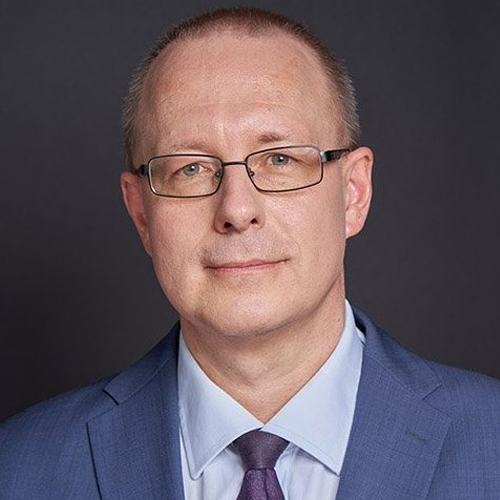
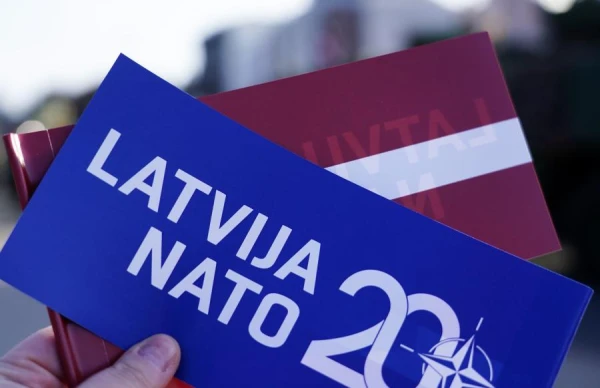
Mārtiņš Vargulis: “NATO Has Experienced a Significant Stage...”
In the vision of the director of the PowerHouse Latvia analytical group, the North Atlantic Alliance currently designates Russia as a direct threat in its strategic concept and has restored the priority of collective defense of the alliance.
That is true – and even a Portuguese drone is roaming the skies of the Baltics. However, only if the member states of the military-political alliance actually prove their readiness to send their citizens to defend distant countries in Northeastern Europe can it be confidently said – yes, NATO has survived. Just like the commitment made last year at the summit in The Hague – about 5% of GDP for military needs, it is vaguely lost in 2035.
Mr. Vargulis also notes that, compared to 2022, Russia is no longer referred to as the “adversary” or “aggressor” in NATO's doctrinal documents – but as a “long-term threat.” “This seemingly semantic, yet politically very significant change illustrates a return to a cautious tone in NATO's communication. Its goal is not only to ensure flexibility for various political interpretations of allies but also to create space for further political dialogue if security circumstances allow. The classification indicates a possible relativization of threat perception and the risk that the alliance will begin to adapt to conflict ‘fatigue.’
The West Is Tired
How is it possible – NATO, and suddenly relativization? From here, it is just a half-step to trivialization, and then we could fall into the abyss of banalization, and become Putin-fershteiners! Here, M. Vargulis explains, the influence of the new U.S. administration manifests itself first and foremost – the desire to maintain assistance to Ukraine while simultaneously reducing tension with Moscow.
“This approach is significantly different from the discourse of 2023-2024, when the ‘irreversible path’ of Ukraine to NATO was emphasized,” continues the head of the analytical group. “The rhetoric reveals the fatigue of the political will of the West and the attempt to balance between societal fatigue and the necessity to maintain the unity of the alliance. Fatigue that has been exacerbated by the administration of D. Trump.”
“At the same time, NATO has faced new elements of division,” M. Vargulis states with concern. And it must be said – Washington acts in the paradigm of Taras Bulba: I gave you birth, I will kill you! However, 35 years ago, the unforgettable M.S. Gorbachev did the same with the Warsaw Pact.




Leave a comment