
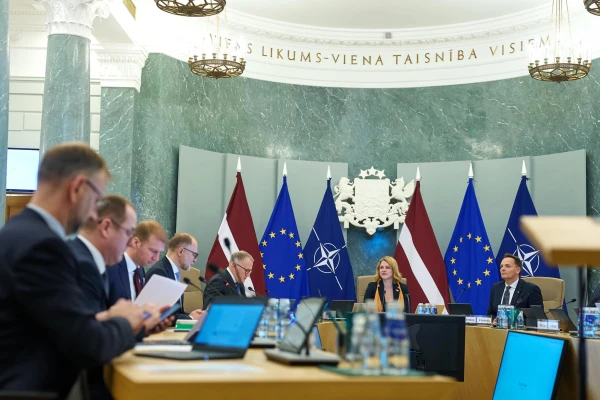
And what do we have overall in the country? Signals, to put it mildly, are mixed... But in the Ministry of Culture, they firmly know that – war is war, but lunch is on schedule.
And they are confidently implementing the Plan for the Development of a Cohesive and Civically Active Society, which is expected to be completed in 2027.
No savings on NGOs
In January, the pressing issue was discussed at the Saeima Commission on Citizenship, Migration, and Social Cohesion, chaired by Gunar Kuttis from the Union of Greens and Farmers, a former chairman of the Constitutional Court. "A challenging task," he complained at the first meeting in 2026, "because it depends not only on various activities but also on the economy and other issues."
In any case, we will be brought together by cultural (at the workplace) ladies and gentlemen, "in collaboration with the Ministry of Education and Science, the Public Integration Fund, to create a unified state language system for adults."
A significant role is assigned to non-governmental organizations (NGOs), which will be provided with national pre-financing so that they can "implement programs funded by foreign donors." Since 2019, the funding for these NGOs has increased more than sixfold, from 400,000 euros, and in 2026 it will amount to 2.5 million euros. Despite known financial constraints – the main financial document is primarily focused on defense! – it has been possible not to reduce payments. After all, their justification is "improving the development of a sustainable society," i.e., for a special period...
Initiative Portal
Among other things, the direction "Culture of Democracy and Inclusive Citizenship" is funded. This includes, by the way, the famous resource Manabalss.lv – the very one that recently brought a wonderful, nationwide initiative to the Saeima: to strip disloyal individuals of Latvian citizenship and expel them from our EU and NATO republic. What is particularly valuable is that this creative idea was personally presented in parliament by the head of this "society participation platform," Imants Breidaks. Apparently, because the authors of the proposal suddenly became modest and faded away.
As for Mr. Breidaks, he apparently believes that the proposed idea fully complies with constitutional norms. For he previously stated that Manabalss.lv will not, by definition, consider any leftist, anti-Satversme attacks – well, there, about non-citizens and the Russian language...
Everyday Communication
But if we return to the topic of the state language, which, as is known, is the cornerstone – then the only innovation in 2026 promises to be a sub-program for "strengthening the Latvian language as a unifying foundation of society in everyday communication" costing... 42,967 euros. That is, less than 1% of what is paid to friendly guests from the fighting, freedom-loving country (5.2 million euros).
Well, those wishing to learn Latvian independently can still be recommended the textbook by B.H. Veksler and V.A. Jurik from 1987.
The Director of the Department of Social Cohesion Policy at the Ministry of Culture, Elena Shaicāne, nevertheless believes that numerous meetings and working groups are going quite successfully – and, for example, the unemployed will soon receive a unified system to improve their Latvian.
Everything that was not with me – I remember
"A constant dialogue with society about national identity and belonging," in the vision of the Ministry of Culture, should include the preservation and popularization of the traditions of Latgale, as well as the constant availability of the Livonian House of Culture (Mazirbe, Talsi region).
"Facilitating the creation of a unifying understanding of social memory in society" is allocated 236,000 euros this year. This will include educational programs on the statehood of Latvia. A group of historians will work on "popularizing information about historical events in Latvia." E. Shaicāne particularly highlighted the topics of World War II, the Holocaust of Jews, and Roma.
Anita Meijere from the Integration Fund also spoke at the parliamentary commission meeting. She heads the One-Stop Agency there, whose task is to "provide meaningful and useful consultations and support to third-country nationals and recipients of international protection." Until 2029, this structure will be allocated 2,440,474 euros, and an additional 2,598,495 euros for assistance in learning the Latvian language and an introductory course for "third-country nationals" about life in Latvia – 1,881,188 euros.
For comparison – national minorities will be allocated 100,000 euros in 2026, which includes both "support for preserving the cultural uniqueness of national minorities" and assistance in the performances of their collectives at the Song and Dance Festival, as well as the activities of the Advisory Council for National Minorities.
Money will reduce stress
For its part, for the diaspora – i.e., those who left Latvia, 640,919 euros is designated. This will include, for example, "methodological support for preparing festive repertoires," as well as preserving for Latvia the incredibly valuable heritage of exiles – archives, art, etc.
In 2026, they intend to improve "the creation of crisis resilience in communities," "the identification of vulnerable individuals who need assistance." There should be "access to reliable channels of information in crisis situations." In society, it is necessary to spread "first aid skills, psychological assistance skills, and stress management abilities."
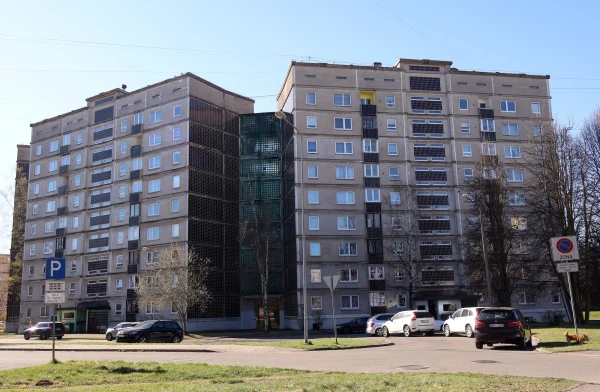
It is a pity, of course, that the ladies from the Ministry of Culture and the Integration Fund did not mention – whether part of this money can be spent on helping the affected residents of house 15 on Bauskas Street in Riga. And also for the fire victims from the Kekava region...
Move culture to the masses
Since the Ministry of Culture is responsible for cohesion, it has decided that it is necessary to "develop an understanding of culture and the expression of competence as a factor contributing to civic participation." For this – "to ensure equal access to professional art and cultural events for the target group of events regardless of residence and socio-economic status of the family."
Well, who would argue – to see an art exhibition or a performance for free is both interesting and useful. Especially since 1,758,911 euros is allocated for this annually. First and foremost, this is, of course, intended for students and is included in the set of the "Latvian School Bag."
"To identify professional events in art and culture that have the potential to contribute to civic participation," there will be a serious selection process – at the Latvian National Culture Center.



Leave a comment