At the end of last year, the Silina government was closer than ever to a crisis and collapse. However, it ultimately stayed afloat — the three ruling parties decided that with 10 months until the elections, there was no point in dismantling the entire power structure and starting to form a new coalition, bringing in direct competitors in the elections.
Internal Opposition
But the miracle did not happen — although the partners agreed to "endure" this marriage of convenience until the elections, the same "green farmers" continued to play the role of internal opposition. Nothing has changed this year - the "green farmers" are again blocking the opposition on a number of bills and even dare to have their own opinion on the "unified foreign policy of Latvia." Judge for yourself.
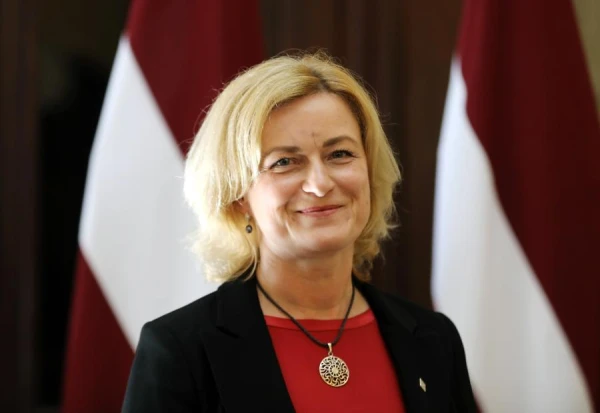
As we reported, last week the Speaker of the Saeima, Daiga Mierina (Union of Greens and Farmers), without coordinating her decision with coalition partners and other leaders of the country, signed a letter from the chairpersons of the U.S. and Israeli parliaments to the Nobel Committee nominating Donald Trump for the Nobel Prize.
Only a few deputies from the "Progressives" party and independent deputy Skaidrite Abrama, who previously was also part of the "Progressives," dared to publicly condemn the Speaker's actions, calling Mierina's demarche a shock for the entire Latvian people. The leaders of the "green farmers," of course, supported their party member Mierina.
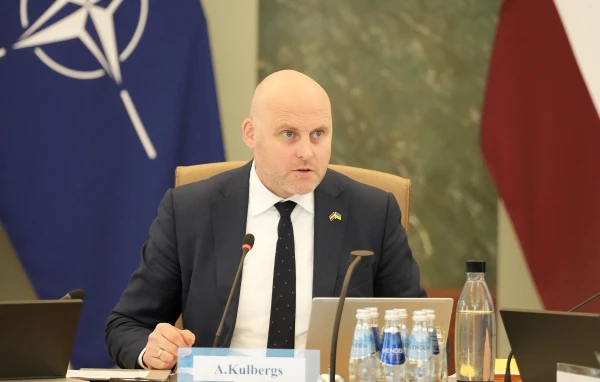
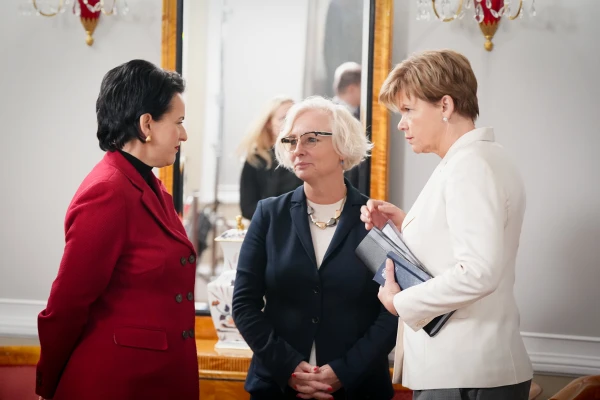
The "debriefing" took place last Friday when participants of the "foreign policy five" — the head of state, the Speaker of the Saeima, the Minister of Foreign Affairs, the head of the Saeima Foreign Affairs Commission, and the Prime Minister's advisor on international issues, who replaced Evika Silina, who flew to Brussels — arrived at the presidential palace for a meeting on foreign policy.
It is clear that neither the president nor the foreign minister criticized Mierina's actions at the briefing. However, according to rumors, the head of state and the foreign minister diplomatically urged the Speaker to coordinate the signing of such sensitive documents in the future.
Moreover, the sending of the letter to the Nobel Committee coincided with Trump's sharp remarks regarding Greenland. The press release only contained a hint at the Speaker's demarche: "Officials involved in implementing foreign policy confirmed the importance of a unified foreign policy and mutual coordination to effectively protect Latvia's interests."
Who's Against Trump Here?!
Meanwhile, the saga in Latvia regarding the "Nobel Prize" for Trump is not over yet. After all, the annual foreign policy debates will take place in the Saeima the day after tomorrow, and it is expected that part of the opposition will begin to "hit" the ruling party from the parliamentary podium for the lack of a coordinated foreign policy line.
Deputies have prepared their "gift" for all the ruling parties and the rest of the opposition as well, having submitted a draft resolution to the parliament in support of awarding the U.S. president the Nobel Prize.
Many parliamentarians will find themselves in a very delicate situation on Thursday — voting against the draft means showing the new U.S. ambassador to Latvia that they are against the American president. Voting for the draft means going against those voters who, to put it mildly, are critical of the current head of the White House.
The Battle for Amendments
It is clear that there are enough disagreements within the ruling coalition regarding domestic policy as well. Just this month, the "green farmers," with the support of the opposition, adopted amendments to the law that allow compensation for unjustly seized property to be paid even before the completion of court proceedings within the criminal process.
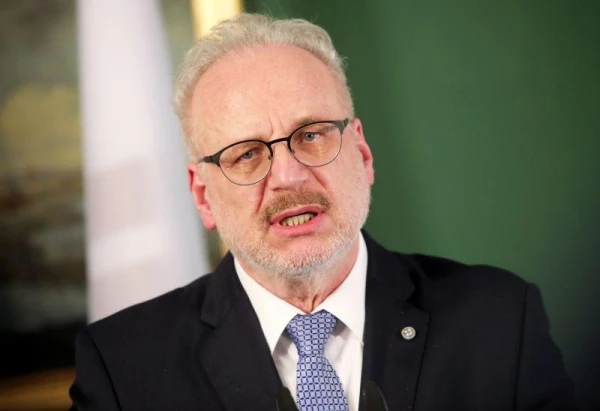
The deputies of "New Unity" and the Ministry of Justice, which is under the control of the same party, appealed to the president and former party member Rinkevics, urging him not to sign the bill. The head of state agreed — as a result, the bill was sent back for revision to the Saeima. The main argument against the amendment is that if compensation is paid in advance, and then the court suddenly recognizes the property as obtained through criminal means, it will be necessary to recover the paid compensation, which is illogical.
It will be interesting to see how the supporters of the amendment will act — will they agree with the president's arguments again, as in the case of the Istanbul Convention, or will they vote again for this amendment? Most likely, there will be a third option — the deputies will prepare a compromise amendment.
Sharp disputes are occurring between the "green farmers" and the "Progressives" at the government level as well. As previously reported, there is currently a real war within the coalition regarding the finance ministry's plan to "take away" from the Consumer Rights Protection Center the functions of oversight over non-bank financial companies and transfer these functions to the Bank of Latvia. The head of the Ministry of Economics, Viktor Valainis (Union of Greens and Farmers), and the Consumer Rights Protection Center, as well as most industry organizations, categorically oppose such a "reform." Representatives of the "Progressives" party are actively campaigning for the reform. It will be interesting to observe how this battle ends.
Meanwhile, the "Progressives" and "New Unity," despite the position of the "green farmers," are trying to push through the Saeima the issue of criminalizing cartels. Specifically, they want those guilty of cartel agreements to be held criminally liable. Additionally, deputies from "New Unity" want to legally allow the use of operational materials collected within one criminal case in other criminal and administrative cases. The "green farmers" consider such an approach unacceptable.
A Chance for the Opposition
De facto, on many issues, the coalition has only 34 votes, meaning these are the votes of the deputies from "New Unity" and "Progressives." The "green farmers" support their partners only on the most key issues — for example, when the opposition raises the question of the resignation of the prime minister or ministers.
It is obvious that as the hour X approaches, that is, the elections, disagreements within the coalition will only increase. This raises the chances of the opposition to push through decisions on issues important to the opposition parties in the parliament.