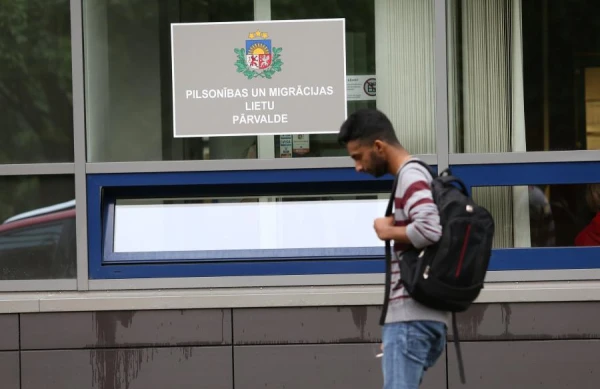
The proposed initiative by the opposition to create a parliamentary commission to investigate issues in immigration regulation at the national and European levels, as well as in the work of executive bodies, which leads to the mass entry and stay of citizens from third countries in the Republic of Latvia, received majority support in the Saeima, writes Diena.
"I believe that this investigative commission has the opportunity to serve not as a battleground between political forces, but as a platform where members of the Saeima can delve into issues related to immigration, identify problems, propose solutions, and help hold accountable those who, ignoring the laws, exploit mass immigration for selfish purposes," said opposition representative Janis Dombrava at a Saeima meeting.
Interestingly, the head of the "Progressives" faction, Andris Shuvaev, who during the debates called the creation of the commission impractical, also voted for its establishment. A total of 76 deputies expressed support for the creation of the commission. Juris Yakovins (SZK) abstained, while representatives of the "For Stability!" faction, as well as, apparently due to circumstances, several deputies who themselves signed the initiative to create the investigative commission, including Ingmars Lidaks and Maris Kucinskis ("United List") and Edvins Snore (National Alliance), did not participate in the voting.
Dombrava noted that since 2015, the number of citizens from third countries residing in Latvia on temporary or permanent residence permits has significantly increased, now exceeding 105,000 people. According to the Office of Citizenship and Migration Affairs, in the coming years, the number of new residence permits may increase from 16,000 to 26,000 per year. The deputy emphasized that this brings the country closer to the scale of immigration observed during the Soviet occupation.
"In a situation where birth rates in Latvia continue to decline - in 2024, only 12,571 children were born - this could lead to irreversible consequences, including the replacement of the Latvian people by migrants from other regions of the world," Dombrava noted.
In his opinion, the existing legal regulation at both the national and EU levels is unable to adequately address current issues. Therefore, more active involvement from the Saeima is necessary: it is required to identify the weak points in the existing regulation, including at the EU level, eliminate the shortcomings of the regulations that allow citizens of third countries to enter and stay in Latvia en masse, as well as develop appropriate amendments and assign specific tasks to the executive power to prevent the growing immigration, especially from countries with a high risk of terrorism or states that support terrorism.