In Latvia, the culture of driving is not at a high level. Countless accidents, countless fatalities and injuries. This year, 23 people have already died, and 56 people have sustained serious injuries.
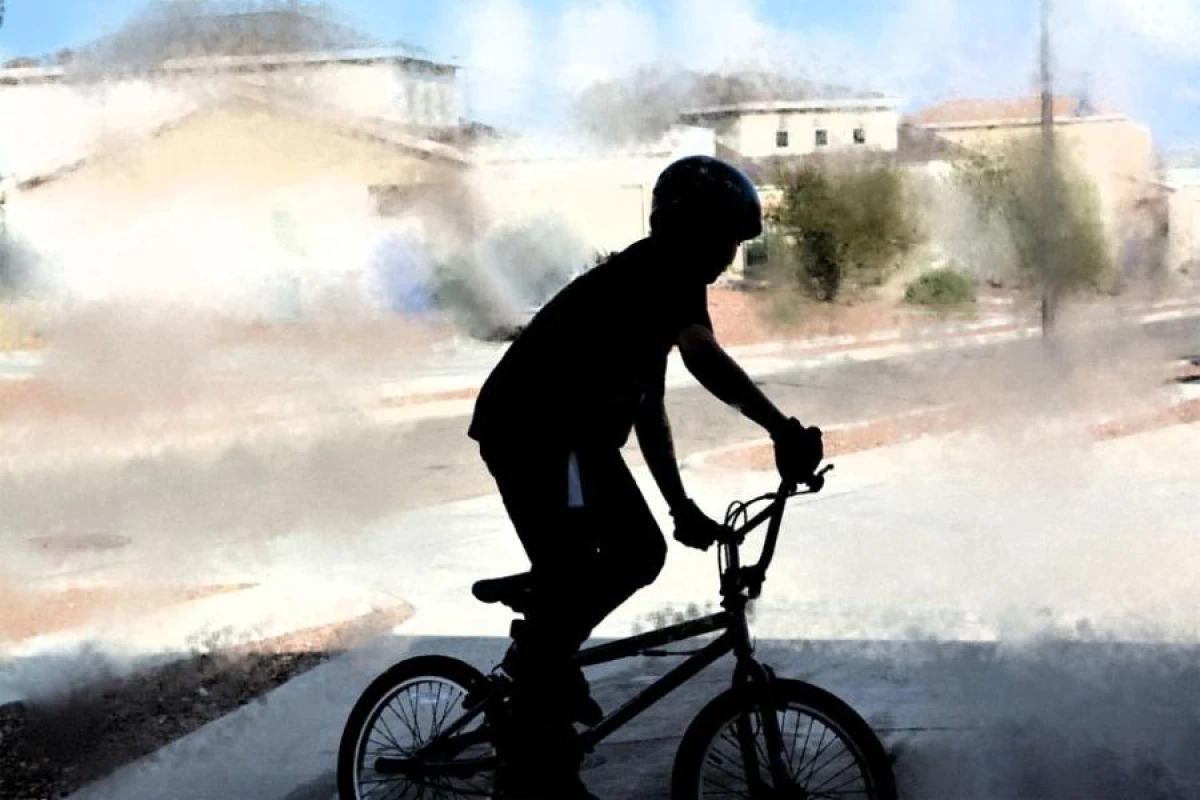
Spring and summer are the times when many cyclists can be seen in traffic. Among them are the youngest ones. According to the Road Traffic Safety Directorate (CSDD), this year 22 children on bicycles have already been involved in traffic accidents. Of these, 15 were injured. A total of 66 cyclists have been injured in traffic accidents involving bicycles this year.
Reader Vaira raises the issue of child cyclists. In a letter to the editor, she writes: “I have a question about small cyclists who have not yet reached the age of 10, meaning they do not have the right to ride a bicycle. They ride bicycles without parental supervision. They do not know the traffic rules, creating a number of life-threatening situations. Since according to the current rules in Latvia they are not allowed to be on the street, I have a question: can school management really allow children of such indifferent parents to ride bicycles to school? If children have irresponsible and indifferent parents, which institutions should still protect the rights of these children?”
To find out what the rules are for children riding bicycles and what parents should discuss with their children at the beginning of summer to ensure they can safely participate in traffic on bicycles, journalists contacted the State Police and CSDD.
As noted by both the head of the communication department of the State Road Traffic Safety Directorate, Mārtiņš Malmeisters, and the senior specialist of the public relations department of the State Police, Lina Bagdone, according to part 4 of Article 24 of the Road Traffic Law, individuals aged 10 to 17 are allowed to participate in traffic on a bicycle independently if they have a license to operate a bicycle or a vehicle of any category. Individuals who have reached the age of 18 do not need a license to operate vehicles for riding bicycles.
Children are allowed to participate in traffic on bicycles accompanied by an adult on sidewalks, bicycle paths, and other places where only bicycles and pedestrians are allowed, regardless of their age, and on the roadway from the age of seven. In residential areas, courtyards of apartment buildings, and places where mechanical vehicles do not operate, children are allowed to participate in traffic on bicycles independently, regardless of their age.
Children who have not yet reached the age of 10 are not allowed to ride bicycles to school alone. L. Bagdone also shares statistical data: in 2025, 29 administrative offense proceedings were initiated in this regard, and in 2026, as of April 29, 2 administrative offense proceedings were initiated.
Tips for Parents
“The State Police urges parents, with the beginning of the more active cycling season, to pay special attention to ensuring that children not only know how to ride a bicycle but also understand where and how they are allowed to participate in traffic. It is important to explain the rules correctly — children, regardless of their age, are allowed to ride bicycles independently in residential areas, courtyards of apartment buildings, and places where mechanical vehicles do not operate.
At the same time, for a child aged 10 to 17 to participate independently in traffic in other places, they need a license to operate a bicycle. Parents should also know that children, regardless of age, can ride bicycles accompanied by an adult on sidewalks, bicycle paths, and other places where pedestrian and bicycle traffic is allowed.
Therefore, in conversations with children, it is important not only to emphasize safety issues but also to clearly define the allowed places for movement. The child should understand why the sidewalk or bicycle path is safer than the roadway, as well as that just because they know how to ride does not automatically mean they can do so anywhere. It is also important to discuss the basic principles of safe behavior — stopping and ensuring safety before crossing the street, obeying traffic lights and signs, and avoiding sharp and unpredictable maneuvers.
Equally important are the child's visibility and equipment — parents should remind them to wear a helmet and ensure that the bicycle is in good working order, equipped with brakes, reflectors, and, if necessary, lighting. It is also recommended to choose bright or reflective clothing that helps other road users notice the cyclist in time. Conversations should also emphasize the need to maintain attention — during riding, one should not use a phone or listen to loud music through headphones, as this significantly reduces the ability to react to what is happening around them.”
In turn, CSDD emphasizes the following points:
• The street is not a playground. It is not advisable to play in close proximity to the roadway. It is especially important to remember this in residential areas and courtyards of apartment buildings. In these places, pedestrians and cyclists are allowed to move across the roadway in its entirety, but this does not mean that one can kick a ball or perform tricks on a bicycle on the roadway, obstructing vehicle traffic. There are playgrounds for games and tricks — use them.
• Follow the rules. They do not get canceled in summer. In summer, one can only cross the street on a green light and at a pedestrian crossing; and in summer, no matter how hot the day is, a cyclist must wear a helmet on their head, not hang it on the handlebars. When going out of town, it is also important to remember that traffic rules apply in rural areas. The assumption that one can ignore the rules when traveling on remote country roads is dangerous. The threats and risks change with the environment. Outside the city, there are often no sidewalks or bicycle paths, so one must be careful when moving along the edge of the roadway. When riding on gravel roads, one should consider that dust and roadside bushes may reduce visibility, and passing vehicles may kick up stones from the road.
• Be polite and responsible road users. Summer is a time of active recreation when traffic changes. This is especially felt in cities, where a decrease in traffic intensity increases the variety of vehicles (means of transportation). There is much more two-wheeled traffic — motorcycles, mopeds, electric scooters, bicycles. There are also more pedestrians, including those moving on rollerblades, skateboards, etc. Therefore, it is especially important to interact with other road users, considering not only one’s rights but also responsibilities in traffic.
• Be attentive and vigilant. It is easy to get caught up in conversations with friends and not notice what is happening around. Remind yourself to “get out” of the phone while participating in traffic. Lack of attention can lead to sad consequences.
• Be visible. Regardless of where and how we move, conditions of poor visibility can arise in summer as well. Bright sunlight shining directly in the eyes, heavy rains that not only complicate movement but also significantly reduce visibility, fog. In such conditions, one must be especially careful. It should also be remembered that there is dark time even in summer when reflectors must be used.
Advice for parents — set a good example for your children. When going for a bike ride, wear helmets yourself. When going for a walk in the city, do not cross the street on a red light. Children observe and learn from you. Actions, not words, are the best lesson.