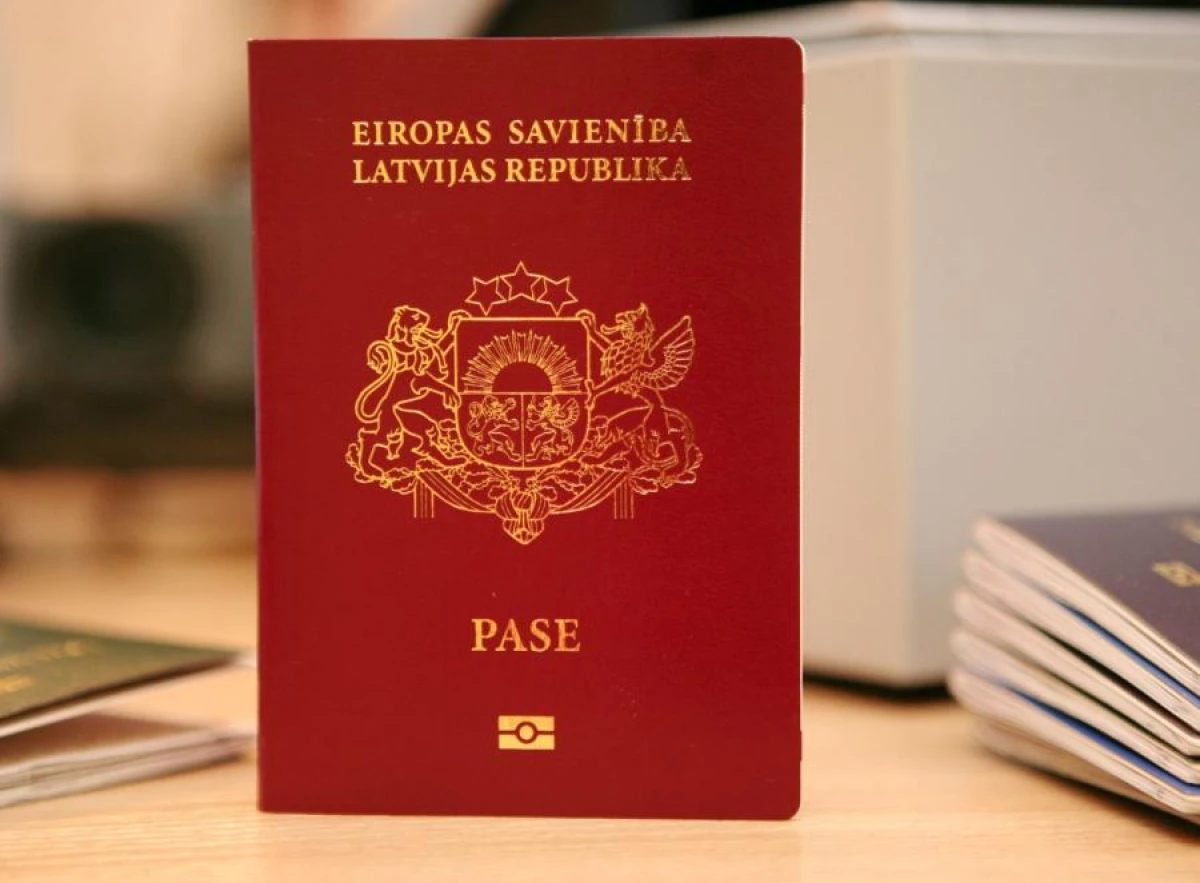
Before vacation, many check only one date — when the passport expires. If the document is still formally valid, it seems that there should be no problems. But in practice, the trip may fall through already at the airport or at the border: for entry into different countries, often not only the expiration date of the passport matters, but also how many months it will remain valid after returning.
In Latvia, a passport is considered valid until its expiration date, as long as it has not become invalid for other reasons. However, this does not mean that such a document will automatically allow entry into any country. The Office of Citizenship and Migration Affairs (PMLP) specifically warns: before traveling, it is important to ensure that the passport will be valid for the entire duration of the trip, as some countries require it to be valid for an additional 3 or even 6 months after the planned end of the trip.
This is where misunderstandings often arise. For example, a person has a passport that is valid for another two months, and the trip is planned for just a week. From a practical standpoint, the document seems "normal." But if the destination country requires the passport to be valid for at least three months after departure, that time frame is already insufficient. As a result, the passenger may be denied boarding or entry at the border.
For travel within the European Union and the Schengen Area, the rules for EU citizens are more lenient: an EU citizen can travel with a valid passport or ID card, and the document must be valid on the day of travel. This applies to EU countries, as well as Iceland, Liechtenstein, Norway, and Switzerland.
However, when it comes to traveling outside the EU, the requirements must be checked separately for each country. In some places, it is sufficient for the passport to be valid at the time of entry or exit, but in many popular destinations, the "three" or "six" month rule applies. Additionally, a visa-free regime does not guarantee entry: the final decision is made by the border service of the specific country. The Latvian Ministry of Foreign Affairs also emphasizes this in information about visa-free travel for holders of Latvian passports.
A separate situation arises for citizens of third countries traveling to the EU and the Schengen Area. For short-term entry into the EU, the passport must be valid for at least three months beyond the intended date of exit from the EU and must have been issued within the last 10 years. This means that a formally valid passport may not be suitable if it is too "old" or if there is little time left before its expiration.
Problems can also arise due to the condition of the document. A passport must not be damaged, marked with foreign notes, or have its content altered. The document must be replaced if defects make it impossible to visually identify the owner or read the information contained in it. If the passport is lost, stolen, or damaged abroad, one must contact the nearest diplomatic or consular representation of Latvia; in certain cases, a temporary travel document may be issued for return to Latvia.
There is also another risk: a person may have previously reported the loss of their passport and then found it. In such cases, using the found document is not allowed — after a written report of loss, it becomes invalid for use. This is especially important to remember for those who retrieve an "old found passport" before traveling and decide that since the date on it has not yet expired, it can be used.