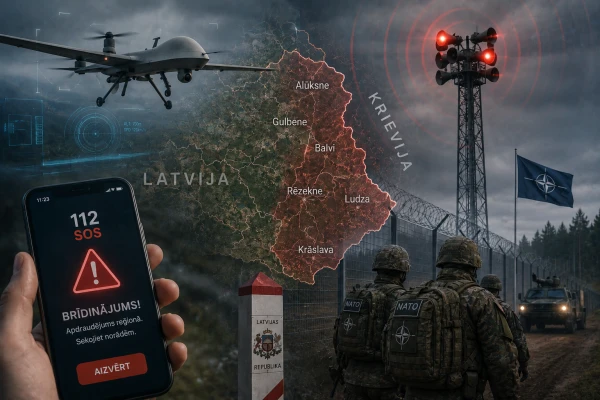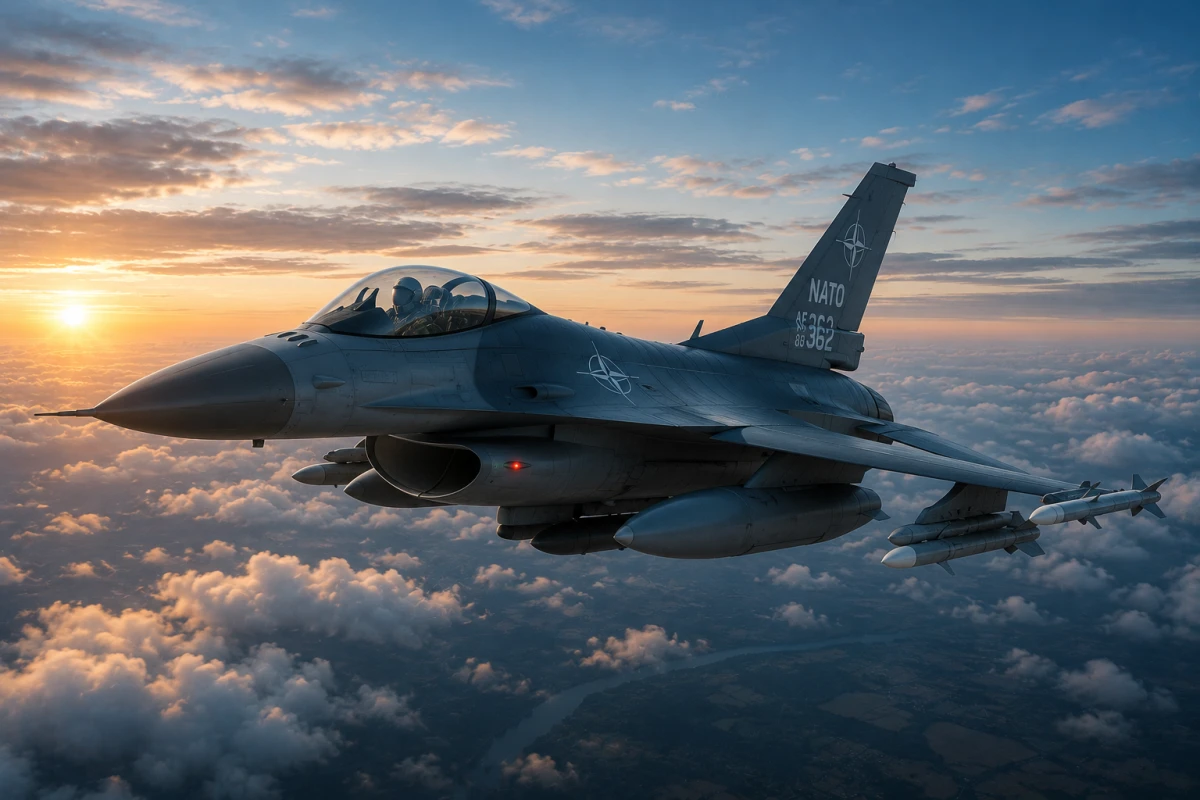
The National Armed Forces of Latvia reported the end of the threat in the airspace of the eastern border areas. Overnight, residents of several municipalities received emergency warnings, and NATO fighter jets were scrambled.
In Latgale, the state of heightened alert, introduced overnight after warnings of a possible threat in the airspace, has concluded.
The National Armed Forces of Latvia reported that the danger to the border areas is no longer relevant. Earlier on Friday night, residents of the Rezekne, Balvi, Ludza, and Kraslava municipalities received emergency notifications from the cellular alert system.
Simultaneously, NATO mission fighter jets were deployed to patrol the airspace of the Baltic states.
The military reminded that they, together with allies, continue round-the-clock monitoring of the situation and have strengthened air defense on the eastern border with additional units.
At the same time, the NAF warns: as long as the war between Russia and Ukraine continues, similar incidents may recur.
In fact, alarming messages and aviation activity have become a new reality for residents of eastern Latvia, where there have already been several instances of drones penetrating or falling.
Due to the night alert, restrictions were imposed on the operation of schools and institutions in several municipalities.
In the Ludza region and Rezekne, classes were completely canceled on Friday. In the Kraslava region, schools switched to remote learning, and kindergartens were planned to open only after the threat was lifted.
Municipal institutions will operate remotely or in a duty mode throughout the day.
Residents were urged to stay at home, avoid gathering in groups, and not approach suspicious objects.
For many families, this was yet another reminder of how close the war has come to the borders of Latvia — even if residents have so far managed to avoid a direct threat.
In recent months, similar warnings have been issued in Latgale multiple times. They were related to drones used in the Russo-Ukrainian war.
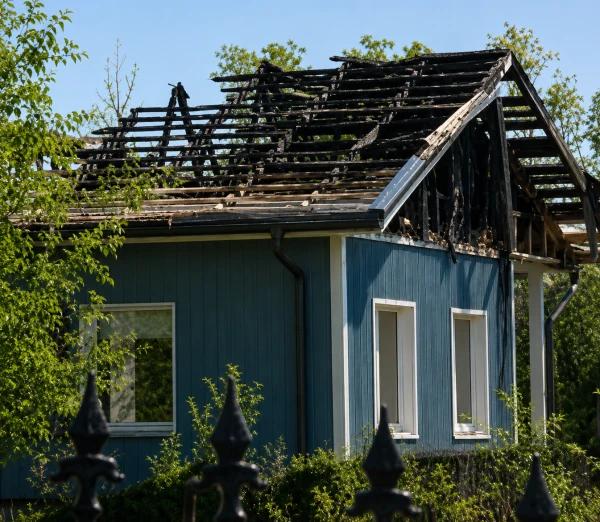
Several such drones had previously exploded on Latvian territory. The latest incident occurred a week ago at a rarely used oil depot in Rezekne.
Although no one was injured in these incidents, the consequences were serious for Latvian politics: following the drone incidents, Defense Minister Andris Spruds resigned, and then the government of Evika Silina collapsed.
Currently, issues of airspace security and the readiness of services have effectively become one of the central topics in the country — both for the authorities and for residents of the border areas.