
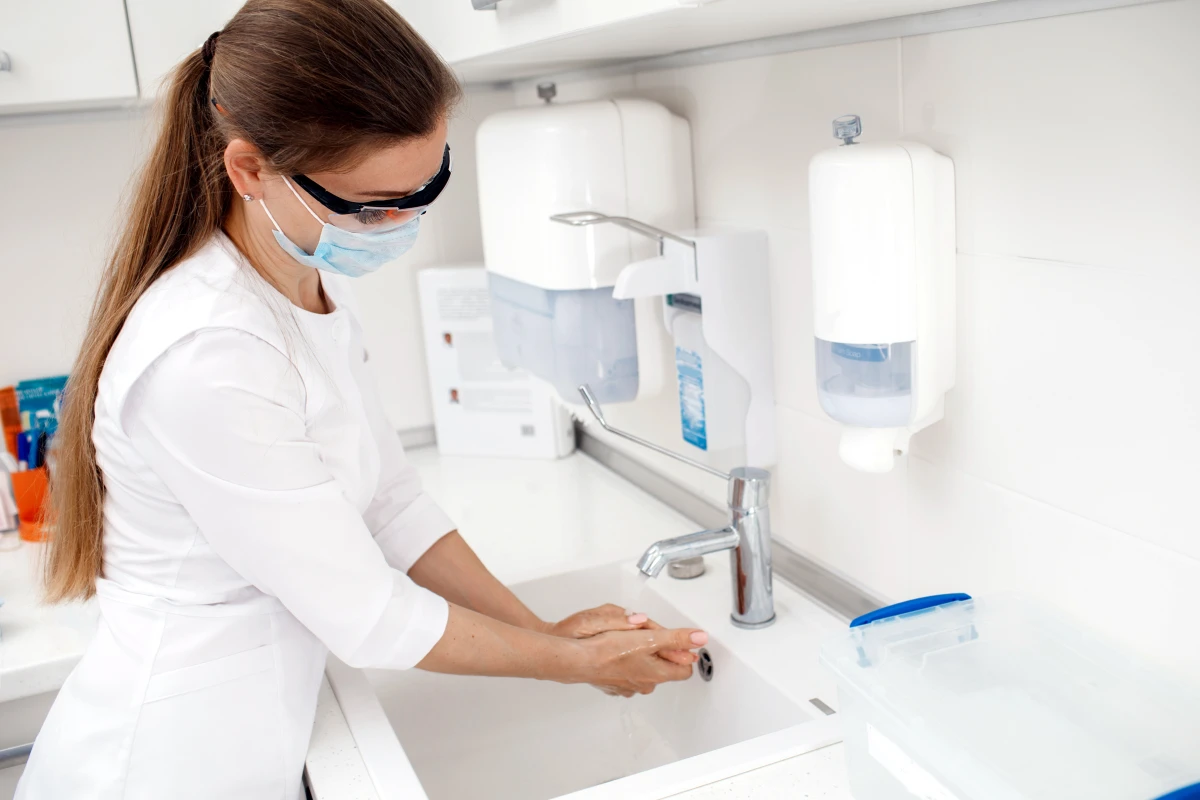
The Riga Eastern Clinical University Hospital urges patients not only to carefully monitor the cleanliness of their own hands but also not to hesitate to ask whether the medical worker has disinfected their hands.
Last week, the Riga Eastern Clinical University Hospital (Eastern Hospital) issued a call to patients and their relatives, as well as to everyone visiting a doctor on an outpatient basis, to pay close attention to a very simple yet extremely important measure for preventing the spread of infections – hand hygiene.
And not just their own hands; before any procedure, even the most minor manipulation or tactile examination, you can confidently ask the medical staff any question related to the upcoming procedure. This includes whether the hand hygiene requirement has been met.
At first glance, such a call may sound somewhat strange, as we live in a society where children are instilled (or at least should be instilled) with the habit of washing their hands in various situations – before eating, after visiting public places (including transport), and so on – and throughout their subsequent lives, a person is supposed to follow this rule automatically. But even if someone did not develop this habit in childhood, the recent pandemic has clearly "explained" to society how necessary it is to maintain hand cleanliness. And it should be even more obvious to healthcare workers.
However, since the issue is raised at the level of the World Health Organization (WHO) – and, by the way, for the 18th time – it means that the problem does exist. And the reminder of how important it is to maintain hand hygiene continues to be relevant.
According to the head of the Infection Surveillance Service at the Eastern Hospital, infectious disease specialist Maris Liepinsh, hand washing and disinfection is not just a formal requirement. It is one of the most effective (and at the same time cheapest) ways to reduce the spread of microorganisms, including in healthcare facilities, and to protect both patients and healthcare workers, as it helps prevent nosocomial infections and the spread of antibiotic-resistant microorganisms in the hospital environment. It is especially important to adhere to hand hygiene rules where patients' health is most fragile and vulnerable – in intensive care units, when caring for cancer patients, and after surgeries. In these cases, even the slightest deviation from the rules can have serious, and sometimes tragic, consequences.
According to WHO recommendations and hygiene requirements established in Latvia for healthcare facilities, healthcare workers' hands should be processed:
- before and after contact with a patient,
- before procedures,
- after contact with the environment,
- after using equipment that has been in contact with a patient.
Hands should also be processed when using gloves – both before putting them on and after taking them off: a patient's health is protected not just by wearing gloves in itself, but by having clean hands.
A separate topic is fashionable long nails, polished nails, rings, bracelets, wristwatches, and other accessories – despite their external beauty, they can hinder the maintenance of hand hygiene, and therefore have a direct relation to patient safety.









Leave a comment