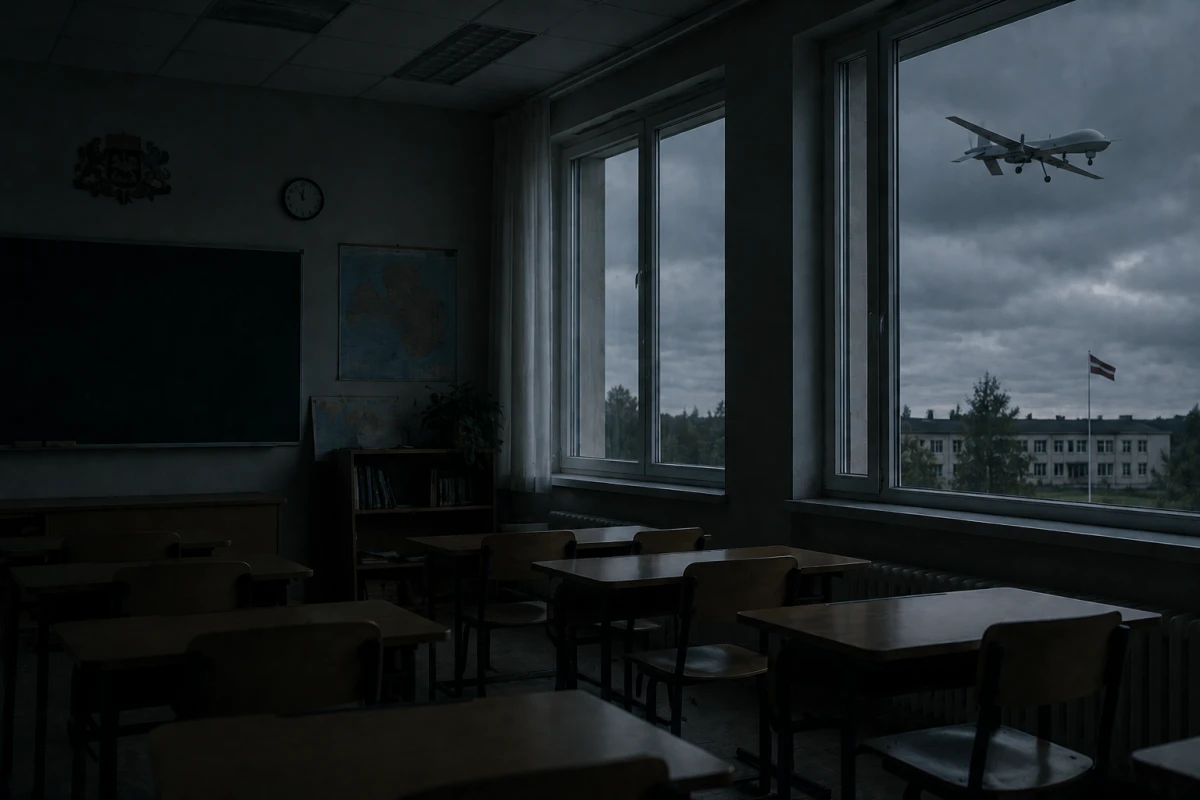
Following recent incidents involving drones, border municipalities in Latgale have begun urgently developing their own action plans for new threats. Shelters are being prepared in schools, duty groups in kindergartens, and parents are being warned: during an alert, children must stay home.
In the border areas of Latvia, following recent incidents involving drones, discussions are increasingly focused on concrete actions rather than theory in case of a new threat, writes nra.lv. Local governments in Latgale and other eastern regions acknowledge that there is no time to wait for instructions from "above".
The head of the Education Department of the Ludza municipality, Gunta Stolere, explains that each educational institution is currently developing its own action plan.
"If there is no such plan, then when specific decisions need to be made, it turns out as it turns out," she says.
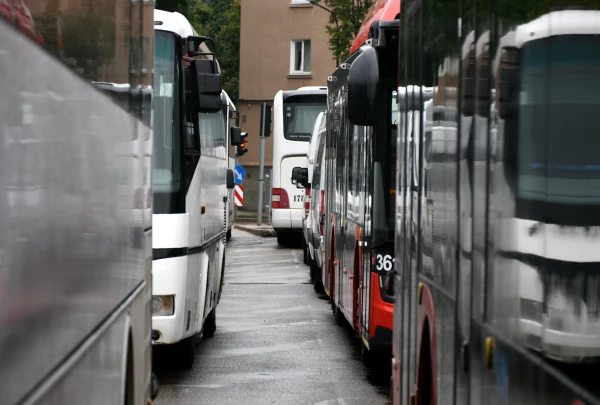
There are 23 educational institutions operating in the Ludza municipality, including schools and kindergartens. After the recent events with drones, they have begun to specifically consider how to organize the transportation of children, what to do with buses, and who will supervise the children of emergency service employees.
"As long as the threat is active, no one is going anywhere. Everyone must understand this," emphasizes Stolere.
At the same time, firefighters, military personnel, medics, and other emergency service employees must continue their work even during an alert, so kindergartens are preparing special duty groups.
In the Aluksne municipality, authorities have also developed their own action scenario. Arthur Dukuls, deputy chairman of the civil defense commission, states that if an alert is declared before morning, schoolchildren will stay home.
"We do not have time to wait for someone at the state level to start developing an algorithm," he said.
According to him, if the threat arises during the day, parents will be asked not to pick up their children from schools and kindergartens until the alert is lifted.
In the Kraslava municipality, which borders Belarus, shelters are already being equipped in school basements. Civil defense organizer Aivars Belkovskis mentioned that the local government is currently waiting for funding to fully equip the shelters.
"The situation can change at any moment," he noted.
In the Balvi municipality, schools have already received instructions on actions in emergencies, and parents have been informed in advance about where their children will be during an alert.
"The position of our local government is this: if we know how to act, parents at least understand where their child is," says the head of the Education Department, Inese Circe.
Against the backdrop of regular reports of drones near the border, anxiety among residents of the region has noticeably increased. For many, this is no longer an abstract topic from the news, but a part of everyday life.
The issue is particularly acute in regions where children travel long distances to schools by bus, and the nearest response services are far away.
The article also criticizes the central government. In the border areas, it is believed that Riga does not always understand how seriously local residents perceive the threat.
Recent incidents involving drones in Latgale have become the first case where local governments had to practically check the readiness of civil defense and alert systems in real time.
For the border regions of Latvia, the topic of drones has ceased to be a matter of high politics — it directly affects the operation of schools, kindergartens, and the daily lives of people.