
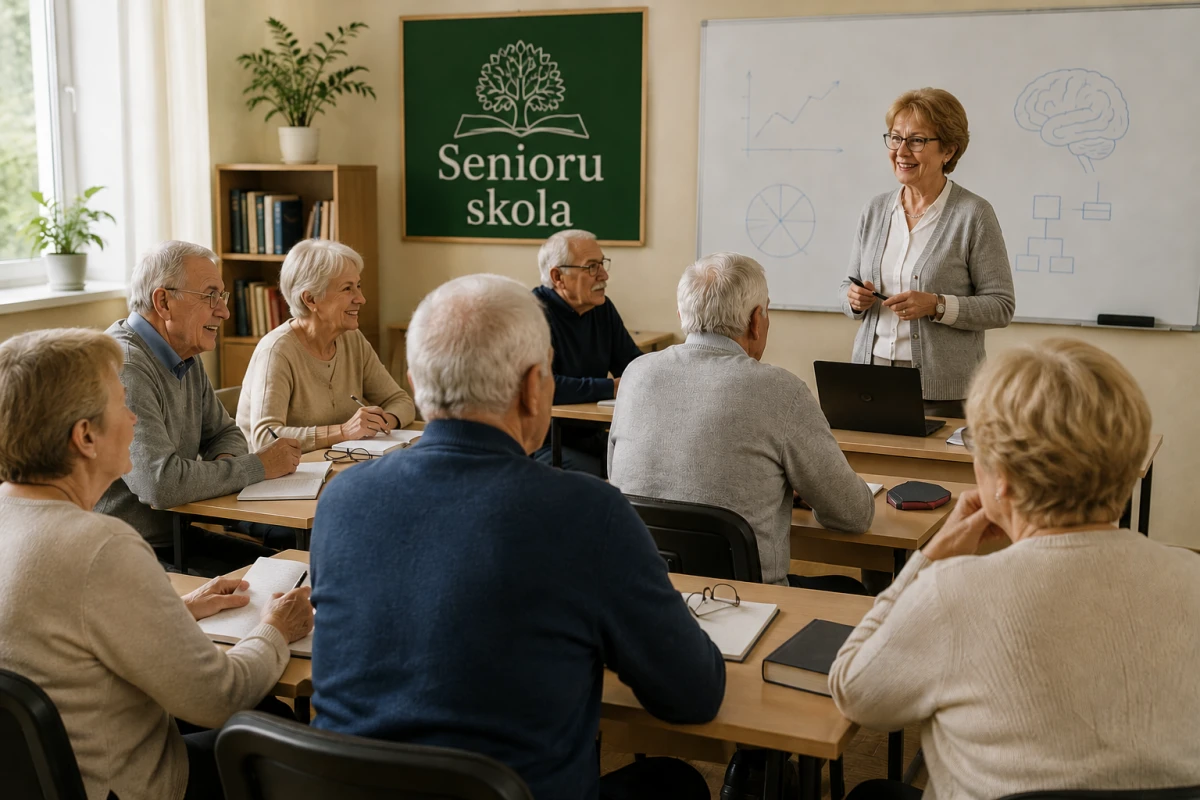
Interest in senior schools is growing in Latvia — 77 projects have already been submitted for the support program, aimed at more than 7,000 elderly people. Authorities and public organizations believe that such initiatives help combat loneliness and support an active life after retirement.
The support program for senior schools in Latvia has generated significantly more interest than expected. According to Minister of Welfare Rainis Uzuliņieks, 77 project applications have already been submitted for the competition, and the total number of potential participants exceeds 7,000 people.
The minister noted that the idea for the program arose from a desire to help elderly people not feel isolated.
"People want to be together, learn, meet, and feel needed," emphasized Uzuliņieks.
At the same time, he acknowledged that not all projects would be supported in the first phase, but the ministry intends to seek opportunities to expand the program in the future.
In the Union of Senior Communities of Latvia, it is believed that the development of such schools can provide elderly people not only with new knowledge but also with the opportunity to participate more actively in public life, volunteer activities, or even return to the labor market.
The chairwoman of the organization, Astrida Babane, called the competition "a serious step towards improving the quality of life for elderly people."
What is important to understand is that senior schools are becoming not just places for lectures or hobbies, but one of the attempts to reduce the social isolation of elderly people — especially against the backdrop of Latvia's aging population.
Organizations working with seniors note that many elderly people want to acquire digital skills, use smartphones, understand finances, and remain engaged in modern life.
For example, the Riga Senior School already offers classes on smartphone usage, meetings with representatives of government institutions, and lectures on various topics.
Classes in Riga take place on Wednesdays at the community center "House of the Holy Family" on Klostera Street.
The senior school program is funded through the Society Integration Fund (SIF). The total funding for the competition amounts to 920,000 euros.
The minimum amount for a single project is 10,000 euros, and the maximum is 45,000 euros.
Projects must cover several areas — from digital and financial literacy to active lifestyles, culture, education, and skills for the labor market.
Authorities expect that such initiatives will help elderly people maintain their activity, independence, and sense of belonging to society for longer.
Against the backdrop of demographic changes, the issue of the quality of life for seniors is becoming increasingly relevant for Latvia — both from a social and economic perspective.








Leave a comment