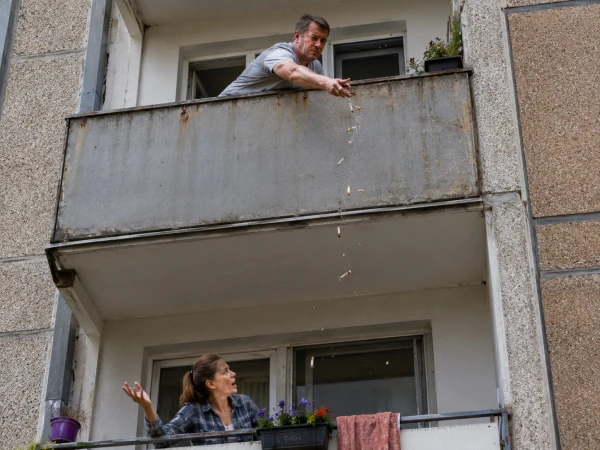
Every fifth (22%) resident of Latvia does not wish to have people of a different race living next to them. Five years ago, this figure was only 17%, indicating that the process of rejecting immigrants is increasing.
The situation with Muslims is even more serious – 37% of the population denies the possibility of coexisting as neighbors (it was 35% in 2021). It can be concluded that xenophobic sentiments towards immigrants from afar are slowly but surely growing in society – while they are indeed becoming, at least visually, more numerous in Riga.
All of this was shown by a state-funded research project "Vectors of Social Cohesion: From Cohesion Around the State Nation (2012-2018) to a Cohesive Community of Citizens for the Sake of the State, Society, and Individual Security (2024-2025)" – which was recently presented in parliament.
"The society's attitude towards migration is mainly negative, but the migration policy is fragmented, lacking a unified system, effective data management, and a long-term mechanism related to cohesion goals," the expert report criticizes the government's activities.
On the other hand, in the last 3 years, up to 10,000 subjects who previously sought a better life abroad are returning to Latvia annually – meaning our fellow citizens have themselves experienced being immigrants and should now understand their new compatriots better...
It is also noteworthy that "the society's attitude towards foreign students is relatively neutral with a positive trend."
Here, a pattern surely emerges – if a dark-skinned student from a private university brings delicious treats in a green or blue box just for you, you welcome him like a relative.
However, if such a person is slowly driving in a small rusty car in traffic or, conversely, sharply cuts you off, you immediately remember his origin "from outside the European Union" and curse those who let such a person into our republic.
In this regard, academic institutions are advised to: "in cooperation with municipalities, it is desirable to create structured integration and mentoring programs throughout the entire study period, reducing cultural shock and strengthening the sense of belonging."
Your author can personally attest – in 10 months, the mayor of the capital, Viesturs Kleinbergs, has not publicly mentioned this even once, and the Riga City Council has not undertaken anything in this area.