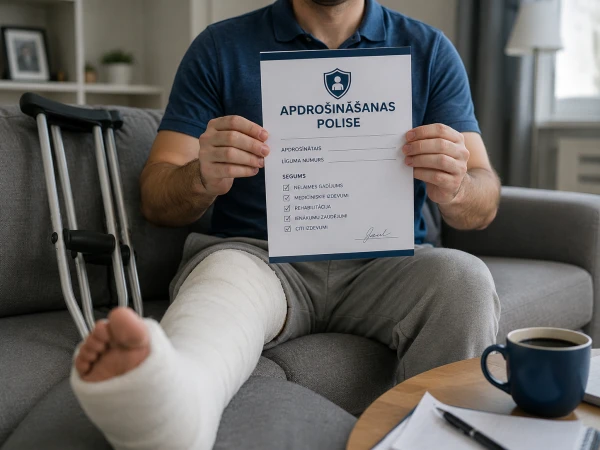
When a fifth-grade student broke his thumb and sought medical help at the Children's Clinical University Hospital, the family was issued a certificate stating that he should not participate in physical education for a month.
However, the school did not accept such a certificate and did not exempt the student from classes, stating that a certificate from a family doctor is required. There is no unified procedure in the country regarding which medical certificates schools should accept and which they should not. This leads to misunderstandings and overloads family doctors.
"I turned to a family doctor, who issued the same information on a different form, and only then did the school accept it. Essentially, this is a waste of the family doctor's time," said the mother of the student to Latvijas Radio.
The State Service for Quality of Education (IKVD) explains that there are no unified rules regarding which certificates schools accept and in which cases they should even be required. This is determined by the internal rules of the schools themselves. If parents feel that the requirements are excessive, they can ask the school to change the rules. If there is no response, they can contact the school's founder, which is usually the local government. However, the service has not received complaints from parents about schools' requirements to provide medical certificates.
However, regarding exemptions from physical education, there are rules set by the Cabinet of Ministers, according to which recommendations for participation in classes can be given by both family doctors and specialists. This means that the school should have taken into account the certificate issued at the hospital.
"You should contact a family doctor if the child has not seen a specialist. For example, at the Children's Clinical University Hospital, certificates are issued in cases of injuries, which may indicate treatment and recommendations for physical activity," explained Gita Perkone, a state methodologist in the field of sports and health at IKVD.
It should be noted that as of September 1, 2023, neither family doctors nor specialists have the right to completely exempt children from sports classes.
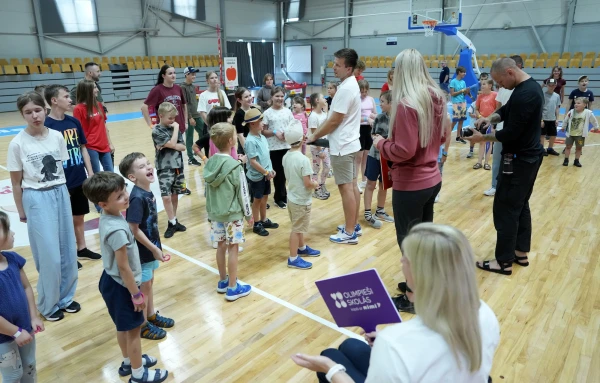
"If a child has an injury, then, of course, a certificate is issued with recommended physical activity or with an exemption from physical activity, but the student continues to participate in the lesson. They can study theoretical topics without physical exertion, [study] health and safety issues. There are also activities such as chess, checkers, and first aid topics — in any case, the teacher includes the child in the lesson," Perkone explained.
For example, if a finger is broken, the student can study theory or perform exercises for the legs. All children must participate in lessons, as grades in sports are required in the 9th and 12th grades. The doctor should not completely exempt the child from classes but should give the teacher recommendations on what the student can do. Perkone acknowledged that not all doctors have fully understood the new system yet, so rules have been developed on how to issue such recommendations for schools.
"The situation will improve each year because doctors will more clearly indicate to teachers what is allowed and what is not. An algorithm has already been developed."
Returning to the issue of medical certificates in general, it is worth noting that family doctors have previously indicated that schools require them too often. As reported by Latvijas Radio, family doctor Ainis Dzalbs even called it a Soviet tradition that should be abandoned. Perhaps the burden on doctors could be reduced if there were a unified system in the country that defines which certificates and in which cases schools have the right to demand. However, when this was discussed in the Saeima, the parliamentary secretary of the Ministry of Health, Dace Klavina, stated that there are no plans to introduce a unified procedure for monitoring absences and presenting medical certificates, as established by law or Cabinet rules.