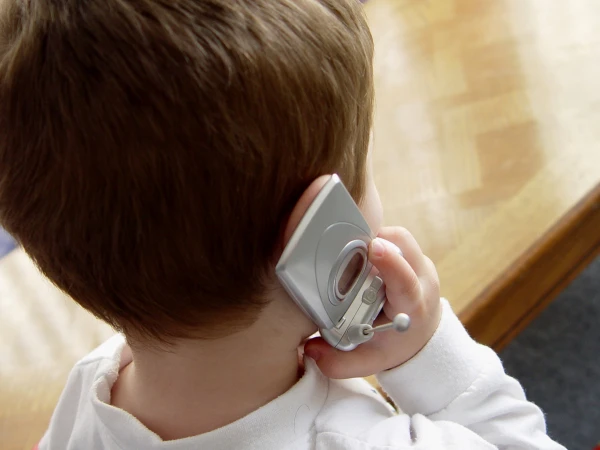
Starting September 1, Latvian schools will begin operating under new rules: the use of mobile phones by primary school students is officially restricted by law, as journalists from the newspaper "Panorama Rezekne" reported on the latest innovation in the education system.
Amendments to the Education Law of Latvia introduce a unified requirement for all educational institutions in the country — from small rural schools to large urban gymnasiums. Previously, the issue of phones was addressed at the level of the principal, class teacher, or internal school rules, but now the approach is becoming nationwide.
This applies to students from grades 1 to 9. The use of personal electronic devices is prohibited throughout the school day — not only during lessons but also during breaks. There is only one exception: a teacher may allow a smartphone as a learning tool, for instance, for completing tasks on educational platforms, including Uzdevumi.lv, searching for information, or participating in digital assignments. Free use of phones — messaging, social media, gaming, or video recording — is no longer permitted.
The change will be particularly noticeable for students in grades 7 to 9. Until now, teenagers were often allowed more freedom in using phones, considering them more independent. The new rules equalize all students in primary school: the requirements for the ninth grade are now the same as for the first.
The Ministry of Education explains the initiative primarily in terms of the quality of education. Recent studies in cognitive psychology show that smartphones affect attention even when they are not in use. The mere presence of the device, the anticipation of notifications, and the habit of regularly checking the screen create what is known as "background cognitive load."
Students have to spend part of their attention resources suppressing the desire to get distracted, which reduces their ability to absorb new material. This is especially noticeable during adolescence, when the curriculum becomes more complex and the volume of independent work increases.