
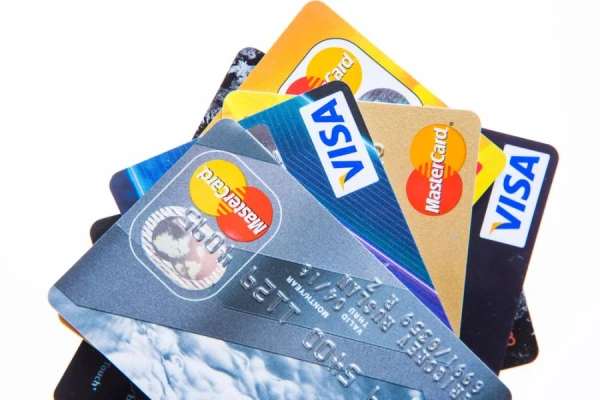
Imagine: you walk into a café in Riga or Berlin to pay for your coffee, and your Visa or Mastercard suddenly stops working. Not because you have run out of money, but because someone in Washington decided that you are an "undesirable" customer. This scenario, which not long ago seemed like a plot from a movie, is now being seriously discussed at the level of the European Commission and the European Central Bank.
According to GlobalData, Visa and Mastercard processed 42% of all card payments in Europe in 2025. In the eurozone, this figure reaches 47%, while in 13 EU countries and the UK, it is 96–98%. For millions of Europeans, these two American giants are not just a convenient payment method but effectively the only bridge between their bank account and real life.
With Donald Trump's return to the White House, discussions about Europe's financial vulnerability have taken on a new hue.
Oro Laluk, Chairman of the European Parliament's Committee on Economic and Monetary Affairs, openly stated: "Visa, Mastercard... Trump can stop everything with one decision."
Similar concerns were expressed by the President of the European Central Bank, Christine Lagarde. Politicians point out that these systems are subject to American laws and have already been used for sanctions, including against Russia in 2022.
However, a complete shutdown across Europe is unlikely — it would also affect the American companies themselves. Much more realistic are targeted restrictions aimed at specific countries, companies, or individuals in the event of serious escalation of trade or political conflicts.
That is why Europe is actively seeking a solution. The main project is the European Payment Initiative (EPI) and its consumer brand Wero. By the end of March 2026, Wero had already reached 52.5 million users in Belgium, France, and Germany (an increase of more than 20% in six months). In February, the EPI signed an agreement with the EuropaPA alliance, paving the way for 130 million users in 13 countries. The first cross-border transfers between individuals will be launched in 2026, and full support for online and offline trading will follow in 2027. In the UK, the largest banks have also begun working on a national alternative.
The conclusion is both simple and alarming: Europe has finally realized that financial independence is not an abstract idea but a matter of economic security. Although dependence remains high, the first real steps toward sovereignty have already been taken. The only question is how quickly Europe will proceed down this path before the hypothetical "one click" from Washington ceases to be just a scenario.












Leave a comment