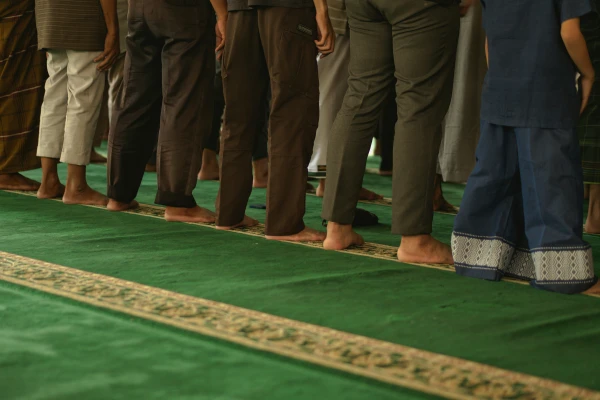
Mass prayers on the street in one of the districts of Riga have sparked a new wave of discussions not only on social media but also among the intelligentsia. For example, actor Janis Amanis openly spoke about migration, respect for traditions, and the growing tension in society.
Commenting on the cases of mass Muslim prayers on the sidewalk in Plavnieki, Latvian actor Janis Amanis noted on the show "Preses klubs" that the issues of coexistence among different cultures are becoming increasingly relevant and complex. According to him, the flow of people into Europe is a reality that can no longer be stopped: "This issue is already quite deep, and unfortunately, we can no longer stop it... Let's be realistic - we understand that this flow will continue."
At the same time, the actor emphasized that the key problem is not the fact of migration itself, but the attitude of newcomers towards local norms: "They come - that's fine, it can be accepted. The next question is whether these people respect our religion, the place they have come to? We are a Christian country, we have our laws. They must respect them."
Amanis noted that, based on his personal observations, this does not always happen: "Unfortunately, I have encountered instances where they do not respect - neither women, nor local laws, nor ethical norms. This is already a question that needs to be discussed."
Speaking about the prayers themselves, he emphasized that he respects religion but raised the question of the form: "The fact that people pray is their religion, and I respect that. But is it necessary to do this on the street?" He also suggested that the problem might be related to a lack of infrastructure: "If they have no other place, then the next question is whether they need such places if we do not want to see this on the lawns."
The actor also expressed concern about how the situation will develop in the future: "If these people keep increasing, then where is the critical mass when they will start demanding something, as has already happened in Sweden or England?"
As a possible solution, Amanis suggested enhancing the information provided to newcomers about local rules: "When a person travels to another country, they study the culture - what can be done, what cannot. Perhaps these people also need to be explained: here are our rules, here are our norms." He added that this may sound utopian, but he considers such an approach to be one of the options for a solution.
In conclusion, the actor noted that in the context of a tense geopolitical situation, such scenes cause anxiety in society: people begin to ask questions and interpret what is happening more broadly than just a religious practice.