
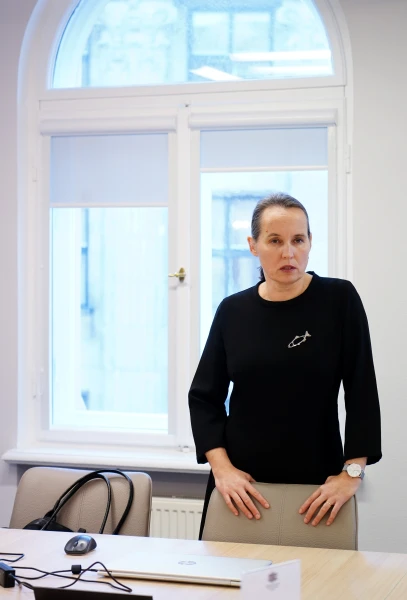
The Saeima Commission on Human Rights and Public Affairs has addressed state budget-funded media, referred to as public media. As the legislators learned, the population would like to watch and listen to something different than what is being broadcast to them!
"Enjoys the Highest Trust"
This assessment was given by Latvian public media to themselves. In particular, it is noted for critical situations in the country. It is unfortunate that computer bots — non-living participants that imitate activity — are increasingly spreading in the media space.
Nevertheless, media funded by the budget "are capable of preventing fragmentation," which, as stated in the report, is caused by "conservatives" and "socialists" who are skeptical of media messages. The remaining residents of Latvia were stratified as "liberals," "greens," and "centrists." These three categories are more acceptable to public media.
According to surveys by Norstat, in which 3,300 respondents participated, at the beginning of 2026, 47% of the audience expressed trust in national broadcasters, another 29% were neutral, and 24% had a negative attitude.
At the same time, national broadcasting structures "reach" 74% of all residents of Latvia. However, among national minorities, this share is significantly lower — 60%.
Wishing You Good Health
When numerous survey participants were asked to mark the topics they would be interested in seeing in broadcasts, the following priorities emerged: healthcare (37%), the economic situation in Latvia (30%), support for families and demographics (20%).
The following topics remained among the outsiders: the Latvian language and culture (4%), agriculture and farming (3%), the EU (2%), sports and recreation (1%), religion and morality (1%), and several others.
Media leaders critically assessed their own successes in engaging non-Latvians: "The current approach to creating content for national minorities does not increase either trust or accessibility in this group of residents in the long term."
Where LTV Was Sent
Member of the Council for Public Electronic Media Andris Saulitis noted that at least once a week, three out of four residents of the country turn to national media; but this does not mean that higher indicators should not be strived for!
– Overall, everything is good and moving in a better direction, – noted the chairwoman of the parliamentary commission Leila Rasima with satisfaction. However, she pointed out that there are many in the country who consume news only from alternative platforms — Facebook, Telegram, etc. Therefore, national broadcasters must go into the thick of the people: "That’s where they can be reached."
Chairwoman of the Council for Public Electronic Media Sanita Upleja-Egermane stated that among social networks, there are some quite dubious ones — for example, TikTok. In order to use it, civil servants need to have a second phone that does not contain official information. This also applies to journalists of national media. On the other hand, Twitter is a verified network — and therefore, public opinions can be clarified there, and one’s own content can be disseminated.







Leave a comment