In the next five years, Latvia has committed to the European Union to reduce CO2 emissions by 17%. The country is actively constructing solar power plants and wind turbines. But not so fast: the population of Kurzeme, the very cradle of the Latvian nation, has risen against advanced, emission-free electricity. Just like a medieval knight of a sad image, from La Mancha.
10,170 Citizens Against Turbines
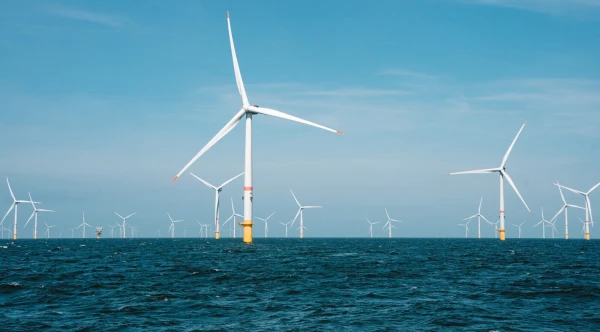
Such a solid number – more than, for example, the population of the regional center Kuldiga – has signed a collective appeal "For the Kurzeme Coast Without Wind Farms" on the Manabalss.lv platform. The energetic initiative, as noted, "envisages the placement of 250-meter-high turbines and the construction of adjacent infrastructure." "For this purpose, hundreds of hectares of coastal forest are to be cut down. As a result of such projects, the landscape of the coast will be irreversibly altered, negatively impacting the coastal natural values and the tourism entrepreneurship of local communities, as well as significantly affecting the military security of Latvia's external border."
Here, as can be seen, the initiators of the protest have come in with strong arguments. There is also a clarification of what is meant: "The construction of wind farms in coastal areas without the introduction of broad compensatory mechanisms may cause disruptions to military radar operations, reducing the security of the airspace of the state during an air raid by aerial objects."
Additionally, in the activists' vision, the construction will violate the Law on Protective Strips, which defines a 5-kilometer distance from the Baltic Sea, intended to prevent the negative impact of economic activities, preserve the protective function of forests, and prevent erosion processes. Wind turbines will obstruct the usual migration of birds! And this is not to mention the dune prohibition zone, where within 300 meters of the shore, neither building construction, nor the laying of drainage systems, nor forest cutting, except for sanitary purposes, nor the passage of vehicles is allowed.
In Defense of the Reserve
According to the documents submitted to the Saeima Commission on Mandates, Ethics, and Statements, there are currently 5 wind farm projects (WFP) off the coast of Kurzeme, from north to south – from the companies Envirsus, Mindes Wind, Enefit Green, k2Ventum, Rapsoil.
The construction of wind farms will negatively impact the Grini Nature Reserve, located in the Dienvidkurzeme municipality (center – Grobiņa). The reserve was established in 1936, covering an area of 1,076 hectares (1,063 hectares are forested). The climate is coastal, with cool summers and relatively mild winters. The average annual temperature is 6.5 °C, the average temperature in July is 16 °C, and in January it is −3 °C; the annual precipitation is 600–800 mm.
The reserve serves for the study of the unique biogeocenosis of the Baltic coast and the unique habitat of bog heather. Approximately 80% of the reserve is covered with pine and birch sparse forests with a dense cover of shrubs or herbaceous plants. This type of vegetation cover is locally called grinis, hence the name of the reserve.
In some places, the tree layer is formed by pines, while the lower layer consists of a dense cover of heather, xerophytic lichens, and hygrophytic mosses, with no understory. In other areas, there is a significant admixture of birch, and in some places, there is an underbrush of willow, with inclusions of buckthorn and juniper. Common among the tussocks are sedges, marsh bedstraw, willow-leaved loosestrife, meadow foxtail, and molinia… In general, a paradise for walks! Meanwhile, the authorities have forgotten about the binding environmental documents for Latvia – the Helsinki and Orhus conventions, as well as the EU directives on birds and animals.
"This Will Be a Huge Tragedy"
Local governments, advanced users of coastal lands believe, should also have the right to veto wind construction. For this, it is necessary to amend the special Law on the Simplified Procedure for the Construction of Buildings Necessary for Energy Security and Independence. The latter, by the way, was adopted literally at the end of the unfortunate, COVID-war XIII Saeima's activities. It came into force on October 4, 2022, immediately after the elections of the new parliament. And bribes – smooth…
A representative of ten thousand concerned Kurzeme residents, Sandra Stepina, stated in parliament that protective strips have protected the natural and historical treasures of the coast from industrialization for decades. – This will be a huge tragedy, – warned the activist.
Liga Rozentale, Deputy Secretary of State at the Ministry of Climate and Energy (KEM), began by thanking for the initiative: "We are working a lot with local communities…".
– We realize that any new technologies, whether on a large or small scale, entering the territory of Latvia cause concern and misunderstanding.
Nevertheless, emphasized L. Rozentale, the state's plan is to introduce generating capacities of about 1,500 megawatts by 2030.
For comparison, the installed capacity of the Riga HPP is just over 400 megawatts.
A Great Leap in Latvian Style
An interesting question arises (which, however, no one managed to articulate properly at the Saeima commission meeting!) – why does Latvia need such a race for electricity? Moreover, it is planned to produce it literally in every village.
In this sense, the titanic efforts of the Ministry of Climate, led by the young and ardent supporter of the "green agenda," Kaspars Melnis (36 years old, "New Unity"), resemble the stormtroopers of Mao Zedong's Great Leap Forward. In 1958-60, the PRC aimed to outpace the UK in steel production, starting to melt down all metal items collected from the peasantry in rural furnaces. As a result, both the people were robbed, and a huge pile of substandard castings was produced.
The current version of the Great Leap in the energy sector of Latvia, evidently, has not so much ideological as selfish motivation behind it. Looking at the quotes from the Nordic Pool energy exchange, many market participants are drooling and burning with desire, for example, to switch from rapeseed oil production to wind energy production. Not realizing:
-
that this, to put it mildly, is a somewhat different set of competencies;
-
and also the meticulous nature of the Kurzeme population, which has shown its uniqueness in past historical stages…
Currently, in fact, wind energy provides only about 133 megawatts of electricity in Latvia. Or half of the capacity of the Kegums HPP, the first in the republic, commissioned in 1939.
– In Lithuania, the capacity of wind farms is 20 times greater, – complained Ms. Rozentale. So, in her opinion, it is necessary to maintain "legal certainty" from the laws adopted in 2022. However, it would not hurt to recall in what context this legal package was formed. Then, due to military psychosis and speculation in the energy market, the very investment bubble around wind and solar energy emerged.
One way or another, the government is waiting for public comments until March 13. Hurry up!
HOMELAND
The Kurzeme coast of the Baltic Sea spans about 365 km, or 73% of Latvia's coastline. In its vicinity, there are 14 national parks, nature reserves, and protected areas.