
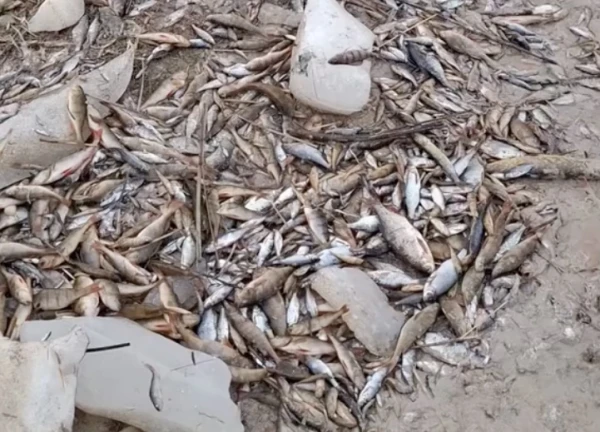
Videos from eyewitnesses at Lake Kaniēris, showing mass suffocated fish washed ashore, have caused a significant stir. Some of the dead aquatic inhabitants were eaten by birds, some sank to the bottom of the lake or were carried out to sea. Will the lake be able to recover from this event, and what does the situation look like now, as reported by TV3 News.
Worrying footage showing hundreds or even thousands of dead fish in the lake was recorded by residents at the end of February, as noted by TV3. Due to severe frosts, the shallow areas of the lake froze to the bottom in places, and when the cold retreated, a sad picture emerged. The lack of oxygen proved fatal for the underwater inhabitants. However, now that the spring warmth has significantly melted the ice, the disaster has ceased.
At the source of Lake Kaniēris, nothing indicates the mass fish deaths anymore. Most likely, they were eaten by the birds living around the lake. Currently, the water is quickly receding into the sea.
This is confirmed by drone footage — in the center of the lake, where the ice has completely melted, there are many birds. Last year, in a competition organized by the Nature Conservation Agency, the ecological solutions company “Ecosoul” became the long-term manager of the lake's ecosystem. Observers of the lake explain that the fish deaths are a natural process; however, their large scale is related to the low water level.
"The biggest factor was the low water level, which, unfortunately, is beyond our control; it is regulated by the Nature Conservation Agency. There is certain pressure from local residents to lower the water level because there are concerns and opinions that the lake is responsible for flooding nearby infrastructure. This viewpoint has no scientific basis, and the situation with the water level in Lake Kaniēris is very painful," said the founder of “Ecosoul,” Arta Kauke.
The Nature Conservation Agency explains that fish deaths in Lake Kaniēris have been observed before. This occurs during harsh winters when the shallow lake is covered with a thick layer of ice. Additionally, hydrogen sulfide waters enter the lake, further reducing the already low oxygen levels in the water. Given these conditions, there are practically no possible actions that could lead to noticeable improvements.
"Previously, attempts were made to create holes in the ice and pump oxygen into the water; however, the effect of such measures is very localized and requires significant resources, including round-the-clock monitoring. The impact on the overall situation in the lake, considering its area, is still assessed as insignificant. Any changes in the water level in the lake at this moment could only worsen the situation. Although in such winters, the impact on the lake's fish resources is inevitable, even the harshest winters have never completely destroyed the fish in the lake," explained Baiba Ralle, a representative of the Nature Conservation Agency.
Lake managers reassure that nature will set everything right and that fish will continue to inhabit the lake, while the dead fish will become food for other inhabitants.
"A food base is forming for small fish, birds, and insects. Some were eaten by other, larger fish, and birds that arrived. Some have swum out to sea; there is no doubt about that," notes the founder of “Ecosoul.”
Where the water flows into the sea, a strong current was observed during the filming of the report; however, no dead fish were visible there anymore. Perhaps they were also eaten by birds.












Leave a comment