
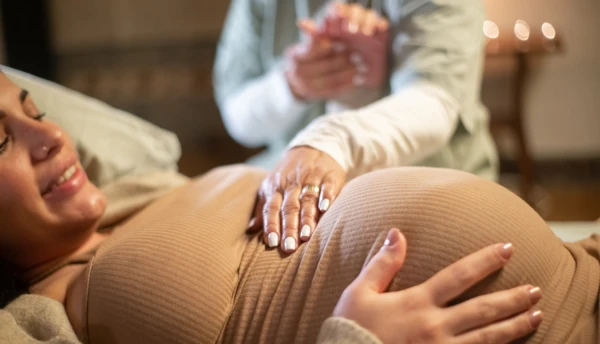
Last year, unfortunately, once again set records for declining birth rates. Why are young families postponing the arrival of their first child – or new children? Typically, both spouses work, they have housing, and in our country, thank God, there is no war or disaster. But – uncertainty, unwillingness to lose the recently established level of minimal comfort...
Therefore, a program is starting in Latvia, within which trained nurses/midwives will make regular home visits to women expecting their first child – who have social and economic risks. The patronage will last from the beginning of pregnancy until the child reaches two years old, with the goal of improving the health of the mother and child and promoting family well-being.
Made in the USA
The new program for Latvia, Nurse-Family Partnership, originated in America in the 1970s and has been successfully implemented in the United Kingdom, Canada, Australia, the Netherlands, Norway, and other countries. Its objectives are a healthy pregnancy, normal child development and success in life, strengthening health and economic self-sufficiency of the family.
Over the years, experimental data has accumulated, and it has become clear that children whose early development is monitored by nurses/midwives demonstrate fewer behavioral and intellectual problems. Among them, there is a lower percentage of juvenile offenders and clients of social correction services. Overall, it is also financially beneficial: for every dollar invested in a patronage nurse, there is a savings of $5.70.
Two Work, One Supervises
Currently, a pilot program is being tested on 200 volunteer mothers, and if all goes well, in 2029 the program will be expanded to the entire republic, using funds from the European Structural Fund.
By the way, the first team implementing the program consists of 15 specialists, of whom 10 are actual nurses/midwives. In Latvian, vecmātes means midwives, i.e., obstetricians. Although among them, there are surely many young and attractive women.
The other five are: a clinical supervisor, supervisors, a coordinator, and a project manager. So, we have 2 working, 1 supervising.
In any case, the language of instruction for the program is English, with training locations being Latvia (the base institution is the University of Stradiņš) and Ireland, considering its Anglo-Saxon roots. There are already 65 nurses/midwives – both trained and retrained.
60 Visits Can Make You a Family Member
That is the number planned for each family, with the duration of one visit being an hour and a quarter. The approach is quite individualized, but each midwife will be able to compare her experience with other families, of which there will be about 20.
During pregnancy, the main focus is on the mother’s health: healthy eating, sleep, lifestyle. Preparation for childbirth occurs, harmful habits are reduced, stress is identified and treated, and a sense of security is instilled.
In the infant period (up to 1 year), care for the newborn is mastered – breastfeeding, proper sleep, hygiene, and child safety at home. Parents will be taught to establish an emotional connection with the infant and to identify its needs. Together with the visiting expert, the young family will gain skills in the development of movement and speech, and will go through vaccination stages.
Until the child is 2 years old, the nurse/midwife will accompany the family’s development – cognitive, language, and social. Positive parenting, setting boundaries, and learning through play – all of this will be necessary for kindergarten, which will be coming soon.
We Need to Meet More Often
In the future, visits from specialists to families who need reinforcement of self-awareness and parental roles, planning their own goals in education and work, calculating financial resources, and future family planning are also possible.
Support is provided throughout all 34–35 weeks of pregnancy; the first postpartum visit will take place 3–5 days after discharge from the maternity hospital.
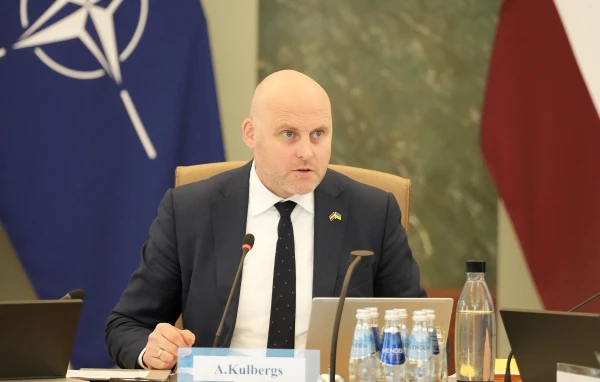
Sanita Janka, director of the Health Department, stated that in Latvia the previously conducted number of visits to expectant mothers was recognized as insufficient. There is a particular emphasis on the need for patronage for the youngest mothers – those who have not yet reached 20 years of age. In 2025, the Cabinet of Ministers of Latvia even adopted a Maternal and Child Health Improvement Plan!
To participate in such a program, it is necessary to have a contract with the National Health System; to be registered in a healthcare institution.
And Now About the Money
The total number of mothers receiving support in this way is 729. "Of course, this is not a large percentage," acknowledges S. Janka. Currently, recipients of this service are determined solely on a voluntary basis, and the future will show whether it will be introduced for all mothers in Latvia.
As for the funds spent so far, they amount to 100,000 euros. That is, approximately 0.005% of the budget of the Ministry of Health of Latvia, which is 1.97 billion euros in 2026.
We are all, of course, aware that the main theme declared in the country is security. However, the above figure is comparable to a dozen modern artillery shells or drones. And Marshal Mannerheim taught that for a warrior to bravely defend something, he must understand what exactly...
Home and Walls Help
To be objective, it should be noted that in Latvia there is also an alternative branch of nurses/midwives who prefer (and promote) home births. There is also a corresponding page on the internet with certified midwives who can assist with childbirth. This costs around 1,000 euros.
Liga Liepa-Klivlande, representing Latvia at a home birth conference in Prague, said: "It seems more reasonable (and at least more proportionate to the real capabilities of our country) to introduce the option in Latvia, where there is clear regulation that childbirth outside of a hospital is possible, but this does not mean that the state sends a hospital doctor or midwife who may not want or be ready to assist with home births. We gladly go to familiar midwives or head to already available maternity hospitals. The other question is that we believe the state should finance childbirth at the same level regardless of where it takes place (the principle of 'money follows the mother'), which is also advocated by the Latvian Association of Home Birth Families. We would also like private insurers not to discriminate against families choosing out-of-hospital births.
Accordingly, the state would pay for the service provided to the woman according to the established uniform price list in the country. The difference that arises for the opportunity to choose their own midwife for home births would continue to be paid by the clients themselves. This principle is by no means unheard of in Latvian medicine, as the same principle is included in the new Maternal and Child Health Improvement Plan, allowing women to register with a private gynecologist and receive reimbursement from the state ('money follows the pregnant woman')."
…And to close the topic of money, let’s recall that twenty years ago, individual childbirth assistance with a cesarean section in the Riga Maternity Hospital officially cost 800 lats. So, due to inflation and the rise in overall salaries, it has now become even inexpensive!














Leave a comment