Economist Pēteris Straujinš gave an extensive interview to LSM, where he explained the reasons for Latgale's lag behind other regions. This is the "victim syndrome," which he sees as "a large part of the problem."
Reading this interview is not the most interesting activity, notes the Daugavpils portal Grani.lv. The fact is that the economist spends the lion's share of his time stating obvious things. That Latgale is "the most contrasting region of Latvia in terms of both landscape and well-being." That "well-tended fields, modern agricultural machinery, decent houses" coexist here with places where the situation is, "by all accounts, very close to complete collapse." That "the cities are quite isolated" and that "when it comes to the development opportunities of Latgale, we are essentially talking about Daugavpils, Rēzekne and the surrounding areas, as well as Līvāni."
As an example, he cited Daugavpils, where the "number of jobs per capita" presents a "good" picture, and the "Augšdaugava region surrounding the city," which "has the lowest GDP per capita in Latvia." The economist shared a valuable observation: "Daugavpils actually provides jobs for a large adjacent area, and therefore the income generated in the city flows out of its borders. This also explains why salaries in the city are quite low, despite a relatively large number of jobs. Residents of the surrounding areas also apply for these jobs, and companies logically take advantage of this situation."
Noting that businesses take advantage of the dire situation of locals, who either have to accept the salaries offered or pack their bags and head to Riga, Straujinš draws the following conclusions. First: this, he says, turns Latgale into an attractive place for investment (it should be noted that by the same principle, slave labor for pennies attracts Western businesses to Asian countries). And second: "One cannot blame those who moved to another Latvian city in search of better pay. It is people's choice, and no matter how cynical it sounds, it also benefits the Latvian economy as a whole."
At this point, the economist should be challenged. There are two approaches in the world regarding how a government treats its provinces, where economic development is not as successful as in the center. If the authorities perceive the country as a business corporation, then the center will drain specialists from the outskirts and say, as Straujinš does, that this "benefits the economy as a whole." But if the authorities treat their country as statesmen, they will develop a system of bonuses, salary supplements, and other perks — just to keep people in the regions for a more balanced development of the country.
A vivid example of this is Alaska, where there is a whole range of compensations: annual dividends (PFD for those who have lived there for a full calendar year and plan to stay), cost of living salary adjustments (COLA), and bonuses for employees in the public and private sectors. Also, the minimum wage in Alaska is higher than the federal one. A similar approach is taken towards remote regions in Norway (where even tax deductions are lower).
You might say — but these are "northern" bonuses for the harsh climate. And we would respond: a similar approach exists in hot countries. For instance, Spain has developed a program "against depopulation" (España Vaciada) — with bonuses, grants, and tax incentives for those willing to live in remote regions like Extremadura. A similar fight against depopulation is underway in Italy, where there are a bunch of support measures for residents of mountainous or sparsely populated areas.
But let's return to Latvia. Here is what Straujinš says about Latgalian cities.
He called the economy of Daugavpils "interesting, without irony," as it "features various industries – engineering, metalworking, electronics, chemistry, food industry, light industry." He cited the company "Pulsar Optics" as a good example, "a Vilnius enterprise that has quickly become one of the leading industrial companies in Daugavpils."
About Rēzekne: "The city itself looks relatively decent, but there are very few development centers outside of it. There are a few companies on the outskirts, such as the subsidiary of Latvijas finiers, Verems, but soon areas begin to appear where small-scale agriculture and individual sawmills prevail." The surroundings of Rēzekne "do not contribute significantly to the city's economy," as is the case, for example, in Valmiera.
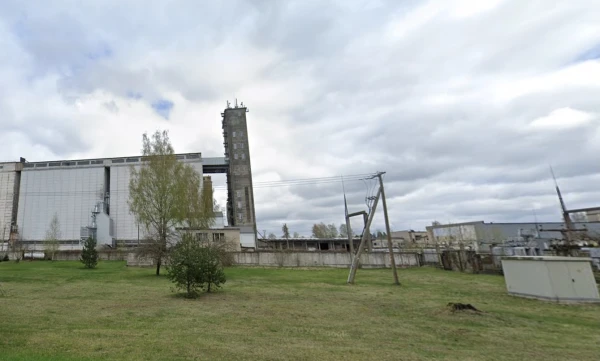
One of the strengths of Latgale that the economist mentions is the "cluster effect." He explains: "In Daugavpils and Rēzekne, there are large areas with former production that could be started or restored at lower costs than in other parts of Latvia. While in other cities, such as Liepāja, infrastructure is being built from scratch on wastelands, in Daugavpils there are already streets, utilities, electricity, and water supply in many places, next to which is only a wasteland or the ruins of a factory. This gives a real advantage in cost. A good example is the former chemical fiber plant complex on Višķu Street — a huge area where something is gradually happening, but it could and should be done much faster. This is land of opportunities for entrepreneurs — with downsides, but also with very clear upsides."
He also names geography as a strong point of Latgale: "Daugavpils is closer to Vilnius and Poland than to Riga, and considering that a large part of trade in Latvia also goes through Lithuania and Poland, the location in the south is quite good."
Straujinš fundamentally disagrees with the assertion that nothing is changing in Daugavpils: "There has been a certain stability established there — the influence of one leader has strengthened. In my opinion, this is better than the previous political chaos, where mayors changed regularly, and the system remained unstable. The work of the municipal administration has improved, which is noticeable in practical indicators, for example, in the ability to attract investments.
As for Rēzekne, assessing the situation is more complicated. Perhaps, there ethnic loyalty and a closed circle of power play a larger role."
"What are the weakest points of Latgale?" the journalist asks. And here Straujinš stuns with his revelation: it is the victim syndrome that afflicts all "Latgalian journalists, politicians," all Latgalian representatives of "state or local authorities." This "really irritates" the economist. Once his irritation reached such a level that he even confronted the Latgalian officials: "I remember one case in Daugavpils when I was talking to employees of an institution who should have been passionately convincing investors that there are opportunities here. I had to listen for a whole hour: we are far from Riga, we are poor, everyone wants to leave, nobody loves us, Riga did not save us in difficult times. If we are given subsidies or tax breaks, then maybe we can talk. In the end, I had to say a few harsher words."
What to do? Straujinš's answer is as follows: the Latgalian "elite must change its mindset." "That part of the Latgalian elite that I have dealt with, whom I comforted and explained that they are not abandoned and doomed, must stop perceiving themselves as victims. Until this changes, it will be very difficult to achieve a real breakthrough."
What a simple and understandable recipe! However, it contains zero economics (even though it is given by an economist). Rather, it is an uplifting slogan similar to those uttered by personal growth coaches, inner enlightenment coaches, and other sellers of pseudo-spiritual nonsense. Latgale has heard hundreds of such advice in the spirit of "there is no money, but you are not a victim, just hold on."
...There are still many revelations of the same degree of usefulness — that "revolution is usually born from hope, not despair," that "thinking supports the reality that gave rise to that thinking," and so on.
But for the reader, this interview raises only one question: "So, Riga, are there any economists in your city?"