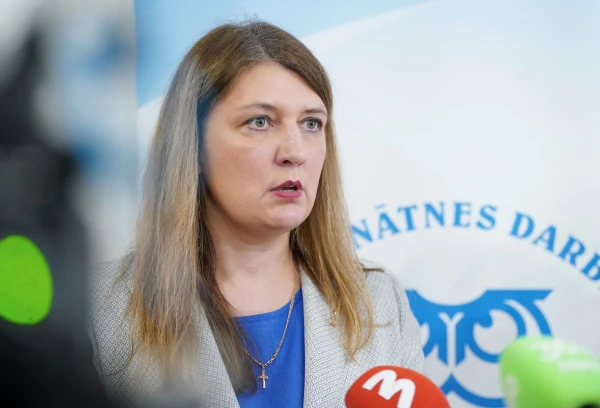
The chairperson of the Latvian Education and Science Workers' Union (LIZDA), Inga Vanaga, commenting on the shortcomings identified in primary education by the State Audit Office during a broadcast on TV24, stated that LIZDA had pointed out the risk areas back when Latvia began working on the new educational reform and the “School 2030” standard.
Revising the content of education and establishing connections between subjects is good, Vanaga believes, however, “we said back then — how can you implement such a reform if there are not enough and appropriate teaching materials, which are a basic resource for both students and teachers,” noted the head of LIZDA. Vanaga does not understand how this can be implemented, as it requires an individualized approach, and teachers do not have time for this given their workload, and it was precisely for a balanced workload that educators took to the streets at the time, reports nra.lv.
“We said this, but how we were scolded! Even those parent organizations that were involved and were very friendly towards the ministry, towards the then Minister of Education. LIZDA and also the Union of Local Governments of Latvia were criticized. Old, stagnant, wishing bad for children — how many names we were called. And what do we see today? Where are we now? Even today, there are not all the necessary teaching materials,” said Vanaga.
The union leader expresses bewilderment: if there is no time and teaching materials, while many teachers were forced to develop teaching aids, sacrificing their time, a more active reform of inclusive education was underway, and this was compounded by a new assessment system and bureaucratic burden, as recorded by the State Audit Office — essentially, these are all the issues that LIZDA raised earlier.
Vanaga disagrees with the Ministry of Education and Science that now is not the time to look for those responsible. According to the head of LIZDA, those who were at the negotiating table and involved in reforms back then should not be in these positions today and create yet another “attraction.” What we see now are the consequences of a poorly thought-out reform without the necessary resources, and this is a bitter truth that should serve as a lesson for future reforms, emphasized Vanaga.