
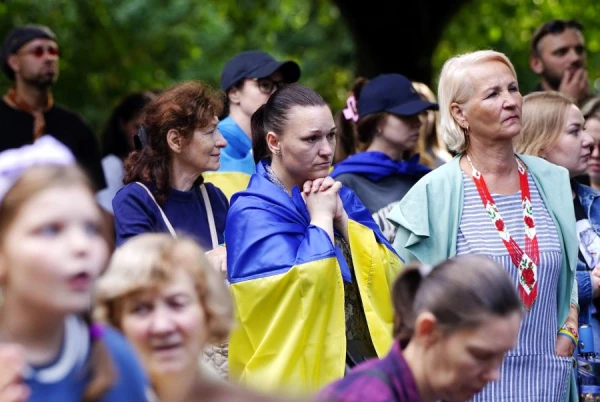
The 2025 study by the UN Refugee Agency (SEIS) analyzed the socio-economic conditions in which Ukrainian refugees live in Latvia.
Positive Aspects
Currently, there are nearly 32,000 refugees from Ukraine in the country who have received temporary protection in Latvia. Most of them are women and children. Survey data, particularly in the areas of employment, education, and housing availability, confirm gradual integration. However, despite these positive results, the study indicates that access to healthcare remains problematic, especially for refugees from less protected groups.
The survey reveals a number of positive indicators of integration in key areas of long-term adaptation. The average employment rate is gradually increasing (from 56% in 2024 to 62% in 2025), 80% of children are studying in public schools, and 41% of respondents reported a level of proficiency in the Latvian language that allows for effective communication.
Improvements are also observed in other areas: the share of those living in dormitories has decreased to about 5%, indicating that refugees are able to meet basic needs. Despite positive trends, challenges remain. In 2024 and 2025, 76% of households reported at least one significant unresolved issue, with employment concerns remaining among the most pressing.
Key Findings of the Study:
In 2025, 95% of respondents had temporary protection status. The nearly one hundred percent figure indicates the state's ability to provide legal residency status to a large number of Ukrainian civilians.
The employment rate among working-age refugees increased from 56% in 2024 to 62% in 2025. At the same time, employment remains the main unresolved issue for households.
An increasing number of refugees report studying the Latvian language: while in 2024, 35% of Ukrainian civilians indicated that their proficiency allowed for effective communication, in 2025 this figure rose to 41%.
School attendance among school-aged children significantly increased — from 65% to 80%.
Housing conditions showed some of the most noticeable improvements: in 2025, 76% of households lived in the private sector, while the share living in dormitories decreased to about 5% (15% in 2024). However, 45% of households still relied on partial or full support to cover housing costs.
According to the survey, access to medical care decreased: in 2025, 88% of refugees in need of medical services received them, compared to 96% in 2024. Long waiting times were cited as the main obstacle.
In 2025, the share of respondents reporting mental and psycho-emotional health issues increased: 24% compared to 17% in 2024. Although 47% of those in need received some form of support, it was most often informal assistance outside of professional services.
The relationship between refugees and the host society is still viewed positively by most; however, there has been a slight increase in the proportion of those experiencing hostility: 25% in 2024 and 27% in 2025.










Leave a comment