
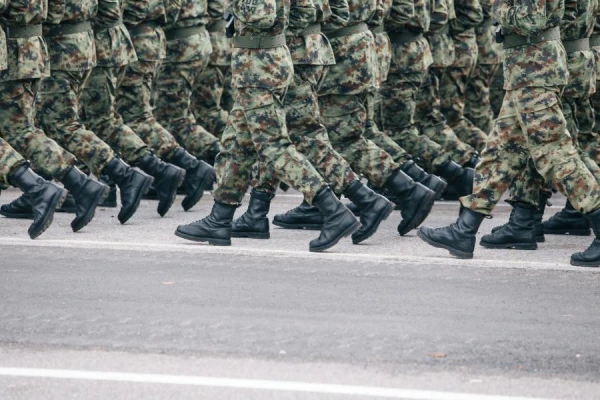
A third of volunteers and about half of those called up involuntarily are rejected due to health issues, reported LTV.
Since July 2023, mandatory conscription has been introduced in Latvia — the so-called National Defense Service (NDS). Currently, selection is underway for the July conscription, which will be the largest to date — one and a half thousand people, and starting from 2028, four thousand young people will be required to begin service annually.
For the July 2025 conscription, 783 volunteers applied for service. However, only 566 (72%) ultimately began their service.
Out of 800 conscripts called up involuntarily, 176 (22%) started their service — this includes those disqualified not only for health reasons but also for other reasons.
During service, up to 5% of young people are discharged due to health issues.
Those who are not accepted into the army
Among the reasons for rejection, insufficient weight, poor vision, as well as anxiety disorders and past use of antidepressants were most frequently cited.
According to Biruta Klein, advisor to the Ministry of Defense of the Republic of Latvia on medical support issues, neurological disorders, musculoskeletal diseases, vision impairments, and oral and dental problems are being identified.
Among those who were slightly below the fitness standard (category 4C), the distribution of health-related rejection reasons was as follows:
35% — neurotic, stress-related, and somatoform disorders (pain, weakness, organ dysfunction);
23% — endocrine, nutritional, and metabolic diseases;
15% — diseases of the upper respiratory tract;
14% — asthma and lung diseases caused by smoking;
13% — vision impairments.
"Essentially, at 18 years old, we receive such a young person as they have formed in society and with the health condition they have," noted Biruta Klein.
Prevention Center: youth health is deteriorating
According to the Center for Disease Prevention and Control, the health of young people continues to deteriorate. Almost 30% of children regularly experience back pain and headaches, and irritability and insomnia are common.
At the same time, birth rates are declining, while the plan calls for an annual conscription of 4,000 people in just two years. Demographic and health indicators show that the task will not be easy. Nevertheless, there are currently no plans to change the fitness criteria for military service.
"The only thing we can change is to think about what mechanisms can be implemented before reaching adulthood through medical institutions to identify certain indicators even before a person comes to us," noted Kristers Grauze, director of the NDS department.












Leave a comment