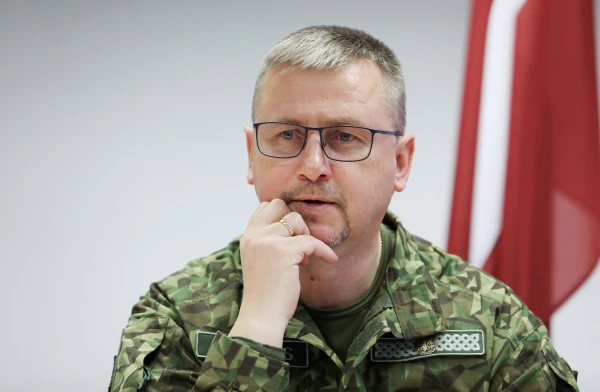
In the TV3 program “900 seconds,” Karlis Krekis, a board member of the society “Pilsēta cilvēkiem,” spoke about the challenges of this winter in Riga.
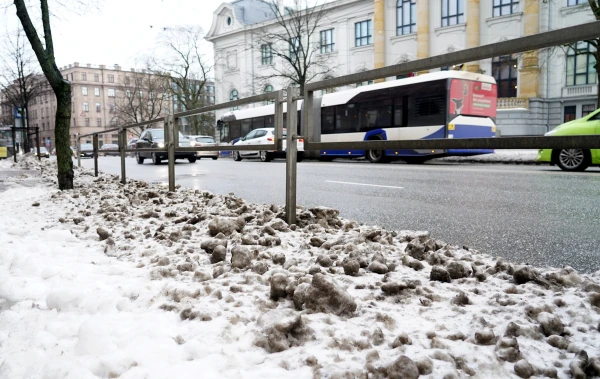
“Every winter is like a natural disaster that we know we will survive, but we are not truly prepared for,” he told TV3. According to his assessment, the situation this year is quite bad in some places — streets and sidewalks are not being properly maintained, in certain areas the roadway remains uncleared, while in others a snowy-icy “mush” forms.
The problems are also evident in public transport movement — at certain times, movement is hindered due to icy roads, including on bridges.
Krekis himself rides a bicycle in winter and admits that in Riga it is objectively often safer to ride on the roadway than to move on the sidewalk or bike lane.
“It’s faster and safer on the roadway because the traffic itself clears the snow. However, the cleaning of sidewalks is lacking,” he noted.
Bike lanes are generally cleared relatively well, but the problem, according to him, lies in the lack of control. The city allocates significant funds for cleaning, but there is a feeling that it is not always checked whether the work has actually been completed. As an example, Krekis mentioned the bike lane on Brivibas Street, which was not cleared throughout the day, although machinery was observed there.
Interestingly, in his experience, riding a bicycle in winter is sometimes even safer than walking — there is less risk of slipping.
Speaking about anti-slip materials, Krekis emphasized that where pedestrians and cyclists move, sand would be a more suitable option. This is also provided for in the regulations. On the roadway, salt is more often used, which is more effective in melting ice, but negatively impacts the environment and infrastructure.
Particular attention should be paid to bridges and structures where salt can contribute to damage. In areas with heavy vehicle traffic, snow is often mechanically compacted and partially cleared due to the movement of vehicles.
Krekis emphasized that priorities should be given to places where there is the highest risk of falling for people — sidewalks, public transport stops, pedestrian crossings. It is precisely there that quality cleaning and suitable materials are of the utmost importance.
Winter in Riga is not a surprise. The question is about preparedness — planning, control, and attitude towards users of the urban environment.