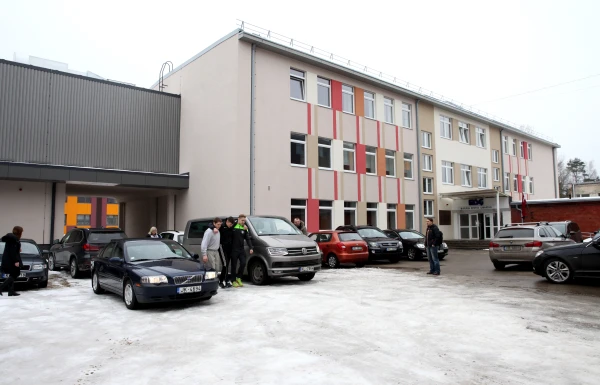
While society proudly celebrates Olympic achievements, daily life at the Murjani Sports Gymnasium takes place in a completely different mood — in the struggle for basic necessities.
School director Sergey Chevers stated on the program "900 seconds" (TV3) that the infrastructure does not meet modern requirements: "This is not 21st century infrastructure for a school."
Some engineering communications — water supply, heating system, sports halls — still date back to 1965 and "miraculously withstand this load." The situation has gone so far that Latvian champions have nowhere to train due to the collapsed floor.
The director emphasizes that the problem is not a lack of athletes or coaches — well-known specialists in Latvia work in Murjani and high-level athletes are being trained. However, "funding is insufficient," and there have been no regular investments in the infrastructure.
Although the school receives about three million euros a year from the state, most of the funds go to ensuring basic functions — education, meals, daily activities. According to Chevers, at least 300,000–500,000 euros would be needed annually for a phased improvement of the infrastructure.
He also candidly speaks about the attitude of politicians towards the only sports gymnasium directly subordinate to the state: "We really have to fight for such basic things." The director believes that Murjani should be a model to show others, not an institution that has been balancing on the brink of survival for years.
"Either we put everything in order and move forward, or we loudly declare that we cannot maintain the Murjani Sports Gymnasium," he noted.
In addition to infrastructure problems, the school also performs an important social function — it provides a stable environment and the opportunity for development in sports for about a third of its students. The introduction of mandatory co-financing from parents is being considered, which could provide about 100,000 euros a year for sports needs, but this will not solve systemic problems.