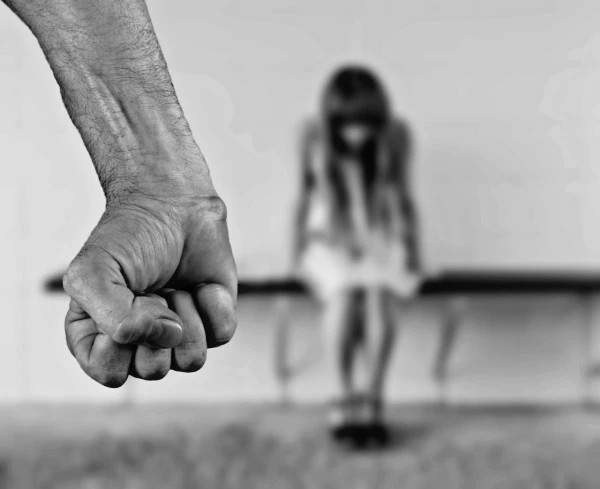
Violence in Latvian families is not uncommon, but some working in responsible structures are not always able to act quickly, this conclusion was made at a seminar in Liepaja organized by the center "Marta," public media report.
The South Kurzeme division of the State Police of the Kurzeme region receives an average of two calls a day to resolve family conflicts. Most often, the conflicts that children witness involve alcohol consumption, the police conclude. To limit violence, much more attention should be paid to cooperation between agencies.
Statistics confirm that domestic violence in Latvia remains widespread: last year, 12,500 family conflicts were registered.
"We respond to the situation on the spot: we assess whether a decision needs to be made regarding the removal of children or to initiate a criminal process. We won’t say that this is the case in all instances, but mainly the conflicts are related to alcohol consumption," said the head of the South Kurzeme division, Ingus Ukstins.
As noted by the Liepaja Social Service, one of the problems in preventing violence is that residents are afraid to ask for help or do not recognize the signs of violence in their personal situation.
"A child feels anxiety, fear of adults, falls into stress, and becomes aggressive," explained the director of the service, Dace Zelge.
"Insufficient information comes from medical professionals; the medical care for the child may be inadequate, leading to long-term health issues that sometimes last a lifetime," added the chairwoman of the Liepaja City Orphan Court, Taiga Ziemele.
One solution is the ability of responsible structures to quickly recognize violence and act in cooperation. An action plan was previously developed, but experts acknowledge that it was not of high quality, and work is currently underway on the next one.
"Despite the difficulties and unfavorable statistics, a crisis center is necessary; moreover, it supports individuals affected by violence," emphasized the chairwoman of the board of the Liepaja institution of the center "Marta," Madara Lapsa.