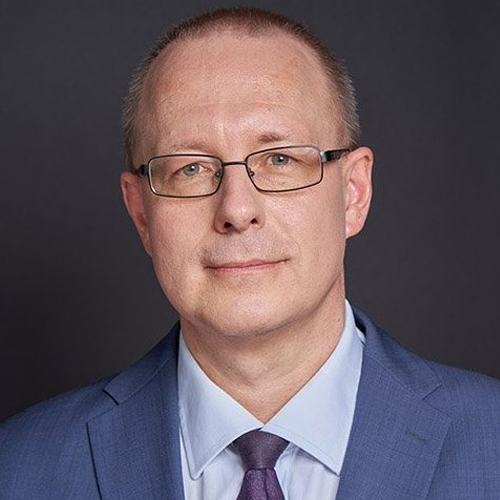
My favorite writer Denis Viktorovich Dragunsky – the prototype of the famous "Deniska's Stories", a Facebook friend, and simply a wise person with whom we had a good conversation in Saulkrasti, when it was still possible for Russians to come to us in the summer – recently celebrated his 75th birthday.
And judging by his posts on social media, the creative life of the writer is in full swing. Every day he creates short literature in the form of brief notes, showing his peers how to be in tune with the times and gadgets.
Pensioners on Social Media
In fact, Facebook has long become the most "age-friendly" resource compared to Instagram or TikTok. And this is wonderful – people have the opportunity to translate their memories into a technologically acceptable format! Photos of their own parents and grandparents from the 20th century, or even the 19th century, stories about how things used to be.
I have a similar story: once I used the home computer to log into my account, didn’t log out, and my mom got curious… And for three years, my mom was interested and commented. As long as her eyesight held up.
But the biggest problem is not just health, but the mobile devices of many elderly people – they still use button phones. And for almost any socially significant function – from making a doctor's appointment to paying utility bills – digital identification on a smartphone is required.
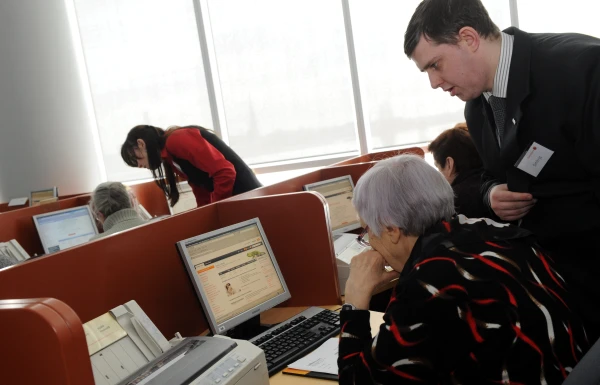
The Ministry of Smart Administration and Regional Development of Latvia continues the "Development of Digital Skills in Society" program, which has already been completed by more than 11,000 people, including 5,087 people over 65 years old. The project finishes on April 30, 2026, so it’s worth rushing to get 8 hours of free classes. There are options – in-person participation with a mentor; remote with a mentor; self-study.
Against the backdrop of numerous alarming signals about fraud in the electronic environment, which elderly people are particularly susceptible to, it is important to emphasize – these courses teach how to identify a fake email or a "friend's call" that actually aims to scam money. For those who are worried – will a more advanced device increase the risk, it is worth noting that victims of criminals also include users of button phones.
Bridging the Gap
Zane Skujiņa-Rubene, chairwoman of the Saeima subcommittee on reducing inequality, pointed out the need to activate the so-called "silver economy" – involving older people in the modern style of managing the economy. And to start, everyone must learn to work with the platform Latvija.lv, connecting to it via Smart-ID or a card reader. Otherwise, the notorious "digital divide" will form, when a significant part of the population simply cannot keep up with the times.
Rinalds Celmiņš, director of the Department of Digital Policy, stated that Latvia, unfortunately, "lags behind the European Union on average" in terms of internet accessibility in households. The country has 68%, while the EU as a whole has 85%. However, we already have 71% coverage of 5G cellular communication in the republic, which is significantly higher than the average European level. You won’t believe it, but in some countries of Old Europe, it is still impossible to sit somewhere in a cabin in the mountains and watch, say, a football broadcast on a smartphone. Yes, you quickly get used to the good.
Deputy Alina Hendele (66) shared her experience gained from meetings in the municipalities. Indeed, now communication with the State Employment Agency occurs remotely – but "it’s not that simple for residents of rural areas…" Libraries or unified service centers located in former schools or train stations can serve as assistants in the village.
Mr. Celmiņš expressed that technically, everything is practically fine now – mobile network coverage reaches the most remote corners, constantly improving.
Liene Priede, project manager for digital education, noted that the most active region today is Latgale – classes are held in Daugavpils, Rēzekne, and Ludza. Pensioners choose the "digital self-service" module. Some companies have introduced good practices by directing their older employees.
In Practical Terms
Smartphones equipped with simplified menus and enlarged text icons are designed to help elderly people communicate on social media and search for information. These phones have an impressive set of features that assist elderly users, including:
- reminders for taking medications,
- quick and easy access to medical professionals,
- medical alert systems,
- programmed buttons for emergency calls or frequently used numbers,
- enhanced sound and compatibility with hearing aids,
- low battery alerts that can notify caregivers or friends,
- long-lasting batteries.
Medical information – prescriptions, allergies to medications, blood type, and emergency contacts – can be stored on smartphones for use by emergency services in case of an emergency. Another important function of the smartphone is GPS tracking, which allows for determining the location of elderly people (provided they have their phones with them, turned on, and charged).
"Some say – I’ll set up online banking, and I’ll get robbed," Priede shared, "But we work, we educate. People are so grateful that they bring homemade pies to the mentors. They say thank you for helping them overcome this fear. And of course, it’s not just education, but also an opportunity for socialization."
– "Of course, we hoped the results would be better," admitted the project coordinator. Unfortunately, even some cities refused to participate in the training. And after all, the money was provided by the European Union…
And of course, life makes its own adjustments – in schools, everything is now electronic. Parents and grandparents can only connect to their children’s successes online. A subtle coercion to progress!