
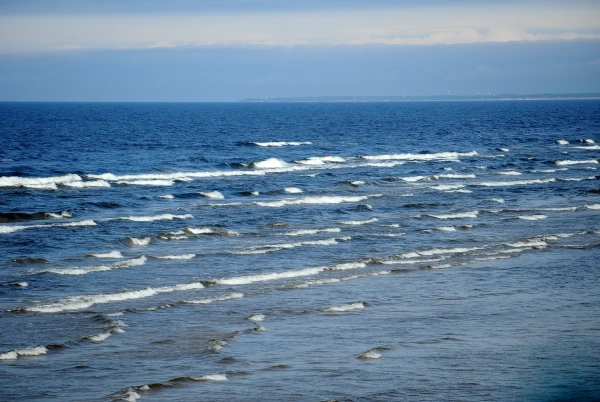
A recent study has shown that over the past decade, the oxygen content in the deep-water layer of the central Baltic Sea has been rapidly decreasing. Since 2016, the influx of fresh oxygen into the deep waters has been very minimal, causing the oxygen deficit to reach a record high level.
A study published in the journal "Frontiers in Earth Science" was conducted by scientists from the Institute of Marine Systems at Tallinn University of Technology, led by Taavi Liblik, in collaboration with Finnish and Latvian colleagues.
According to Liblik, due to a combination of several factors, the oxygen deficit in the central part of the Baltic Sea at depths greater than 100 meters has reached a record high level.
"A water mass with a high content of hydrogen sulfide has formed in the deep layer, and the oxygen deficiency in it has already reached 2.5 million tons," said Liblik.
There are several reasons for the oxygen deficit. Oxygen cannot penetrate into the deeper layers of the Baltic Sea because the water in it is stratified—similar to a mixture of oil and water. The saltier layer of water acts as a lid, preventing oxygen from the surface waters from sinking deeper.
In recent years, the halocline—a sharp boundary between water layers that prevents the mixing of waters with different salinities—has been particularly pronounced. It isolates the deep waters from the rest of the sea. At the same time, the period of winter mixing has shortened, as the upper layer of water remains warm for a longer time.
The oxygen deficit is exacerbated by other factors. Insufficient amounts of oxygen-rich water have flowed from the North Sea into the Baltic Sea, which usually helps to "ventilate" the deep layers. The deep waters have become warmer, and warm water holds less oxygen. Additionally, the decomposition of organic matter is accelerated in warm water, which also consumes oxygen. At the same time, a large amount of nutrients continues to enter the sea, promoting the growth of algae and other organic matter. As these substances settle to the bottom, their decomposition depletes the oxygen reserves in the deep waters.
Scientists estimate that rapid changes in the situation are not to be expected. The Baltic Sea depends on powerful inflows of water from the North Sea—situations when a large volume of new, saltier, and oxygen-rich water simultaneously flows through the Danish Straits, reaching even the deeper layers.
The oxygen deficit in the deep waters is currently so great that even a powerful inflow of water from the North Sea is unlikely to fully compensate for it. Global warming continues, further complicating the improvement of the sea's condition.
However, long-term changes can be achieved if the Baltic Sea countries consistently reduce pollution and nutrient inflows—these measures will help reduce the accumulation of organic matter and slow down the loss of oxygen.
The study is based on extensive monitoring data and expeditions on the Estonian research vessel "Salme" and the Finnish vessel "Aranda." Measurements were taken of oxygen content, temperature, salinity, nutrient concentration, and water stratification. The results show that by 2024, the oxygen deficit in the deep waters has more than doubled compared to 2014. At the same time, the temperature of the deep layer and the concentrations of ammonium, hydrogen sulfide, and phosphates have increased.














Leave a comment