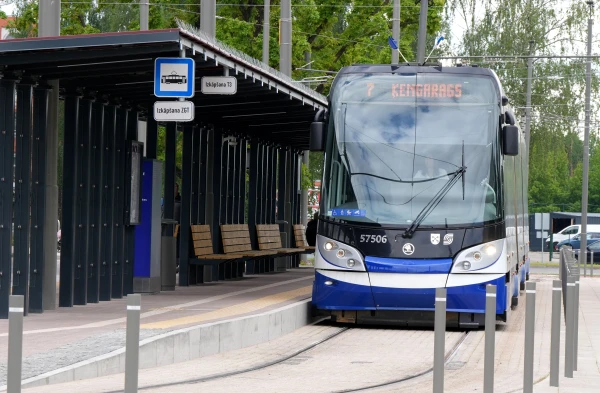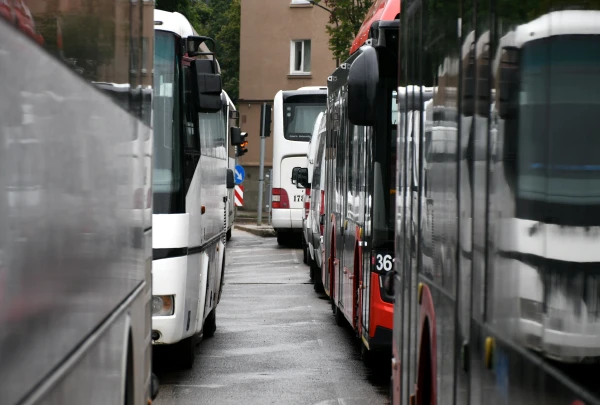
According to the decisions made last year, regional public transport will face a number of significant changes this year: ticket prices will rise next week, on January 15, and the state network of regional bus routes is planned to be reduced by 11.06 million kilometers, or 16%, compared to 2025, writes Latvijas Avīze.
Preparations will also begin for the introduction of the "Public Transport on Demand" service, so that it can be implemented across the country by the end of this year or early 2027. Then residents of sparsely populated areas will not be left without transport.
Last autumn, the Public Transport Council decided that starting from January 15, 2026, the fare for rail transport will increase by an average of 6.6%, while for bus transport it will rise by approximately 7.5%. As for the "Public Transport on Demand" service, it will be provided by the Road Transport Administration (RTA).
At the end of last year, the chairman of the RTA board, Janis Lapins, told the media that the administration would offer the new service independently, purchasing environmentally friendly and low-emission transport for four to eight passengers. The RTA will also hire drivers to provide the service. This type of transport will be introduced throughout Latvia in areas with poor transport accessibility and low demand.
RTA transport will be provided on request via the call center phone or through a special application. Dispatchers will register the request and inform the passenger when the transport will arrive. The ticket prices for such trips will correspond to the existing ticket policy. This is planned to save funds by avoiding empty buses on routes.
Transport on demand will allow people to live outside major cities without losing access to services, while reducing the number of empty trips and transport costs. The RTA plans to implement this type of transport throughout Latvia, providing it in areas with poor transport accessibility and low demand. It is expected that RTA transport will be available on request via the call center phone or through a special application, where the need will be indicated. Dispatchers will register the request and inform the passenger when the transport will arrive to take them, for example, to another stop or station for further travel, or to a specific destination in the area. The ticket prices for such trips will also correspond to the existing ticket policy. Thus, it is planned to cover those who have previously used public transport, as well as to save funds to avoid empty buses on routes.
"Transport on demand will allow people to live outside major cities without losing access to services, while reducing the number of empty trips and transport costs," said Anna Margreta Verdina, a specialist in route network planning and mobility projects for the Kurzeme Planning Region.