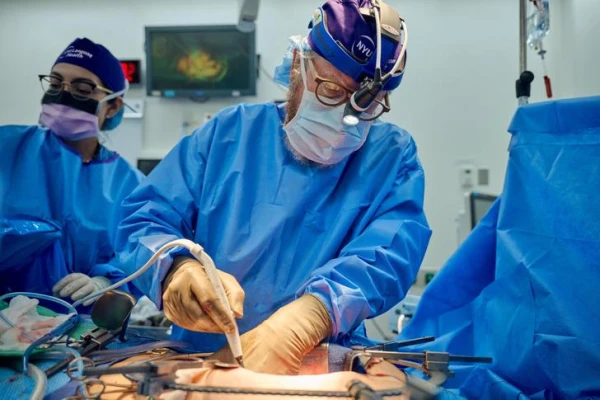
With the help of a new treatment method at the Riga Eastern Clinical University Hospital (RAKUS), two patients managed to eliminate severe episodes of bradycardia — a slowed heart rate — and improve their quality of life, the hospital reported to the LETA agency.
An innovative method of cardioneuroablation using radiofrequency energy has been successfully applied for the first time in a medical institution to eliminate life-threatening episodes of bradycardia caused by excessive activation of the parasympathetic nervous system.
Specialists explain that neurocardiac syncope is a condition in which the heart rate sharply slows down or blood pressure drops due to the malfunctioning of the parasympathetic nervous system, which can lead to loss of consciousness. Although there are few such patients, doctors regularly encounter similar cases.
Until now, the only way to assist in severe bradycardia was the implantation of a pacemaker, which is often not an optimal solution for younger patients. Clinical trials of new medications are also ongoing, which may offer a solution to this problem in the future. However, specialists note that there are few effective treatment methods available until research is completed and results are obtained.
As explained in the hospital, one such method is cardioneuroablation, which blocks the transmission of parasympathetic impulses to the cardiac ganglia located in both atria. The same radiofrequency energy used in other modern endocardial procedures is employed for their destruction.
At the Eastern Hospital, this method has already been successfully applied to two patients whose episodes of bradycardia significantly affected their daily lives and safety. One of the patients is 63 years old — her episodes of loss of consciousness possibly began after a viral infection, and a pronounced parasympathetic response was identified during examination. The second patient, a 56-year-old man, experienced recurrent severe episodes of bradycardia in stressful situations, mainly during flights, and standard treatment methods were ineffective.
After the procedures, both patients were artificially induced to have an episode of bradycardia; however, nerve stimulation no longer caused a slowdown in heart rate, confirming the effectiveness of the innovative operation performed. After the intervention, the patients were monitored in the department for three days and were then discharged with the heart problem completely resolved.
The operations were performed by the arrhythmologists of the Eastern Hospital in collaboration with cardiologist Aigars Rubulis, who currently works at the Sahlgrenska University Hospital at the University of Gothenburg.
Rubulis notes that the method used is becoming increasingly popular in leading clinics across Europe. In his opinion, the specialists at the Eastern Hospital have every chance of becoming leaders in the development of this treatment approach.
The head of the arrhythmology department at RAKUS, cardiologist Yuri Verbovenko, stated that in the future, a combined department of cardiologists and neurologists is planned to be created within the structure of the neurology and neurosurgery clinic under the leadership of Professor Guntis Kareliss. This will allow for quicker identification of patients with similar problems, clarification of diagnoses, and offering innovative treatment options.