
In the coming weeks of the Christmas holidays and New Year, the temperature in Riga is not expected to drop below minus 7, forecasters promise. But, as they say, winter is just beginning — and meteorology varies across our not-so-small republic. Utility payments at the beginning of 2026 may bring quite unpleasant surprises.
And therefore, the data from the State Audit Office looks even more relevant — Latvia is forced to spend 550-600 million euros annually on heating, including 360-390 million in expenses from residents of apartment buildings.
How to Save Billions
Recently, state auditors presented their audit of the expenditure of funds allocated from the European Union funds for building insulation to the Saeima. It seems that the programs are in high demand — the available 173 million euros until 2027 were claimed within a month. Additionally, until 2023, 127 million euros can be borrowed from the Social Climate Fund for "individuals at risk of energy poverty."
The activities are carried out by the Ministry of Economics, the Ministry of Climate and Energy, as well as the development finance institution ALTUM, which is responsible for granting loans for increasing the energy efficiency of housing.
According to estimates by the State Audit Office, there are about 39,500 apartment buildings in Latvia, of which 34-36 thousand are not energy efficient (belong to the so-called class F). It is possible to renovate 26,600 buildings, and restoring 30% of the housing stock in the country is deemed "uneconomical."
So far, the most active renovations took place from 2007 to 2013 — 741 buildings for 63.2 million euros. In the following 6 years, energy efficiency was improved in 621 buildings, costing 149.1 million euros. EU funds for 2021-2027 have so far been utilized for 173 million euros and 357 projects. The goal is ambitious — by 2030, the average energy consumption should decrease by 16% compared to 2020. By 2050, "all buildings need to be emission-free."
However, from today's perspective, the last goal seems completely fantastic, as so far, with the funding from the European Union, only 4% of all apartment buildings in Latvia have been renovated. To increase energy efficiency in 2,000 buildings over the next 5 years, 1.5 billion euros are needed. The issue is fundamentally solvable — this is much less than Latvia spends annually on military expenses. However, defense is sacred, and only 230 million euros are available for insulation.
National Difficulties of Insulation
In Latvia, let us remind you, the National Energy and Climate Plan, designed until 2030, has not been canceled. The problem, however, is that it was drafted when the most formidable threat to the economy was the coronavirus pandemic. And no one anticipated, for example, that the national energy system, designed for cheap Russian gas, would itself become a source of double-digit inflation, as happened after the sanctions against Russia were announced by Brussels.
And yet, "the increase in energy efficiency of apartment buildings in Latvia is mainly based only on funds from the European Union..."
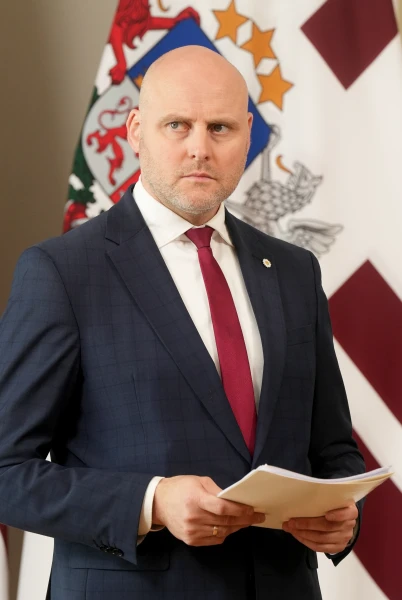
Against this backdrop, auditors reported to the Saeima's Commission on Audits and Public Expenditures, led by Gatis Liepiņš ("New Unity"):
- Rising construction costs significantly reduce the financial benefits of energy efficiency;
- Responsible institutions do not utilize all available opportunities to attract financing, which would provide more favorable conditions for supporting energy efficiency projects;
- There is a lack of a targeted mechanism for providing support to low-income households to reduce the burden of housing benefits on municipal budgets in the long term;
- The necessary service of quality project management for renovation creates a disproportionate burden for apartment owners;
- Responsible institutions and local governments actively inform residents, but do not sufficiently engage businesses operating in residential buildings, so apartment owners are unaware of insulation opportunities.
How Much Is a Square Meter?
"There is a very large variation in project costs," the auditors found. If the lower limit of insulation is quite reasonable, around 60 euros, the upper limit is more than 1,200 euros per square meter, already comparable to the cost of the apartment itself. Just to illustrate — here is an advertisement for the sale of a one-room apartment in Vecmilgravis, in a building renovated in 2024 — about 855 euros per square meter.
Similarly, repair prices vary in different regions — Kurzeme appears cheaper (205.01 euros/m² in Liepāja), significantly more expensive in Vidzeme (Valka region - 414.34 euros/m²). It is also very expensive in seemingly low-income Latgale (Rēzekne — 409.77 euros/m²). Riga is closer to the upper level — 370.43 euros/m².
Likewise, the cost expression of energy savings is not obvious, as the lower limit of savings per megawatt is 1,609 euros, while the upper limit is 31,711 euros. On average, it turned out to be 4,032 euros/mW.
The cost of construction work in Latvia has increased by 52% over the past 7 years, but in terms of energy efficiency, the increase has been even higher, by a full 127%. This is quite understandable — builders know very well that they are dealing with desperate people who have been forced to fit into schemes for utilizing bad European money. And they have nowhere to go.
"Rising construction costs significantly reduce the financial benefits of energy efficiency," states the State Audit Office. According to surveys of residents who have already insulated, in 61% of cases, the heating price has decreased. However, in 27% it is noted that it has only decreased slightly, 8% — remained unchanged, and in 4% — even increased!
Moreover, loan repayments must be made not only during the heating season. But year-round. In particular, for the aforementioned "one-room apartment" in Vecmilgravis with an area of 31 sq. m, this adds 60 euros per month. Therefore, when considering the reduction in heating expenses and loan repayments, a total decrease in heating bills is observed only in 39% of residents.
As one of the possible state moves to stimulate energy efficiency, the State Audit Office proposed to ALTUM — to lower interest rates on loans. Currently, they are 3.9% per annum, with a 20-year repayment term. If reduced to 3%, this would lead to net savings for more than half of borrowers.
However, even with such an unprecedented generosity from the state, only 54% of all participants in insulation programs will see at least a small plus in their wallets. So, essentially, it turns out to make no difference — either we pay energy companies, but only in the cold season, or year-round — builders and bankers.





Leave a comment