
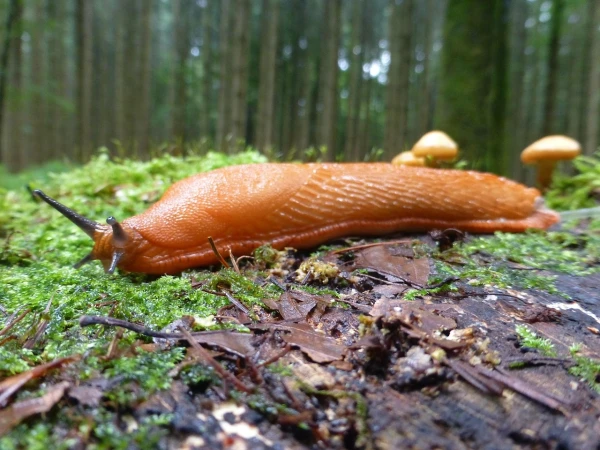
Zoologist and representative of the Latvian Museum of Nature Inta Lange stated that the snow cover warms the plants, the surface of the ground, and the slugs, thereby refuting the assumption that severe frosts this winter could reduce the population of the invasive species — the Spanish slug.
"Remember that the snow cover warms the plants and the surface of the ground, as well as warms the slugs," she said in an interview with the program TV3 '900 Seconds' on Wednesday, February 18.
Lange reminded that such a winter as this year — with sub-zero temperatures and snow cover — is completely normal for Latvia.
"It is important to remember that slugs do not hibernate just anywhere. Usually, we see them crawling on the surface of the ground, but in winter they crawl into burrows, dig into the ground, into mole holes and rodent burrows, and there they feel good, they can lay eggs," the specialist explained.
Frost without snow is more harmful to mosquitoes and other insects, as well as slugs — severe cold in the absence of snow.
"Just like with people, when we worry that everything in the garden will freeze, mosquitoes and ticks freeze faster too," noted the zoologist.
This year, snow fell before the top layer of soil had a chance to freeze. This means that the ground has not frozen much under the snow. For forest animals, such weather conditions are also favorable, as necessary food for survival can be found under the loose snow.
"People definitely do not need to rush to help birds, animals, and nature. There are no extreme conditions right now. Everyone living in Latvia — both plants and animals — is in a normal climate zone. The fact that it is winter and there are sub-zero temperatures is completely normal," emphasized the representative of the Latvian Museum of Nature.
More concern should be given to what spring will be like. Nature can be harmed if there are both thaws and sharp drops in temperature in spring.













Leave a comment