
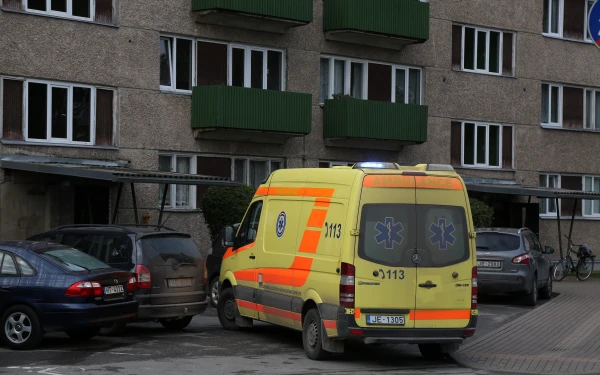
The ambulance is required to arrive at the call: in state cities of Latvia within 12 minutes, in regional centers – within 15 minutes, in rural areas – within 25 minutes. But what is the reality?
Delay is akin to death
The waiting time for an ambulance is like a death sentence, as in the villages, hamlets, and rural areas, the target group for emergency services remains – elderly people with chronic illnesses. And even if a patient can be stabilized for transport to a hospital, there are still dozens of kilometers ahead on dreadful provincial roads...
The most careful drivers work in Rēzekne. The Emergency Medical Service (NMPD) summarized the data on call responses: in 2025, the highest performance rate, in the literal sense, was demonstrated by ambulances in Rēzekne – 91%. The result from Daugavpils also looks quite respectable – 82%.
Unfortunately, the ambulances based in Riga in Imanta timely responded to only 63% of high and highest priority calls. Of course, this does not mean that the other calls were left unattended.
In Rēzekne, the average response time of the ambulance to calls to 112 and 113 was achieved at just 11.7 minutes. This is the second place in Latvia, after the "Kraste" station in Riga.
What, where, and how many
-
In Daugavpils, there are a total of 10 ambulances,
-
in Rēzekne and Jēkabpils – 4;
-
in Krāslava – 3;
-
in Līvāni, Balvi, Preiļi, and Ludza – 2 ambulances each.
The most challenging situation for a patient would be to find themselves, for example, between Lūbāna and Tilža. The distance by highway is 64 or 68 km (depending on the route), and in each of the settlements, there is only 1 ambulance (!) for emergency medical assistance.
In Latgale, as in the rest of Latvia, about 50% of all ambulance patients are taken to hospitals. Meanwhile, according to NMPD statistics, the region currently accounts for 10-14 percent of all calls in the country.
Is reduction necessary or inevitable?
NMPD Director Liene Cīpule noted that in 2025, the number of night ambulances was reduced everywhere, including in Latgale. However, young personnel will come to the rescue – in Rēzekne, the college is training medical assistants, while in Daugavpils, the 4th year of training is provided specifically for the ambulance specialization. But!
– The annual expenses of one ambulance team are about half a million euros. We need to meticulously assess the location of each team. So far, there is no indication that new ambulance teams need to be created in Latgale. If there are any changes in the hospital network, we are definitely ready to respond!









Leave a comment