
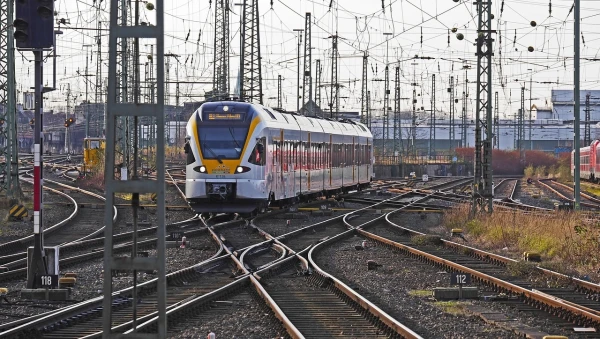
Latvia may start renting diesel trains produced by the Swiss company Stadler from Estonia, said Raitis Nešpors, chairman of the board of JSC "Pasažieru vilciens" (PV), operating under the brand Vivi, in an interview with LETA.
He noted that the Estonian passenger train operator Eesti Liinirongid, operating under the brand Elron, has acquired electric trains from the Czech company Škoda and is currently electrifying railway lines, so theoretically, the Estonians will have diesel Stadler trains available.
When asked about the possibility of Latvia purchasing these trains, Nešpors replied that first, it is necessary to talk about renting, as the new electric trains still need to be fully put into operation, which means the need to keep backup options, and the Estonians are not yet ready to completely abandon their fleet of diesel trains.
"Right now we are talking about renting, and it is possible that the first two trains will be available to Latvia as early as next year," he added.
Nešpors explained that on the electrified lines in Latvia, with the new 32 Škoda electric trains, there will be no need for new rolling stock for the next 20 years. However, in the non-electrified zone, there are currently 23 diesel trains in operation, and according to PV estimates, 28 sets will be needed in the next 10–15 years.
"Thus, there is no need to significantly increase the number of diesel trains, but the question is about the level of service. In the summer, there is no air conditioning in the diesel trains, and in winter, it can be cold on the first trips because the old trains need time to warm up. Unfortunately, if passengers do not see improvements, they may return to other modes of transport," emphasized Nešpors.
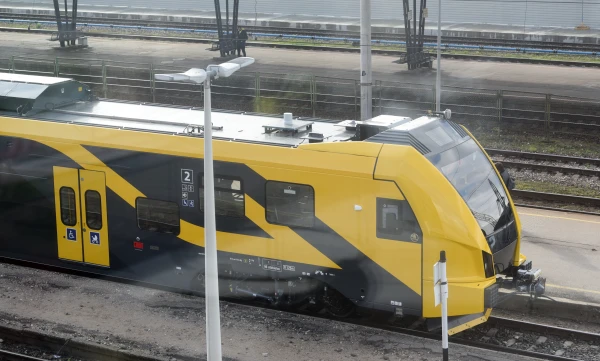
He also reported that a decision has been made to complete the procurement of battery-operated trains (BEMU). It is planned that the contract may be signed by the end of the year, after which production will begin. By 2029, Latvia is expected to receive nine such trains, with the possibility of acquiring six more if funding is found.
"Thus, we can expect 15 battery trains, which will allow us to replace a large part of the current fleet of diesel trains," added Nešpors.
At the same time, he acknowledged that PV is cooperating with train operators in Lithuania and Estonia and is also seeking various funding opportunities to replace the remaining old fleet of diesel trains, as the current funding period from EU funds has already ended.
As previously reported, new electric trains from the Czech company Škoda began operating in Estonia at the end of November this year.
Elron purchased a total of 16 electric trains from Škoda Group: 11 for intercity services and five for suburban services. The total purchase amount was 146 million euros.
Elron also uses trains produced by the Swiss company Stadler, supplied between 2012 and 2014.
It was previously reported that Latvia transported a total of 19.445 million passengers by rail last year, which is 13.5% more than in 2023 and 5.3% more than before the pandemic in 2019.
It was also reported that in mid-December 2023, PV began passenger transport on electric trains produced by the Czech company Škoda Vagonka. Prior to this, the trains underwent extensive testing on the Latvian railway infrastructure. Despite this, in December 2023 and January 2024, the new trains regularly faced various technical problems.
JSC "Pasažieru vilciens" was established in 2001 by separating domestic passenger transport from the functions of LDz. Previously, PV was 100% owned by LDz, but in October 2008 it was transformed into a state enterprise.










Leave a comment