
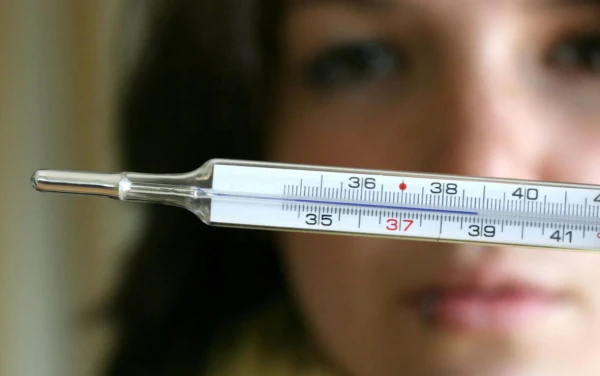
The situation where the thermometer shows elevated temperature while feeling well is quite common. Medical professionals explain that in many cases, this is not a cause for panic, but ignoring such a signal from the body is not advisable.
Elevated temperature without symptoms does not always indicate illness and can be a physiological response of the body.
Stress, medications, hidden infections, and autoimmune processes are among the most common causes of subfebrile temperature.
Doctors advise assessing the dynamics of temperature and seeking help if it persists or rises. Elevated body temperature is traditionally associated with a cold or inflammatory process. At the same time, some people experience so-called subfebrile temperature — readings between 36.9–37.2 °C without other symptoms. Specialists note that against the backdrop of stress, anxiety, and constant nervous tension, such reactions have become common.
Why Does Temperature Rise Without a Cold?
Doctors emphasize that there is no universal "norm" for temperature. For some, 37 °C is a variant of physiological norm, while for others, it signals changes in the body. The crucial factor is not the reading itself, but its duration and accompanying circumstances.
When Should You Urgently See a Doctor Due to Elevated Temperature?
In most cases, a short-term increase in temperature resolves on its own. However, there are situations that require immediate medical consultation.
In particular, if:
- the temperature exceeds 38 °C in infants under three months;
- exceeds 38.9 °C in children aged 3 to 6 months;
- rises above 38.9 °C in children under two years for more than a day;
- the temperature appeared after the child was left in a closed car in the sun;
- fever persists for more than three days in children of any age;
- readings exceed 39.4 °C in adults.
Such conditions may indicate serious disorders and require examination.
Why Can Temperature Rise Without Symptoms?
Stress and Anxiety
Psychogenic fever is a well-known phenomenon. Chronic emotional tension can raise the temperature by 0.3–0.7 °C even without infection. This is more often observed in young people and those with high sensitivity to stress.
Side Effects of Medications
Seven to ten days after starting a new medication, so-called drug fever may occur. It is most commonly associated with antibiotics, blood pressure medications, and anticonvulsants.
Viral Infections in Atypical Form
Acute respiratory infections, influenza, or mononucleosis sometimes begin only with an increase in temperature, without cough or runny nose, especially in individuals with weakened immunity.
Autoimmune Processes
Rheumatoid arthritis or multiple sclerosis may manifest for a long time only with subfebrile temperature, which is a result of chronic inflammation.
Oncological Diseases
Some forms of leukemia and lymphomas in early stages may sometimes be accompanied by prolonged elevated temperature without other symptoms.
Bacterial Infections in Early Development
For example, tuberculosis may begin with slight fever and general weakness.
Doctors also mention reactions to vaccination and cases of fever of unknown origin, where even after examinations, a clear cause cannot be established.
What to Do If the Temperature Is Elevated but There Are No Other Symptoms?
In the absence of alarming signs, medical professionals advise against rushing into self-treatment. It is important to normalize sleep, reduce stress levels, drink enough fluids, and monitor the dynamics of the readings.
If the temperature rises, persists for a long time, or new symptoms appear — it is advisable to consult a doctor for examination and basic tests.












Leave a comment