
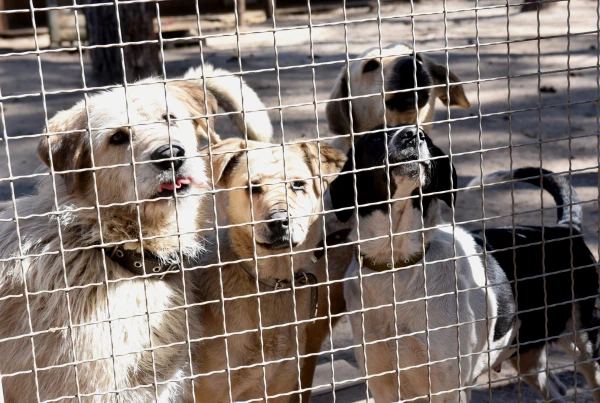
Many laws have been enacted in the field of animal protection, but regulatory authorities are failing to fulfill their duties, and society's responsibility for the fate of animals remains low, writes Latvijas Avīze.
This is how animal rescuers assess the situation.
In Latvia, there are still many dogs without microchips, street colonies of cats are quickly replenished by new, unsterilized animals abandoned by their previous owners, and shelters are overcrowded. Last year, nearly ten thousand animals ended up in shelters, 3,648 found new homes, and 883 were euthanized. The Kurzeme region stands out in this regard, where 34% of animals were euthanized in 2024.
Previously, the shelter services in the region were provided by the animal protection society "Liberta," located in Priekule. The organization could freely accept stray animals despite not being registered as a shelter with the Food and Veterinary Service. However, this year, new regulations came into effect requiring all non-governmental organizations that systematically house animals in specially equipped facilities and seek new homes for them to be registered as shelters. Therefore, since January 1, "Liberta" lost the right to accept new animals.
"We are moving towards shelter status. Since we received the premises relatively recently, and it was just a roof over our heads, they require huge investments. We built everything according to the old requirements and would have received the status this year, but the law changed, new regulations appeared, so everything has to be redone," said Ilze Saulite, the head of "Liberta," to "Latvijas Avīze."
This year will be spent in a restructuring mode, while "Liberta" continues to care for the existing animals and seek funds. The main construction work is already completed, and the documentation is currently being processed. Initially, the new law was interpreted in such a way that societies were prohibited not only from accepting new animals but also from giving new homes to those already in the shelter. Later, this interpretation changed, and over several months, about 20 out of 70 animals found new owners. Previously, the shelter transferred about 200 animals to new families each year.
"Changes in legislation have greatly affected us because we are almost the only organization in the country that now has to suspend operations and completely restructure the premises," says Saulite.
At the same time, the new requirements actually only affect those organizations that have specially equipped premises, while societies operating in private homes or apartments can continue their activities. "I don’t see how this regulation has changed anything for them - they, as before, accept animals, help them, and transfer them to new families. And I am now the bad person who has to refuse people every day and say - look for help somewhere else, I cannot help," says the head of "Liberta."








Leave a comment