Cape Kolka is one of the most remarkable natural objects in Latvia, the northern tip of the Courland Peninsula, where the open Baltic Sea meets the Gulf of Riga.
This place is a popular tourist destination in Slitere National Park: tourists walk along the pine forest trails, observe bird migrations, admire the meeting of waves during storms, and take photos by the stone embankment.
It is an important site for both nature tourism and the promotion of the cultural heritage of the Livs, attracting visitors from Latvia and abroad year-round.
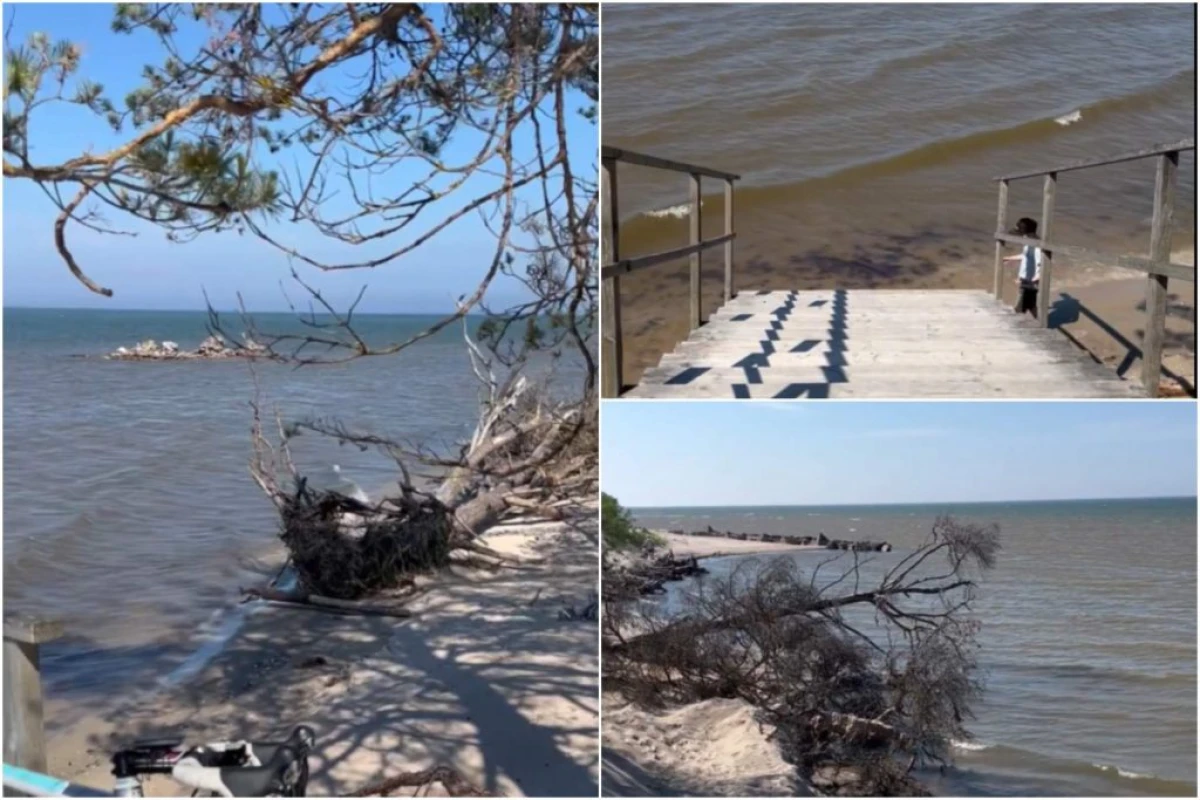
On the social network "X" (formerly "Twitter"), Mārtiņš Ketners posted a video and writes that Cape Kolka seems to have been washed away:
"I don’t know if this is important, but it seems to me that Cape Kolka has been washed away. Well, that is, there is no longer Cape Kolka. There are still photos on Google Maps where you could walk to those stones. And in general, it seems that during the school excursion there was still some distance from those ruins to the water."
Most commentators reassure that this is a normal and cyclical phenomenon. Geology enthusiast @JLapinskis explains that the "tip" of Cape Kolka is a very variable accumulative projection of the shore: "Sometimes it is eroded, sometimes it builds up, but overall, over the last more than 200 years, the cape has a tendency to erode." He points out that the visible ruins of the lighthouse are the "near" lighthouse, while the "far" one has long disappeared. Additionally, the water level is currently slightly elevated (+0.3–0.4 m), which enhances the effect of the "disappeared beach."
Dāvis Valters (@DW_Immurs) agrees: "Everything changes. Definitely, after some time, it will be possible to walk to the lighthouse ruins (the stones) again. It was still possible in October."
He notes that sand can both wash away and accumulate (for example, as in Ventspils).
Other commentators share personal experiences: "The wind will change, there will be a low tide — and you’ll be able to stomp to the stones. This isn’t the first or last time high water has occurred"; "In early May, it was the opposite — the water receded quite a bit."
Some are ironic or seek the positive: "Look on the bright side — the population density in Talsi County will increase" or "Over time, all horns break off!"
Overall, commentators agree that the situation is not dramatic and is typical for such coastal formations — the sea periodically changes the landscape, but tourists can still enjoy the unique atmosphere of Cape Kolka, its trails, and views. The place remains attractive; one just needs to consider the variability of nature.