
Over time, you notice that instead of exploring new spaces, it is much more pleasurable to delve deeper into the already familiar. And to return to your own past. The fifth visit to Vienna at the beginning of the blessed tourist season reminded me of times we seemed to have long lost.
A Station for Two
The train from Schwechat Airport arrives at the Main Station, Hauptbahnhof Wien – a gigantic structure that, even at best, our Rail Baltic will never reach. This is because, since 1918, when Austria-Hungary ceased to exist, Vienna lost its access to the Adriatic – thus, all logistics became predominantly rail-based, the steel highways of this 9-million country form the basis of its economy and lifestyle. Life in the capital revolves around its stations, and this one, launched in the second decade of the 21st century, is the most modern.
No matter how many times we crossed Hauptbahnhof together, we always found something interesting – either a store with unnecessary but beautiful items; or a bakery with crispy warm bagels sprinkled with salt. The station is a place where, at least until 9 PM, you can buy groceries. Other Viennese gastronomes close soon after 7. This is a strange way of working for us – just like the fact that beer, wine, and schnapps can be purchased in supermarkets from the moment they open at 7 AM. One might think, "but we didn’t see any drunks," however, that’s not the case. There are plenty of homeless people, immigrants, and marginalized individuals of all kinds in Vienna, as will be discussed below.
When the new huge station was being built, hundreds of hectares were reclaimed from old sorting tracks, and bold architectural skyscrapers were erected there. It’s somewhat like our Skanstes area, but in Vienna, the results are already visible. The new streets were named after 20th-century thinkers, Popper and Adler. Austrian Jews, who succeeded in emigration, fleeing from the Holocaust, made a significant contribution to the understanding of man and society.
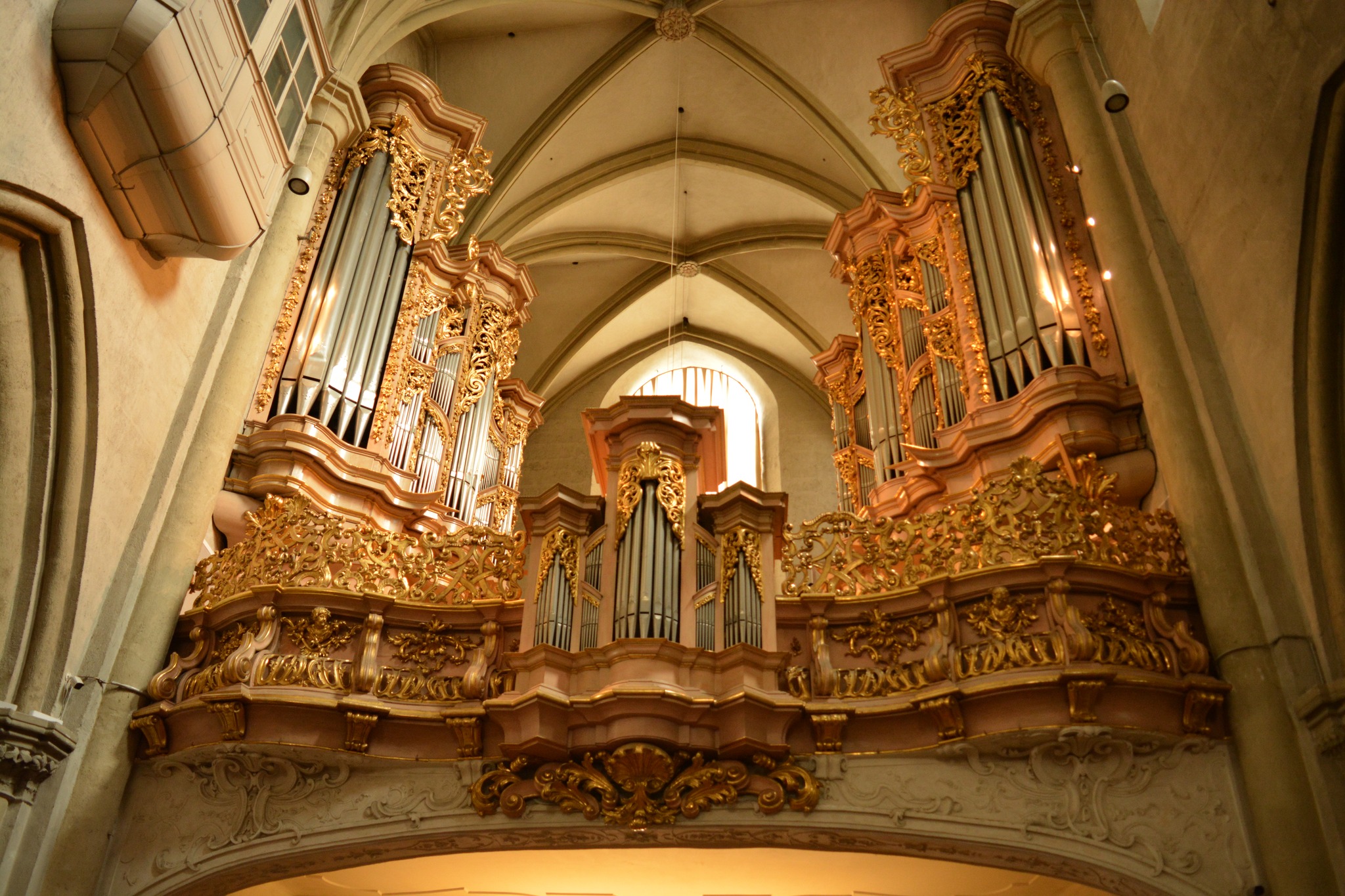
The organ of Michael's Church, built in the early 13th century. Photo by the author.
And now on their "strasse," cheerful individuals from the former Yugoslavia with golden watches on their wrists, and ladies in black scarves walk by. It was interesting to observe the crowd at the D tram stop early in the morning, from the height of the 4th floor of the hotel, where the TV and air conditioning in the room do not work, and the price per person per day approaches a hundred euros. What can you do – many fans of popular music came for the "Eurovision," and apparently, the repairman is one for several hotels. Just like the maid in the rooms – she hasn’t checked in even once. But the outstanding design – everything seems to be made of crates, light bulbs hang on cords, and metal tables and chairs are firmly bolted to the floor. Indeed, our Booking sometimes presents such surprises to independent travelers.
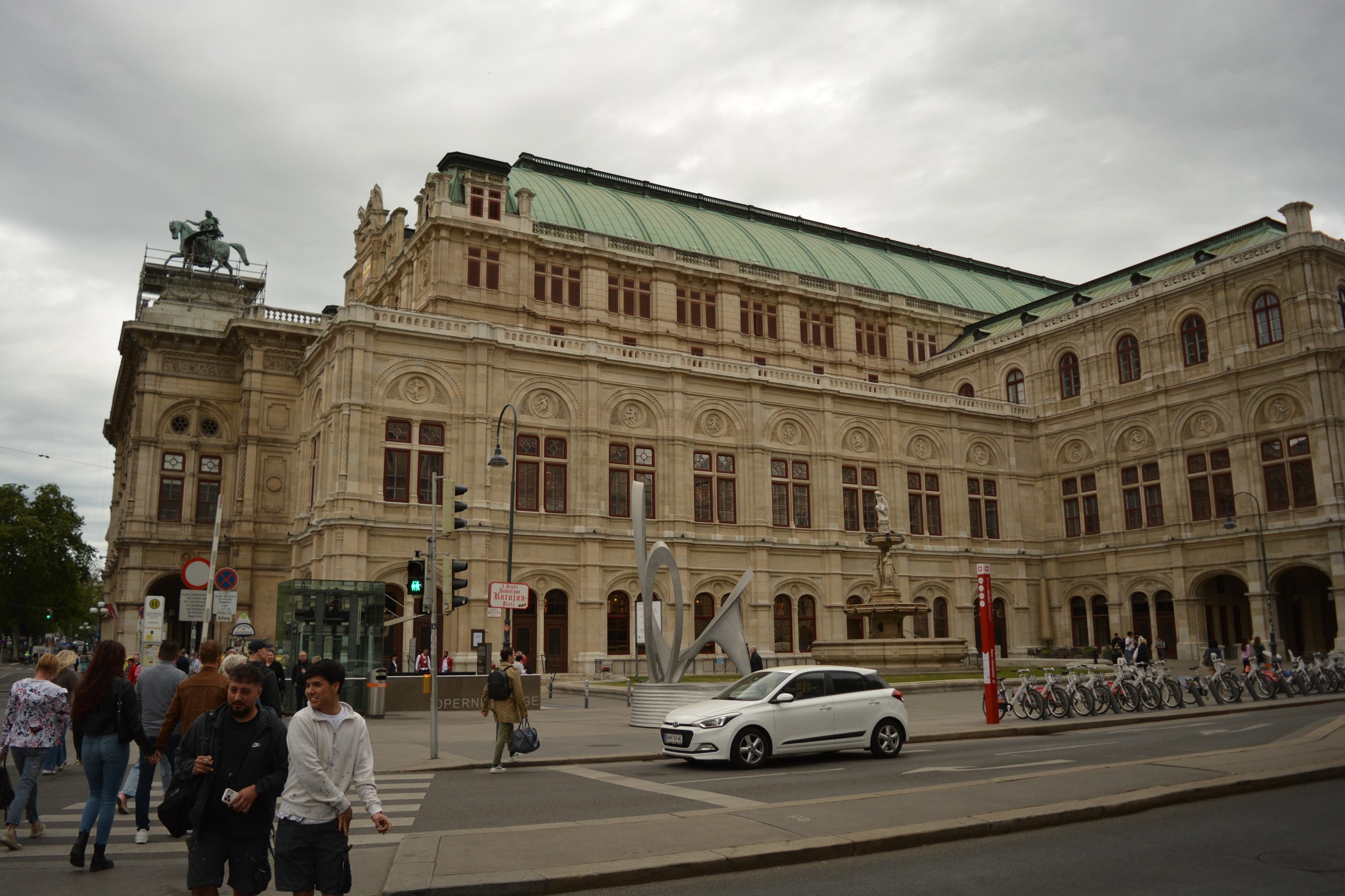
Vienna Opera. Photo by the author.
Vienna's public transport is ideal – but somewhat old-fashioned in terms of payment. Thus, a ticket purchased directly in the tram or at the metro station with our payment card must be immediately inserted into the validator to receive an ink imprint. You can ride underground as much as you want, even all day, but if you exit after just five minutes, the ticket is already invalid.
However, in the national pride of the great Russian, you look at the screen where, under the white-blue-red flag, in the pure language of Pushkin and Putin, the nuances of ticket purchasing are explained. How about that!
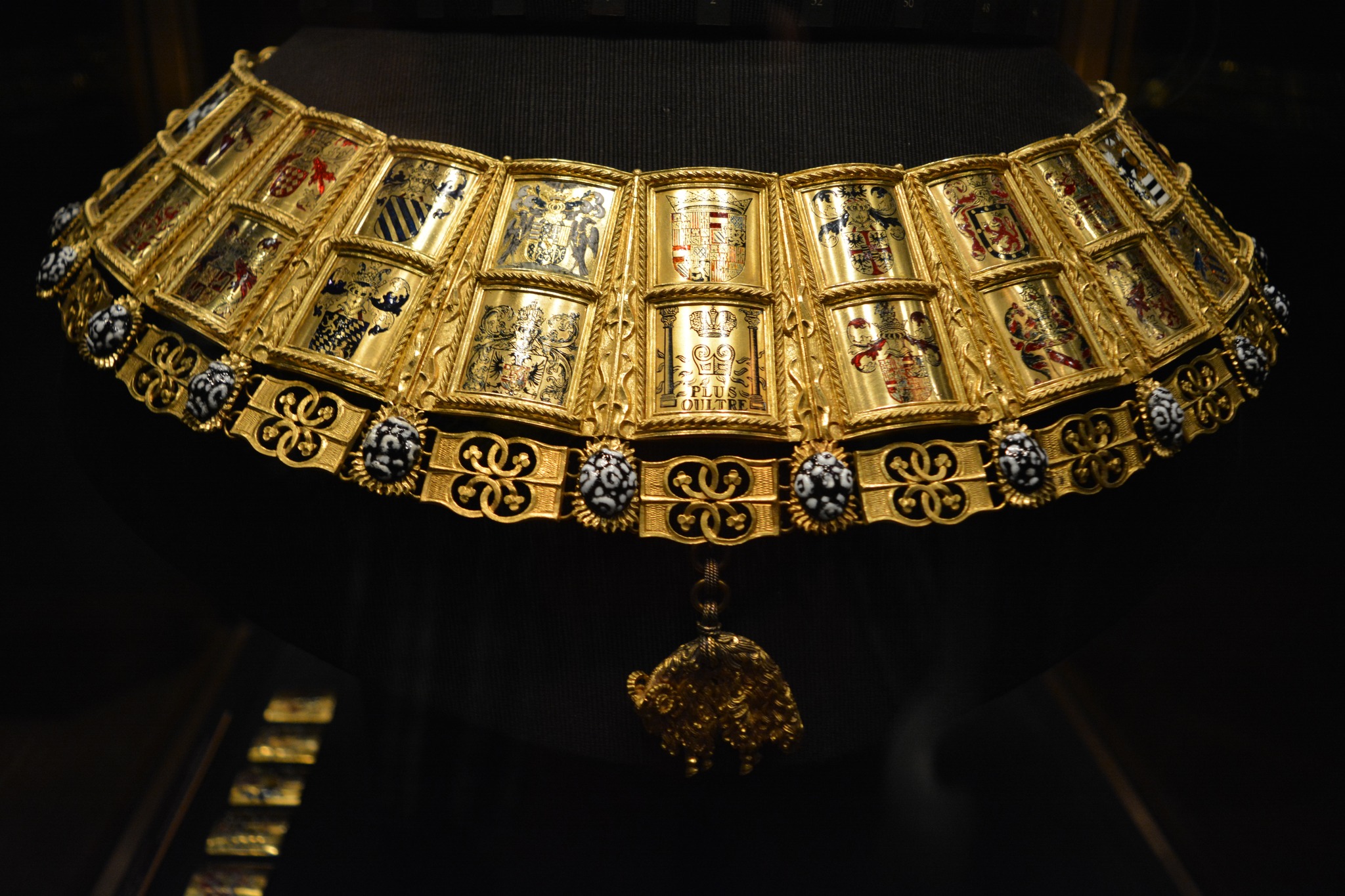
So this is what you are, the Golden Fleece! Photo by the author.
Show Us Your Treasures
Currently, 1.9 million Vienna consists of only 900,000 native Austrians. Although, of course, they can originate from various tribes. For example, the federal chancellor and great friend of the USSR, Bruno Kreisky, was of Jewish descent, the famous saboteur "Scarface" Otto Skorzeny was Polish, and the paradoxical expressionist artist Oscar Kokoschka was Czech. So finding 100% "German Austrians" will be quite difficult.
In the rest of the population, first and second-generation immigrants predominate. Firstly, representatives of Islam; secondly, strangely enough, Orthodox Christians (Serbs, Montenegrins, and in recent years Ukrainians); thirdly, of course, residents of South and Southeast Asia. But since all these ethnicities are roughly equal, no one particularly dominates – and Vienna creates a pleasant, albeit visually dark, mix of people. Here’s a Chinese family – a husband, wife, a child in arms, and a child in a stroller, examining the dark hall of the Habsburg treasury in the Hofburg Palace, the golden relics of the Carolingians from the 10th century. And they, in the Celestial Empire, have been ruled by emperors for about three thousand years. Well, for our brother, we compare: yes, Kyiv already existed, but in the place of Riga, at best, there was a Livonian settlement.
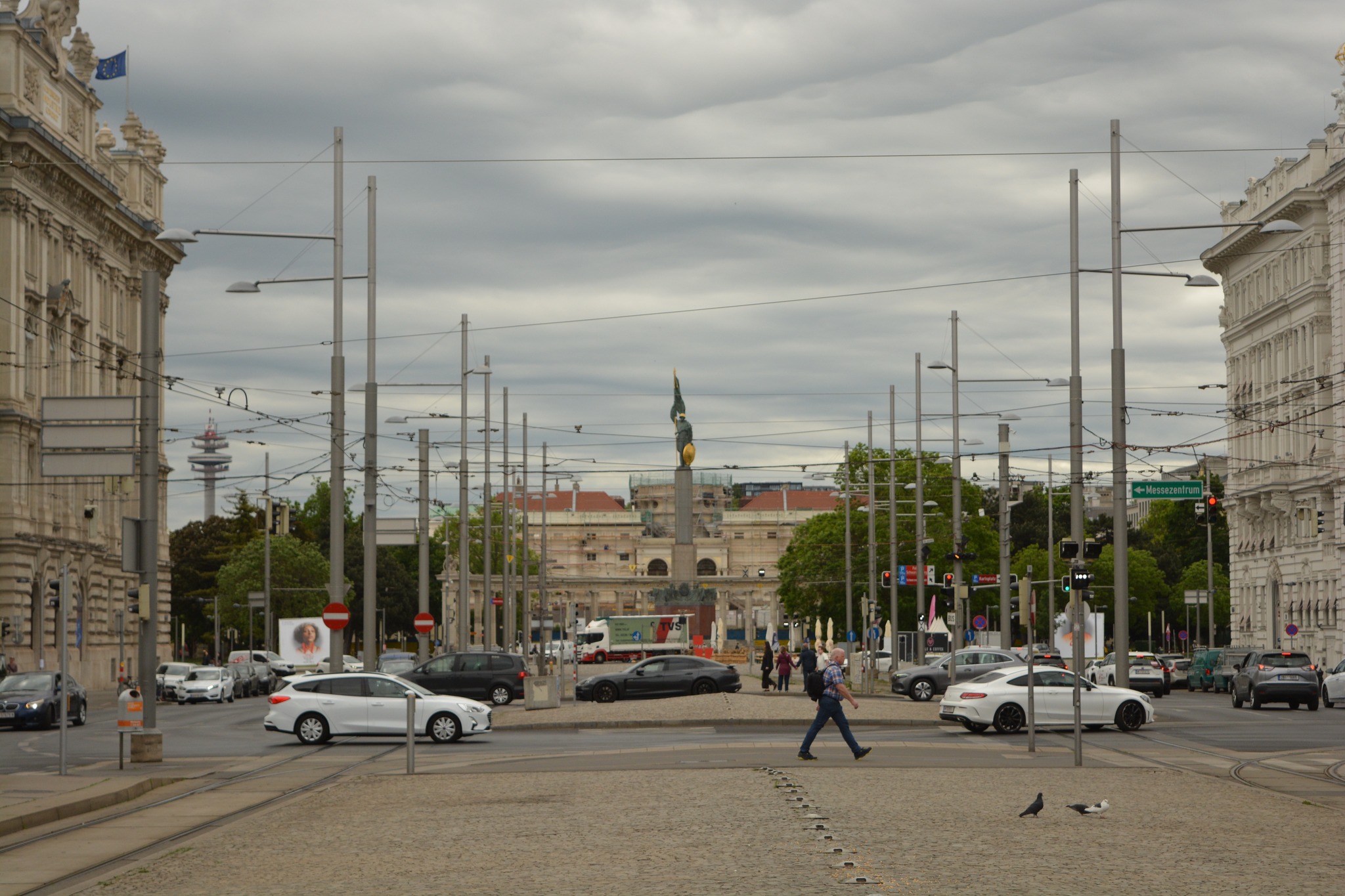
A Soviet soldier in the capital's perspective. Photo by the author.
Incomprehensible wealth – both in purely financial and essential senses – is now displayed in the gloomy storerooms of the Austrian court residence. Probably, it is here that the quintessence of this monarchy is contained, which held the geopolitical axis of Europe for centuries. Once an ally, then an opponent of Russia – but without relations with which Russian history from the 18th to the early 20th century cannot be imagined.
Gloomy portraits of medieval emperors; extensive canvases of coronations with hundreds of meticulously drawn faces; crowns and mantles that seem to be intended not for living people, but simply for display… And you look at the dating – well, let’s say, the sixteenth century. The Vatican, the Armory Chamber of the Kremlin – where else in Europe can you see such things? Certainly not in the Museum of the History of Latvia.
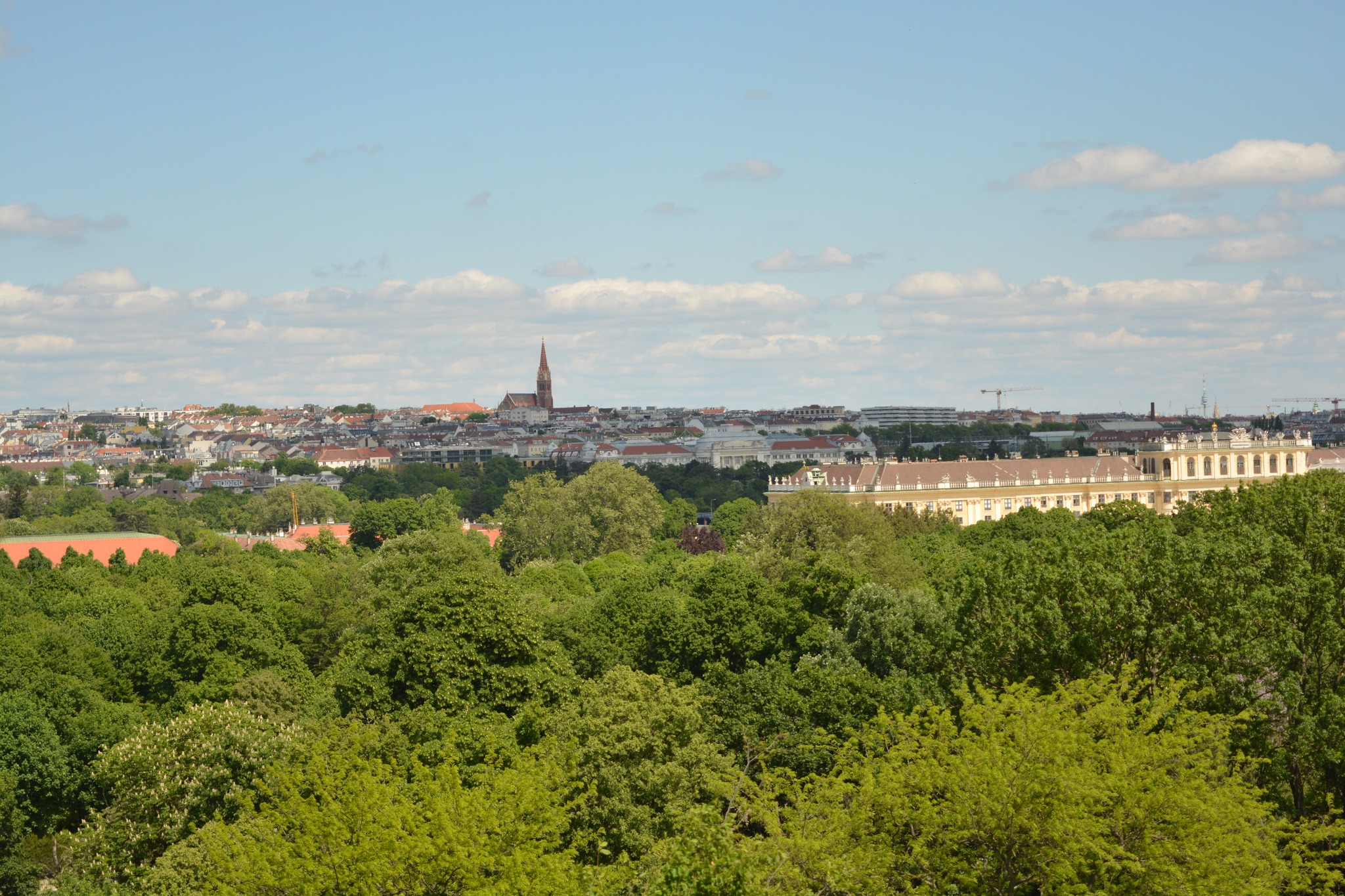
Vienna is a very green city. Photo by the author.
Empress Elisabeth of Bavaria, or Sisi (1837-1898) – the most promoted Habsburg brand. She is dedicated to liqueurs, fans, and perfumes with soap. This is because the wife of Franz Joseph, outstanding in mind and beauty (in the years of her reign, she tamed her body with strict diets and gymnastics), opposed herself to the Viennese court and ultimately fell victim to the sharpened file of an Italian anarchist on the shores of Lake Geneva. The dramatic fate of the unfortunate Sisi is dedicated to, among others, a book in Russian. I flip through it on the shelf of the museum shop, and next to it is also a Russian-language album about Vienna. Not from ancient times, published in 2025 – however!
Schönbrunn Palace, the Lives of Remarkable Animals
It’s best to spend a sunny day here when the sun is already scorching above 25, and the cheerful cries of animals spread around the vast yellow palace (now private property, rented for various events).
Vienna is the home of elephants, sea lions, pelicans, penguins, adders, and other incredible creatures, whose lives can be tracked in conditions close to nature at Tiergarten Schönbrunn. Personally, I enjoyed interacting with a pair of thinking crows, Rufus and Munia, who allowed me to film a couple of videos with jumps, poses, and cawing for nuts and seeds.
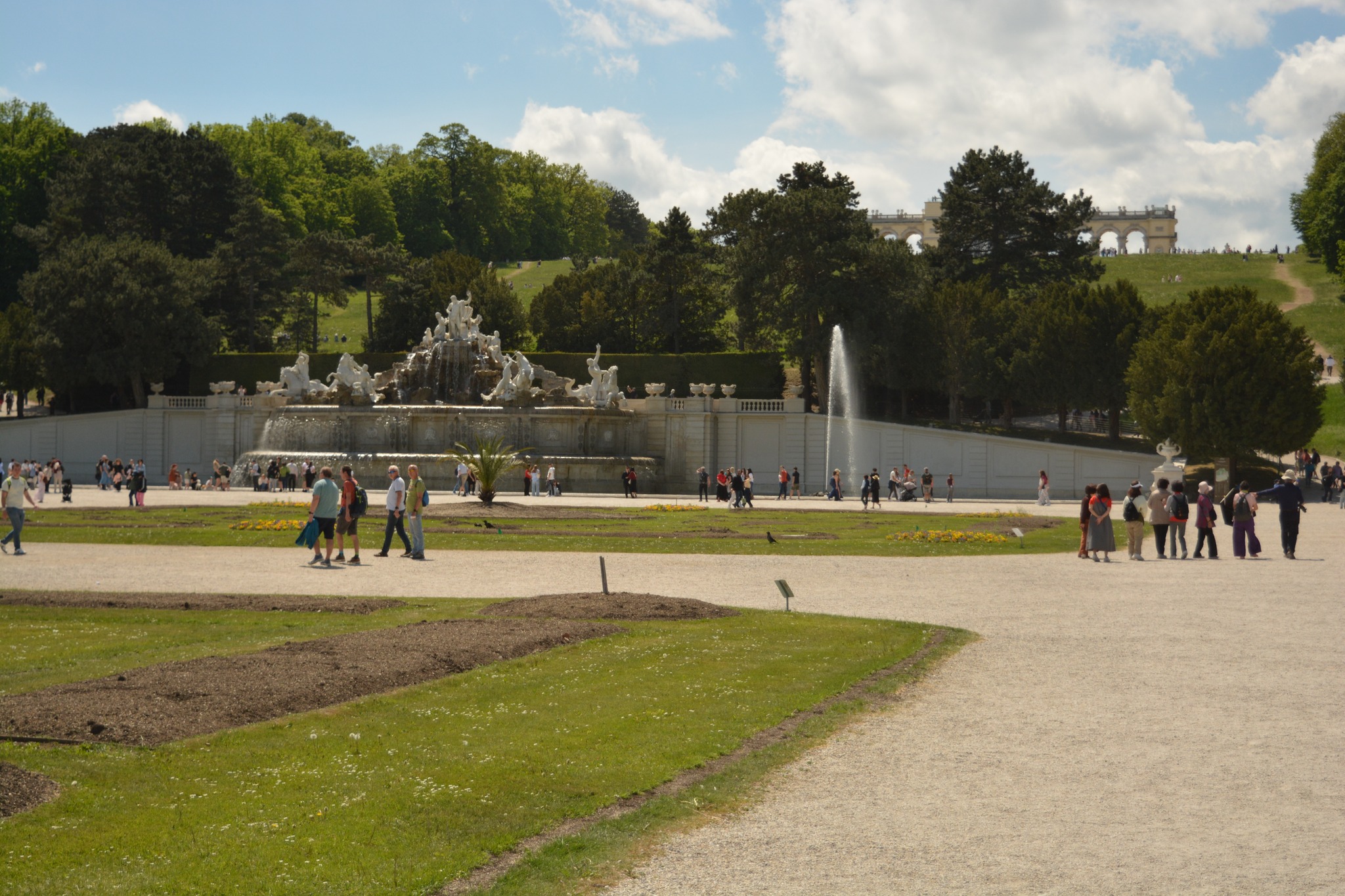
A beautiful fountain at Schönbrunn. Photo by the author.
Schönbrunn translates from German as "beautiful spring" or "pretty well." This name comes from the artesian well that was used by the Habsburg imperial court. The first mentions of a structure on the site of the current palace date back to the 14th century. According to legend, Emperor Matthias stumbled upon wonderful springs during a hunt in 1612, which later gave the palace its current name, near which the majestic Neptune fountain still stands today.
Water All Around
The outstanding water characteristics of Vienna deserve special admiration. Here, the best H2O among all European capitals – so you can safely drink from the tap, and it will always be tasty and cold. The water flowing from the Alps is not chlorinated, only subjected to "smart" filtration just in case. Consequently, this foundation lies in all the nutrition, metabolism of the local people, which is why they have a very flourishing appearance and rather moderate temperaments. This, in our opinion, is the secret of the prosperity of Austrians.
As for the Danube, the largest water artery of Europe, celebrated in Schubert’s waltzes, crossing 10 countries – from Germany to Ukraine can be reached by boat – within Vienna, it splits into several channels. There is no single grand ensemble like in Budapest, although a business quarter of skyscrapers has been built along the bank of one of the branches.
The islands, however, remarkably resemble our Zakusala and Lucavsala – varying degrees of comfort and neglected embankments, an optional, vagabond population with sprinklings of rare tourists, and expensive cafes. What can be said – it’s worth seeing, but it’s a one-time pleasure. You can get off at the metro stops Alte Donau (Old Danube, line U1) and Neue Donau (New Danube, line U6). Or "Donauinsel" (Danube Island) – an above-ground elevated station on line U1, located in the 22nd district of Donaustadt on the artificial island of the same name in the middle of the Danube.
By the way, regarding district numbers – in Vienna, they are always indicated in front of street signs. Locals know, for example, that the 10th, Favoriten, is traditionally considered sketchy. Having been annexed to the capital only in 1874, it is still something like our Moskachka. Former proletarian quarters are now inhabited by immigrants, and by population, it is the first in the city – over 200,000 people. Well, I don’t know about others – but we quite liked it.
Memory of Tragedy
On the eve of the parade of various, sometimes tasteless pop music at "Eurovision," we managed to attend a grand open-air concert, which in memory of the victims of World War II was opened by the Federal President of Austria, Alexander Van der Bellen. The descendant of a Dutch aristocrat was born at the Russian court in 1944, at a time when the Ostmark land was a collective formation with the Third Reich, and its representatives were fighting fiercely on the fronts.
It was the Austrian division that stormed the Brest Fortress on June 22, and the mountaineers of the "Edelweiss" division were largely recruited from local highlanders. Not to mention that the mad Führer was from the town of Braunau, near Linz – and lived the first 23 years in Austria. Ah, it’s a pity that the professors of the Vienna Academy rejected the unfortunate painter; there would have been another artist in the word "bad," not an inspirer and organizer of mass murders.
Austria, however, positions itself as the first victim of Nazism – and the concentration camp Mauthausen located here gave its name to the foundation conducting mass events. Its symbolism is dominated by red – both as the national red-white-red flag (the color is truly scarlet, lighter than Latvia’s), and as the red triangle used in camps to mark communists.
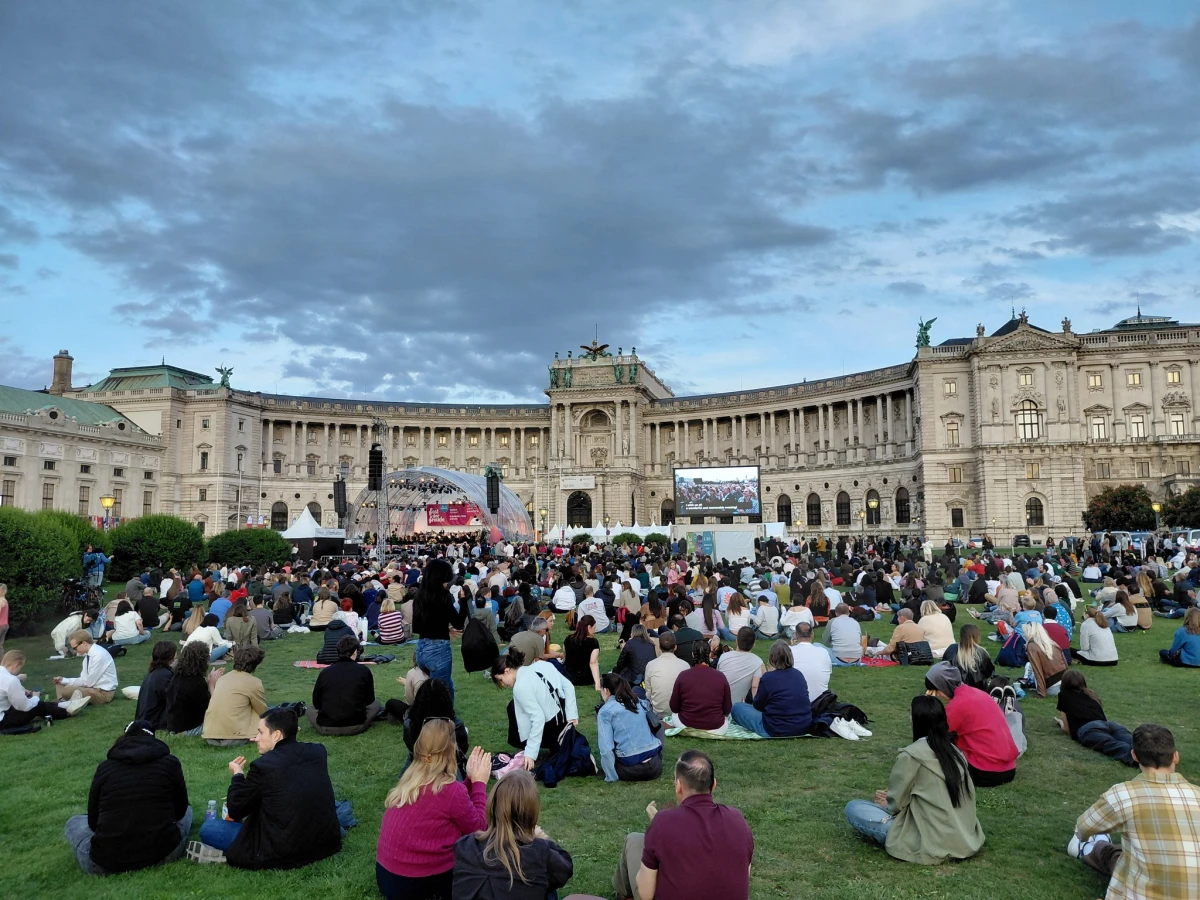
The president firmly condemned totalitarianism and war in a voice that did not reveal his age, presenting several truly elderly people, now close to 100 – former child prisoners. And then the Vienna Symphony played, so much so that it sent shivers down the spine. All this took place against the backdrop of the evening sky over the monumental palace of the emperors, at the hooves of the equestrian monuments, and the 200-year-old colonnade of the fortress gates, which now symbolizes the memory of all the killed Austrian soldiers.
Returning from the emotional concert, we passed by a fountain illuminated in purple on the tram. In the already fallen darkness, reflections fell on the golden shield of a soldier of the Red Army, whose monument was erected in the very center of Vienna back in August 1945, even before the formal end of World War II. Workers were setting up benches near the monument – an event from the Russian embassy was approaching. The next day, several hundred people walked down the central street of Vienna with flags of the USSR, the Russian Federation, Belarus, and the St. George ribbon. Local authorities limited themselves to three police cars at the tail of the column.
VICTIMS OF THE EMPIRE
In the 18th-19th centuries, starting from the War of the Spanish Succession and up to the Austro-Prussian War, the monarchy lost 1-1.2 million dead and wounded. In World War I – the same amount. And when the former Austria-Hungary was divided, and, so to speak, played for different teams in World War II – about 5 million! The lion's share of this consisted of Holocaust victims, massacres in the Balkans, and in the former Austrian Eastern Galicia...
ALL IN THE NAME OF MAN
Our U4 metro train stopped at Pilgramgasse station and stood for about 10 minutes while the driver and concerned Viennese convinced an unyielding black man not to throw himself under the train. He was shouting in the language of Goethe and Hitler and was trying to break free. Despairing to convince the guest from Africa, the Viennese blocked the movement on that route, and all passengers obediently switched to another route, where trains were launched in both directions.

Leave a comment