
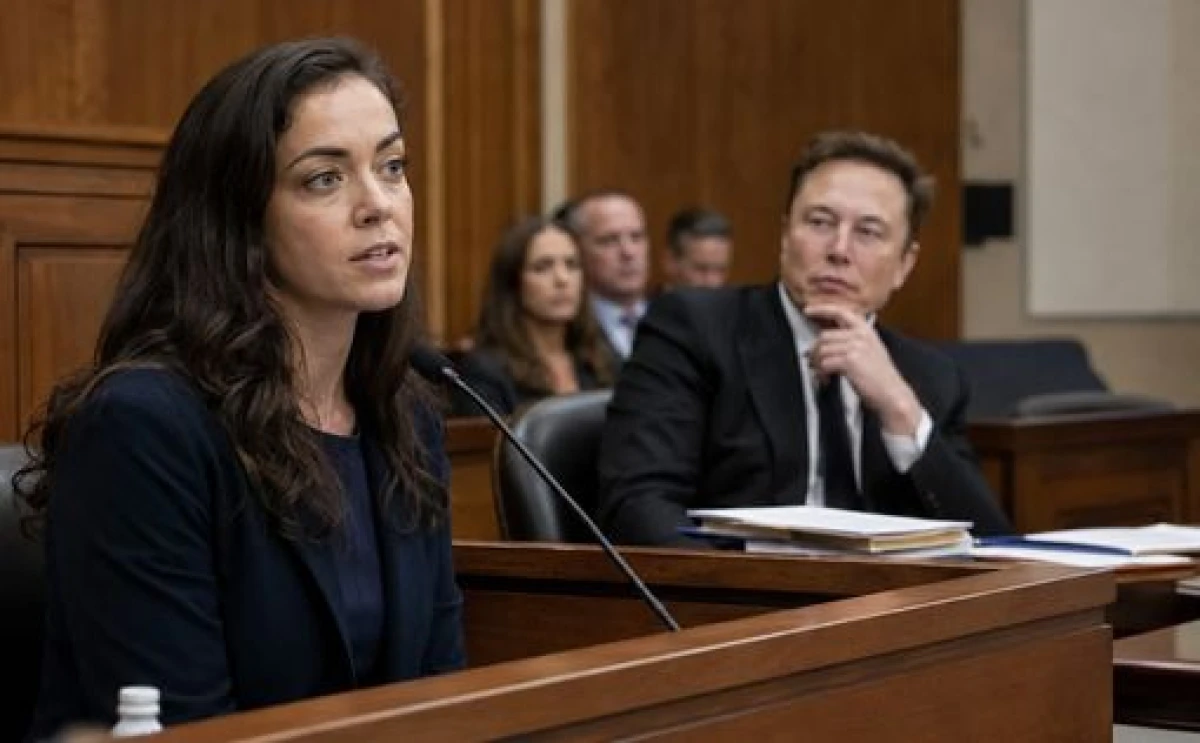
Former OpenAI board member Shivon Zilis testified in federal court in Oakland in the case of Elon Musk against OpenAI. In court, Zilis discussed both early discussions about a possible shift of OpenAI to a commercial model and her personal relationship with Musk, explaining how she became the mother of four of his children, BBC reported.
"I still really wanted to be a mother, and Elon made that proposal around that time, and I accepted it," said Zilis, specifying that in 2020 Musk himself suggested becoming a donor. "He was encouraging everyone around him to have children and noticed that I didn’t have any. He offered to make a donation."
According to Zilis, she had a brief romance with Musk about 10 years ago, but by 2020, there was no longer a romantic relationship between them. As the woman explained, her plans for a traditional family life changed due to health issues.
Zilis claims that it was not initially intended for Musk to be actively involved in the lives of the first two children. They agreed to keep his fatherhood "strictly confidential." Now, according to Zilis, Musk is involved in the lives of all four children, and the family spends several hours together each week.
Due to the confidentiality agreement, Zilis did not inform OpenAI CEO Sam Altman that the twins she gave birth to in 2021 were Musk's children. Altman learned about this when news of a forthcoming Business Insider publication broke.
Zilis worked at Tesla and Neuralink, and joined OpenAI in 2016 as an advisor. She later became a member of the board of directors and held that position from 2020 to 2023.
OpenAI lawyers suggested that after Musk left the company in 2018, Zilis might have been passing information about OpenAI to him. Earlier, OpenAI president Greg Brockman, responding to a question about her role, stated: "We trusted her to keep the conflict with Elon under control."
Zilis stepped down from the OpenAI board in March 2023, when Musk was launching xAI – an artificial intelligence company developing a chatbot to compete with ChatGPT.
The court also discussed letters and messages from Zilis, Altman, Brockman, and Musk regarding a potential restructuring of OpenAI. According to the materials presented, as early as 2017, the company believed that a departure from a fully nonprofit model was necessary for growth and attracting significant investments.
From Zilis's correspondence, it was evident that Musk wanted to gain more control over OpenAI, including additional seats on the board of directors. He also suggested making OpenAI a part of Tesla. In one message, Zilis wrote that such a move "immediately solves the funding issue."
Ultimately, Altman, Brockman, and Ilya Sutskever did not reach an agreement with Musk on the terms. According to a letter from Zilis presented in court, one of the reasons was that they did not want Musk to "gain control" over the operations of OpenAI.
It should be noted that the legal proceedings began on April 28, 2026, and experts in the technology field claim that it could determine the future direction of the artificial intelligence industry.







Leave a comment