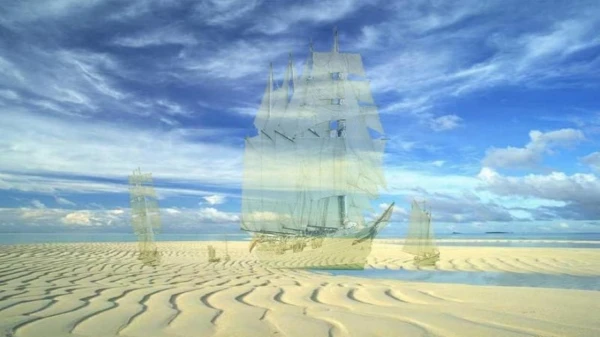
Mirages are one of the most mysterious natural phenomena. On one hand, almost everyone has seen the simplest effect—a "puddle" on a scorching road. On the other hand, there are documented cases where people observed entire cities, castles, and even armies in the sky.
Scientists can explain the basic forms of mirages, but more complex phenomena remain a subject of debate.
How People Have Tried to Explain Mirages
Unusual visions have been reported since ancient times. Particularly many accounts have survived from the time of the Crusades: eyewitnesses described cities and palaces in the sky, but such stories were long considered fabrications.
With the development of navigation, mirages began to be documented in more detail. For example, in 1820, the captain of a whaling ship described a "city" with towers and temples seen off the coast of Greenland. Despite detailed sketches, no evidence of this phenomenon has ever been found.
Later, similar observations were repeated. In the 19th century, residents of islands off the coast of England saw white buildings in the sky several times that did not exist in reality.
Where Mirages Most Often Occur
One of the places where mirages are observed particularly frequently is Alaska. There, cold air and temperature fluctuations create conditions for the appearance of clear and unusual optical effects.
In these regions, regular observations are even conducted: tourists can see how mountains or other objects "appear" on the horizon and then disappear.
Lower Mirage
The most common type is the so-called "lake" or lower mirage. It can be seen on a scorching road when an illusion of water appears ahead.
This happens due to the heating of the surface: warm air near the ground bends light rays, and a person sees a reflection of the sky below, as if there were a body of water in front of them.
Upper Mirage
More complex phenomena are upper mirages, where objects appear to be raised above the horizon. This includes the "flying" cities and castles.
Such effects arise from differences in temperature layers of air, which change the trajectory of light. As a result, objects may appear enlarged, distorted, or located elsewhere.
Side Mirage
There is also a side type of mirage that can be observed near heated surfaces, such as the walls of buildings. In this case, the image appears as a reflection, although in reality, light is refracted in the heated layer of air.
Fata Morgana: The Most Mysterious Effect
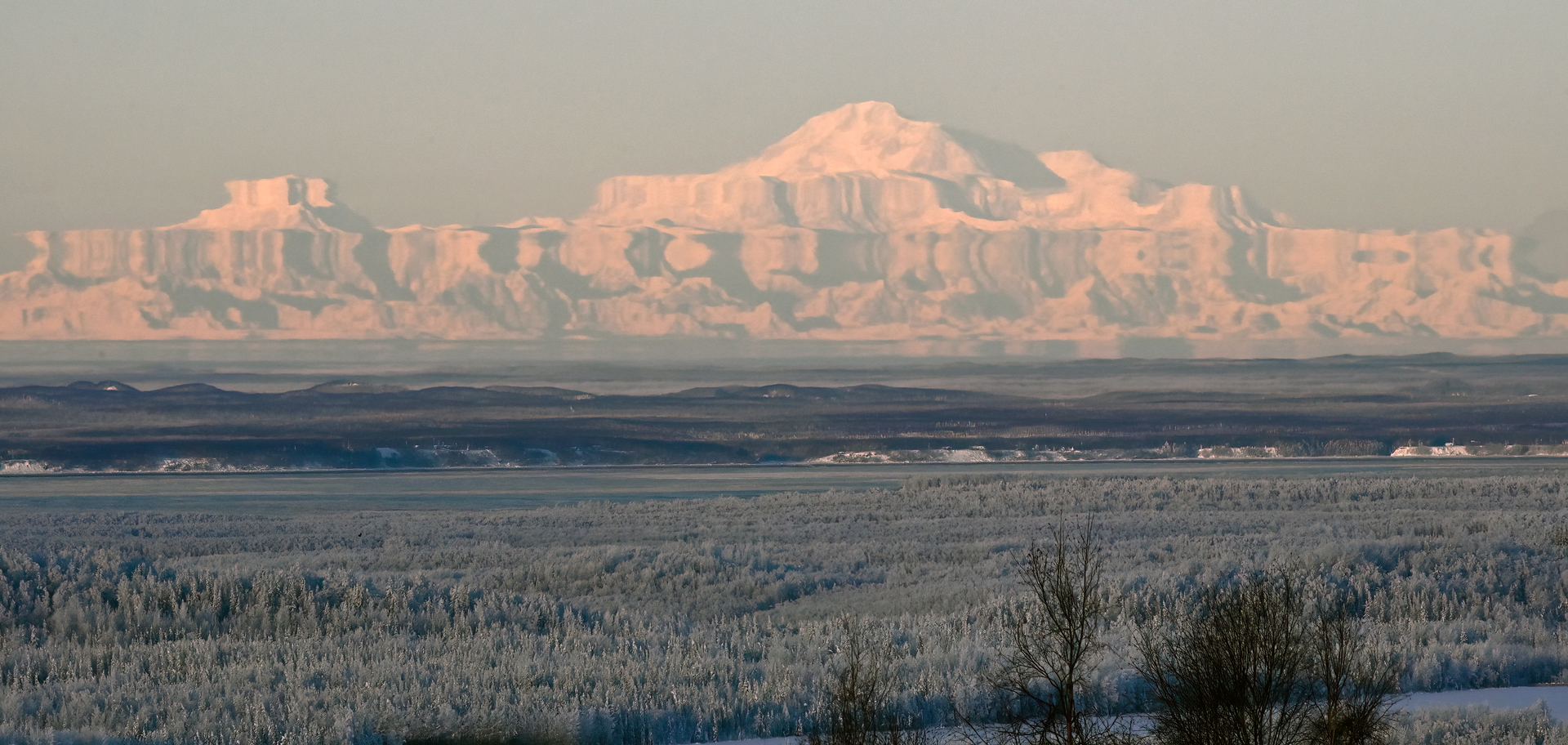
A special type of mirage is called "Fata Morgana." It is associated with the appearance of complex and layered images—cities, ships, or even people.
The name comes from legends about the fairy Morgan, who supposedly creates illusions to mislead travelers.
Even today, such phenomena remain not fully explained. Scientists suggest that they arise from complex temperature gradients in the atmosphere, creating the effect of an "air lens."
Ghost Mirages
Sometimes so-called ghost mirages are observed, where a person sees their own reflection or silhouettes of people in the air.
It is believed that such effects are related to the reflection of light in fog or special atmospheric conditions, but the exact mechanisms have not yet been established.
Why Mirages Cannot Be Fully Studied
The main difficulty lies in their unpredictability. Mirages cannot be summoned at will or reproduced in the laboratory in full.
Therefore, despite the advancement of science, part of these phenomena remains a mystery, and some observations still lack a definitive explanation.