
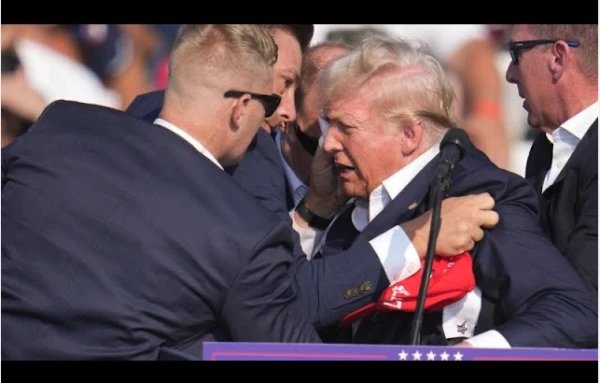
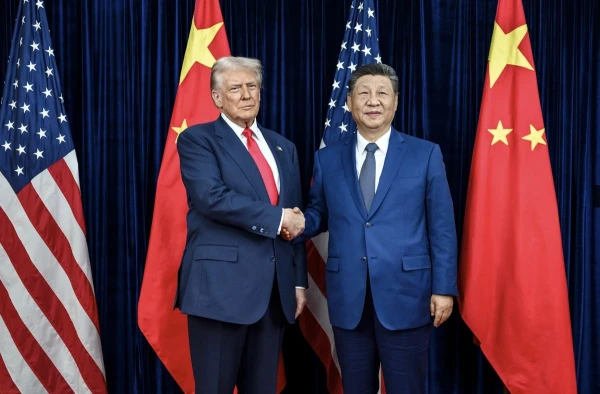
"In the USA, there has been active discussion about what happened to Trump? I see two reasons," writes American scientist and analyst of geopolitical processes Sergey Lopatnikov in his Telegram channel.
Professor Sergey Lopatnikov writes, quote: "1. In the USA, there has been active discussion about what happened to Trump? - I see two reasons:
1.1. The strange visit of Trump to Britain in September 2025, after which his rhetoric regarding Putin changed within a week. In particular, the special relationship of Britain with Iran, Israel, and the Middle East in general is well known.
1.2. I think Netanyahu simply blackmailed Trump with Epstein information. Well, cannibalism - maybe not, - but minors are honestly written all over his face.
1.3. I don’t know, but everything seems peculiar with Iran. The question is whether assumption 1.2 is correct. If it is correct, then the USA, without the elimination of Trump in one form or another, seems unable to get out of the situation. And this really smells like a global economic catastrophe, as Hormuz is Hormuz, firstly, and secondly, the main vulnerability of the Middle East is water, and I see no rational reasons, except tactical ones, why Iran should spare Israel and Sunni states.
At the same time, if this assumption is incorrect or Trump is removed, the USA will get out of the problem and betray Israel. And then Israel's situation is worse than dire. And here arises the question of nuclear weapons seriously. Moreover, I fear, from both sides.
-
I also do not quite understand Russia's position. Europe has made up its mind: it is waging a war to the death. Why, in this situation, does Russia intend to help it? - A mystery of nature. Unless one assumes that during the destruction of Russia, two are dancing - Europe and the Russian authorities. After all, if some believe that the sluggish special military operation is somehow "denazification" of Ukraine, then why not make a symmetrical assumption - that for Russia it is about knocking out enthusiasts. Or, say, conversely: creating an aggressive protest mass within the Russian Federation in the style of 1917.
-
I remember with horror my own forecast in Izvestia from 1998 or 1999 - I need to sort through the boxes with the archive - that a world war will begin in 2025 and will be related to the rearmament of armies with new technologies. But I have mentioned this forecast in my LiveJournal more than once, as far as I remember.
-
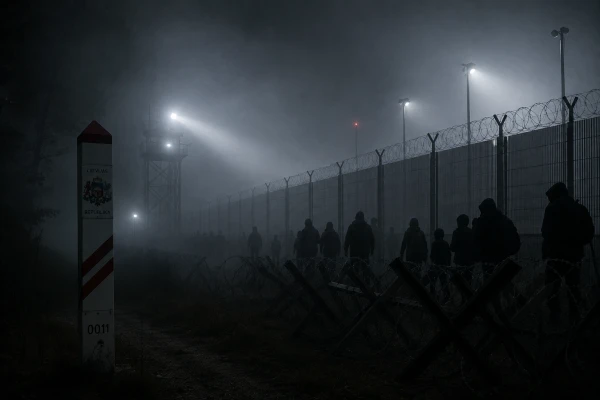
I am very concerned about the situation in the Baltic states. I have been writing about it for a long time, and the situation there is only getting tenser. This is obvious. The main thing is that Russia, it seems, does not even have enough strength for one Ukraine (unless it is really fighting there and not just fooling around). A second front is not great. And if Kazakhstan also joins in joyfully - it will create problems for the Russians in the north... Then, in fact, the western half of the Keitel scenario that I described in the Green Crown will be implemented. And a lot of interesting things can happen all the way to the Far East. What if China remembers the Aigun and Beijing treaties? - Who knows.
The reshaping of the world may go entirely differently than what the Solovyov-style narratives present to the Russian public.
P.S. Kaliningrad could very well be turned into a "Russian Taiwan." I did not want to write about such a possibility. But it is real and likely. I am not sure about the absolute incorruptibility of both the civil and military leadership of the region. In fact, I always look pragmatically and ask the question: "What is the advantage for Kaliningrad to remain part of Russia compared to becoming a strong, politically and economically independent country integrated into the Baltic world?" - I ask - and do not find a convincing answer," emphasized Lopatnikov.
Sergey Lopatnikov is the head of the American laboratory of mathematical modeling methods at the University of Delaware (USA), and a former leading researcher at Moscow State University (MSU). He has been living in the USA since the early 2000s.






Leave a comment