
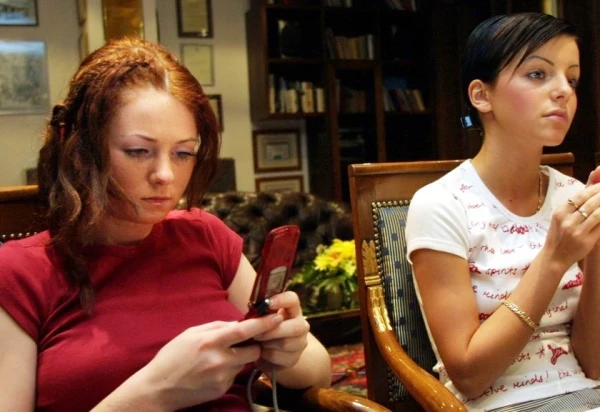
The songs will live on because they are cool, great, and relevant at any time.
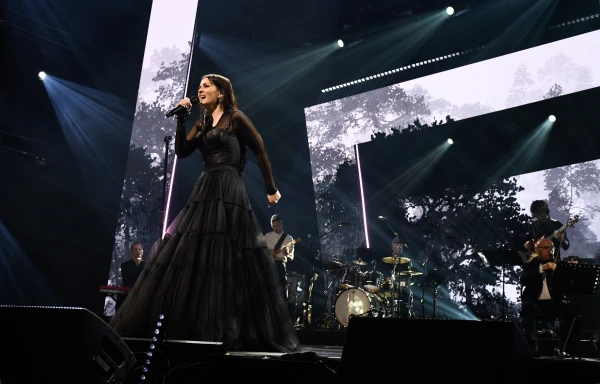
Singer Lena Katina, the lead vocalist of the iconic group 'Tatu', openly talked about how she managed to rebuild her relationship with Yulia Volkova and why they decided to revive their duet. As part of the video project 'To Be Honest', the artist also recalled how her modest wedding at the MFC went and admitted what she regularly asks forgiveness from her son for. In addition, Katina spoke about censorship, recalled an unpleasant story from Eurovision, evaluated the popularity of Vanya Dmitrienko, and shared what fees she received at the peak of her fame.
— In recent years, songs from the 90s and 2000s have been trending, including covers and remixes of them. Artists who were popular back then are making a comeback, including 'Tatu'. You have reunited before, but those were more one-off events, like at the Olympics in Sochi. Now, as I understand it, this is a full-fledged return?
— Yes and no. We returned not because of trends, but because the time simply came. We had a conflict: we initially parted ways in 2009, and then we reunited for the Olympics. We had further plans for joint work, but Yulia and I had a conflict. So, naturally, all of that was canceled. We had a hard time finishing what was needed. But years go by. And the audience, of course, constantly writes: 'Girls, why are you not together?' Yes, Yulia and I have quite successful solo careers, but, of course, a part of the audience will always want and perceive us only when we stand together on stage. It's a completely different chemistry. Apparently, years have passed, we have accumulated some baggage, we have grown up. Some things are forgotten, some are simply pushed aside. And we decided to try again. But for now, everything is going well.
I believe that 'Tatu' is that very group that is outside of trends. When we reunite, then it becomes a trend. Our music is still used in various series, including non-domestic ones. Therefore, of course, this raises popularity, and there will always be interest in our group. Even though we can work together or not, the songs will live on because they are cool, great, and relevant at any time.
— You mentioned a conflict with Yulia. Have you managed to establish friendly relations? Or are they just work-related now?
— We spent 10 years practically in the same room. We are connected by a lot, and of course, we have warm relations. It's hard to call it friendship, and it's also hard to call it super friendship. We just have very good human relations. As for the conflict, we didn't resolve it; I think we just looked each other in the eyes and somehow accepted it. No one apologized. In terms of attitude and communication, it's clear that we have matured during this time, that we have rethought something. With age, there is a reassessment of values. It was all clear from the look. We are now successfully working together.
There were many requests. Of course, fans constantly write, have written, and asked. Then we received a very interesting proposal. Our teams suggested meeting to discuss. We met, discussed, and realized that yes, maybe we can try. And somehow it clicked for us. No one knows how long this reunion will last. Maybe we will argue again tomorrow, maybe we will tour for another 15 years. When people reunite, they don't plan to part ways again in a week, right? We have already come a long way. 'Tatu' is a small life. We lived it, we are living it now, probably a little differently, but nevertheless, it is again a new life.
— If you could go back to the 2000s, would you agree to go through all that again?
— Yes, absolutely, one hundred percent! Without any doubt.
— And, for example, perform at Eurovision?
— Eurovision is my sore subject, but nevertheless, I would still agree and do it again. At that time, it gave me a push for development. I was so dissatisfied with myself that I went to do something about it. If you don't like something, then you need to fix it. Maybe if that hadn't happened, I would have sung differently.
— What were you dissatisfied with?
— Vocally. Not hitting the notes, there was this wild shaking. There was third place, but it should have been first. There was simply a substitution of results, and an official letter came to Channel One that, I believe, England changed the results. At that time, there was a separate audience vote and a separate jury vote. And somehow they changed something. That is, even the audience gave 12 points. At that time, it was the peak of popularity. We were everywhere, including in the UK, at the top of the charts. And suddenly, bam, like this: the UK gives 0 points. But that couldn't have happened. So there was indeed a replacement of the people's voting results with the jury's voting results.
— But would you agree to perform at Eurovision in the form it has taken in recent years?
— I think that for us, this is already a thing of the past. To try to be first again? Why? We are already first. We are unique.
— You were just kids back then, and producers were making money off you. Did you actually receive any money?
— Probably, initially, the main part went to someone else, but that didn't last long. Initially, we had a salary of 100 dollars per concert. Then it was raised to either 300 or 350; I can't say for sure now. And then, when it came to signing a contract with Universal, they offered to revise the terms, hire our lawyers to represent our interests and negotiate. And they negotiated very well.
— At your peak, what were the amounts you could afford?
— Anything. From one concert, you could buy an apartment in Moscow. Well, okay, from two.
— Now at your concerts, you sing some songs in English. Is this due to censorship?
— Yes. Instead of changing the lyrics in Russian, we decided to sing in English. Moreover, these songs are also very well-known, popular, and so on. Fortunately, we have almost all bilingual albums. You could say all the hits exist in both Russian and English. As for censorship, you understand that this is life: censorship, then freedom is born after censorship, then freedom again gives rise to censorship. It's such a cycle and a closed loop; it will always be like that.
— Recently, rappers have started re-recording songs: some just cut parts out, some change them for some jokes. What do you think about that?
— That's their choice. We are not rappers; we don't change lyrics; we just sing in another language.



Leave a comment