
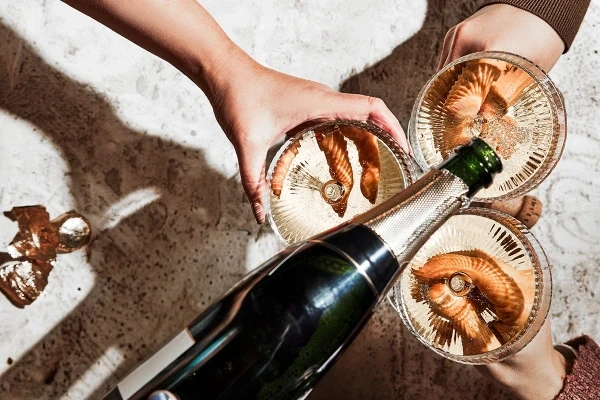
There are countries and regions that offer drinks just as good as the famous ones but with a better price-to-quality ratio.
The Independent's wine expert and holder of the Wine & Spirit Education Trust (WSET) qualification, Rosamund Hall, shared how to avoid mistakes when buying wine.
She compared consumers' wine selection in stores to a task comparable to "finding a second sock after doing laundry." Hall provided ten universal tips to help choose the right bottle of wine in a supermarket, local wine shop, pub, or restaurant.
Tip 1. Pay Attention to Wine in Supermarkets
Rosamund Hall notes that supermarkets are a reliable option for selecting wine. Moreover, many stores have advantageous promotions and seasonal offers from the retail chain.
Additionally, it is worth paying attention to the supermarket's own brands, which can offer quality wines often underestimated by consumers, according to the wine expert. "Many people prefer to choose wines with well-known brands; however, wine under supermarket private labels can be just as good. Supermarket buyers work diligently on their wine selections, often collaborating with high-quality producers who invest in quality rather than large marketing budgets," the wine expert explains.
Tip 2. Determine Your Wine Preferences in Advance
When was the last time you stopped and really thought about wine? You don’t need to delve into philosophical reflections, but it’s worth taking a minute to understand what you actually like about the wine you drink, says Hall. Is it refreshing acidity and a feeling of something bright and dry? White wine that reminds you of the taste of ripe peaches in the sun, or a rich red with notes of sweet fruits? Determine what you truly enjoy, rather than what you think you should love. This will significantly ease your selection.
Tip 3. Don’t Be Influenced by the Label
Special markings on wine labels, such as images of medals on bottles, usually mean nothing. Yes, they may indicate that the wine won a certain competition. But that doesn’t mean the wine in that bottle will be great. It’s worth choosing such wine only if the name of the competition is genuinely well-known.
Tip 4. Don’t Overlook “House” Wines on Wine Lists
Don’t hesitate to order wine that is listed as house wine on restaurant wine lists. This wine is often carefully selected by the establishment's owners and can serve as their calling card, reflecting the quality and style of the entire wine list or concept of the establishment. Additionally, this choice will allow you to discover new, interesting varieties and producers.
Tip 5. Don’t Be Shy to Taste Wine in a Restaurant Before Buying
Demand to taste the wine before purchasing it in a restaurant or bar, especially considering that wine in such establishments may be improperly stored and lose its qualities over time.
Inquire, the wine expert advises, how long the bottle from which you were poured has been open. If the wine seems unsatisfactory, ask for a replacement. The main advice is to be assertive in your choice and not settle for something that does not meet your expectations.
Tip 6. Communicate with Sommeliers and Wine Merchants
Instead of trying to navigate the store shelf or wine list on your own and feeling awkward, it’s better to start a conversation with a sommelier or salesperson. This will not only make your selection easier but also make the purchasing process more enjoyable and informative.
Don’t hesitate to seek help from staff in wine shops or restaurants. They are experts in their field and can provide excellent recommendations based on your preferences and budget.
Tip 7. Set a Budget for Wine
Decide how much you want to spend on wine and stick to that amount. Keep in mind that wine cannot be too cheap. In a world where a cup of coffee can cost 500 rubles, quality wine cannot be less expensive. Therefore, acknowledge that you need to spend a bit more on wine if you want to get something of decent quality in your glass.
Tip 8. Look for the Right Abbreviations on the Label
This is probably the easiest way to find quality European wines. Check if the wine has a classification after the name of the production region on the label, such as Chianti DOCG (Italy), Bordeaux AOC (France), and Rioja DOC (Spain). These are wines that have definitely passed strict quality assessments to earn those letters on their label, and it’s a convenient way to search for quality wine.
Tip 9. Buy Wines from Regions with the Best Price/Quality Ratio
Many well-known wines, whose labels speak for themselves, are expensive. Conversely, there are countries and regions that offer wines just as good but with a much better price-to-quality ratio. In particular, such regions include Portugal, South Africa, or the French Languedoc-Roussillon.
Greece, Austria, and Georgia were once considered somewhat obscure, but wine from these countries has now become more accessible. Look for Assyrtiko and Xinomavro from Greece, Grüner Veltliner and Blaufränkisch from Austria, as well as Saperavi and Rkatsiteli from Georgia.
Tip 10. The Most Important
Experiment and enjoy wine.












Leave a comment