Behind calls for "freedom of speech" may lie something entirely different.
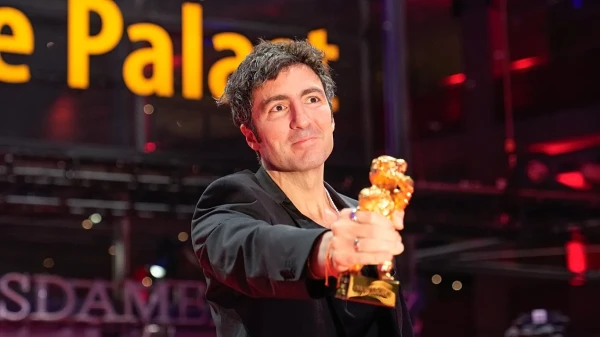
Ilker Catak, who won the main prize at the Berlin Film Festival this year for the political drama "Yellow Letters," warns of the consequences of a possible code of conduct for the Berlinale: "This should be called by its name — censorship."
German-Turkish director Ilker Catak (42), whose film recently received the main prize of the Berlin Film Festival, the Golden Bear, commented on the recommendations of the German Ministry of Culture, developed after Berlinale director Trisha Tuttle was threatened with dismissal.
Tuttle's leadership came under threat after the current edition of the festival was initially marred by criticism of its silence on political debates, and then by several directors using their acceptance speeches at the awards ceremony to make pro-Palestinian statements and speak out about Gaza.
A powerful wave of solidarity has risen in support of Tuttle — not only from more than 3,000 film professionals who signed an open letter stating that the strength of the Berlinale "lies in its ability to combine different viewpoints and give voice to many voices."
Support for Tuttle was also expressed by 32 directors of the world's largest film festivals, including Cannes head Thierry Frémaux, who signed an open letter stating: "We need to maintain spaces where discomfort is accepted, where discussions can be broad, where new ideas are spread, and where unexpected — and sometimes conflicting — viewpoints become visible."
The Berlinale confirmed that Tuttle will remain director following a meeting of the supervisory board. It concluded with the festival's organizing committee KBB developing a series of recommendations, including the creation of a code of conduct, training for staff working with politically sensitive content, and launching an independent advisory forum representing various community groups, including representatives of the Jewish community.
The German tabloid Bild, which openly supports Israel, falsely claimed that a condition for Tuttle's continued work would be the Berlinale and its guests signing a new "code of conduct."
The Berlinale stated that the supervisory board provided "recommendations, not conditions related to Tuttle's continued work."
Ilker Catak reacted to the possible adoption of these recommendations. "An international first-tier festival like the Berlinale, a festival dedicated to the free arts, freedom of expression, and cinema in all its diverse voices, should never submit to any 'recommendations' or any external dictates," the director said in a statement to Variety.
"Aside from the inviolability of human rights and, in this case, the Constitution of Germany, nothing can dictate how the festival's leadership shapes its program," he added. "Directors and guests should also be free to express whatever they deem necessary within these frameworks. Anything else would mean blatant state interference in the independent exercise of art. We must call it by its name: censorship."
<iframe width="560" height="315" src="https://www.youtube.com/embed/DoeHw-ls_90?si=rFhkITJh7xtBzeGy" title="YouTube video player" frameborder="0" allow="accelerometer; autoplay; clipboard-write; encrypted-media; gyroscope; picture-in-picture; web-share" referrerpolicy="strict-origin-when-cross-origin" allowfullscreen></iframe>