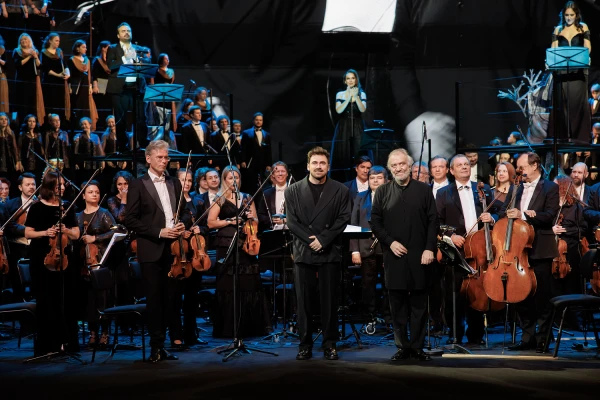
Dranga worked on the structure of 'Mandragora,' including writing additional music and text.
At the Mariinsky Theatre in St. Petersburg, the first performances of "Mandragora" by Pyotr Tchaikovsky — an unfinished mystical opera — are taking place. It was completed with the participation of composer Pyotr Dranga and artificial intelligence. The neural network was used in the restoration of the libretto, as well as in the work on the scenography and costumes.
The opera in question is the mystical "Mandragora" by Pyotr Tchaikovsky, which was left unfinished by the composer. The theatre reported that the idea of creating the opera arose for Tchaikovsky after meeting with botany professor Sergey Rachinsky, who later became the author of the libretto for "Mandragora." "The complete text is unknown to researchers, but a brief plot of the opera has survived to this day," the theatre stated.
The opera was completed with the involvement of composer Pyotr Dranga and artificial intelligence. Dranga worked on the structure of the opera, including writing additional music and text. During the process, as noted by the theatre, he relied on the preserved materials and the artistic language of Pyotr Tchaikovsky and Sergey Rachinsky. Artificial intelligence was applied in the restoration of the libretto, as well as in the work on scenography and costumes.
The director is Ilya Ustyantsev, and the choreographer is Dmitry Pimonov. "The process of creating 'Mandragora' required maximum respect for the original source, a deep immersion in the style of Tchaikovsky and Rachinsky. AI became an important partner in this process: it helped structure the dramaturgy, develop visual images, and design the stage. I am confident that when technology allows us to hear the voice of the era — it is not magic, but true art," noted Pyotr Dranga.