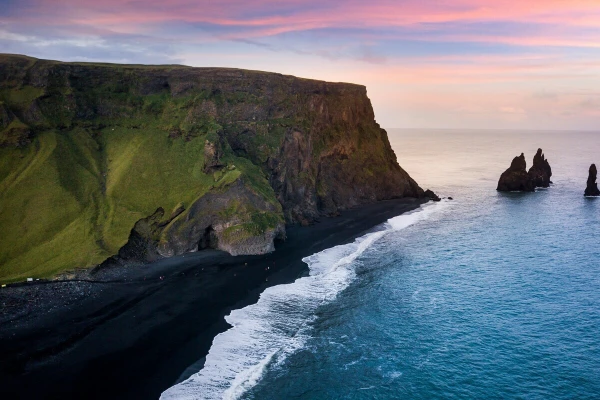
The island's nature is beautiful but unpredictable.
Reynisfjara Black Beach: one of the most recognizable beaches in Iceland, located near the village of Vík on the southern coast, is temporarily closed to visitors. The reason is a series of landslides that occurred from the slopes of Reynisfjall mountain. The decision was made for safety reasons.
Reynisfjara is known for its unique black sand, basalt columns, and sea cliffs that create a stunning contrast with glaciers and the turbulent Atlantic Ocean.
However, according to the Icelandic tourism agency Visit Iceland, this place is considered one of the most dangerous on the island.
There are several reasons. Firstly, powerful ocean waves often occur here. They suddenly crash onto the shore and pull people into the sea. Secondly, the slopes near the beach are unstable: landslides and rockfalls frequently happen in this area.
According to the national broadcaster RÚV, a landslide occurred from the eastern part of Reynisfjall mountain and reached the area where warning signs for tourists are placed. A video posted on social media shows large masses of earth and rocks sliding down the slope.
Iceland's Road Administration engineer Sigurður Sigurðarson explained that the cause of the collapse was prolonged eastern winds that caused accelerated soil erosion. He stated that rising sea levels did not play a role in this case.
It is still unknown when the beach will reopen to visitors. Authorities continue to assess the condition of the cliffs and the risks of further collapses.
Despite the closure of Reynisfjara, there are other places in Iceland where visitors can safely enjoy black sand and views of the volcanic coastline.
Popular Alternatives
Diamond Beach (Breiðamerkursandur) — located in the southeast of the country near the Jökulsárlón glacier. Icebergs washed up on the black sand sparkle in the sun like diamonds.
Djúpalonssandur (Snæfellsnes Peninsula) — a bay with black pebbles and solidified lava, known as the "black pearl of the West."
Sandvík (Reykjanes Peninsula) — a favorite spot for surfers, surrounded by dunes and green hills.
Kleifarvatn (Reykjanes) — a beach by a large lake with rare black sand for Iceland.
These locations are currently open and considered safe for tourists.
Authorities Warn of Risks
The Icelandic government urges travelers to exercise caution when visiting natural attractions. Despite the picturesque landscapes, many areas of the country are subject to sudden natural processes — erosion, landslides, and storms.
Tourists are advised to check for updates on the official websites of Visit Iceland and RÚV before traveling, as well as not to ignore warning signs along the coast.
Reynisfjara Black Beach: Conclusion
The closure of Reynisfjara serves as a reminder that Icelandic nature is beautiful but unpredictable. Travelers should be attentive and choose verified routes to ensure their trip leaves only pleasant impressions.
<iframe width="560" height="315" src="https://www.youtube.com/embed/IYJsRMKmGEY?si=Ta6wG-dAoU5aabQu" title="YouTube video player" frameborder="0" allow="accelerometer; autoplay; clipboard-write; encrypted-media; gyroscope; picture-in-picture; web-share" referrerpolicy="strict-origin-when-cross-origin" allowfullscreen></iframe>