The film raises questions of segregation, social stratification, colonialism, rewriting history, and racial stereotypes.
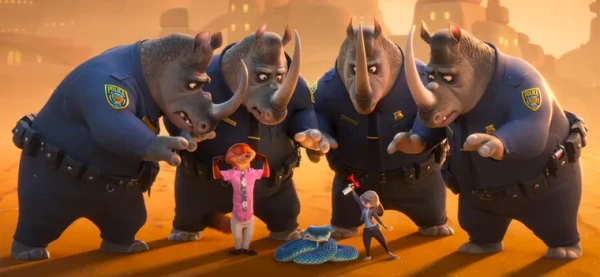
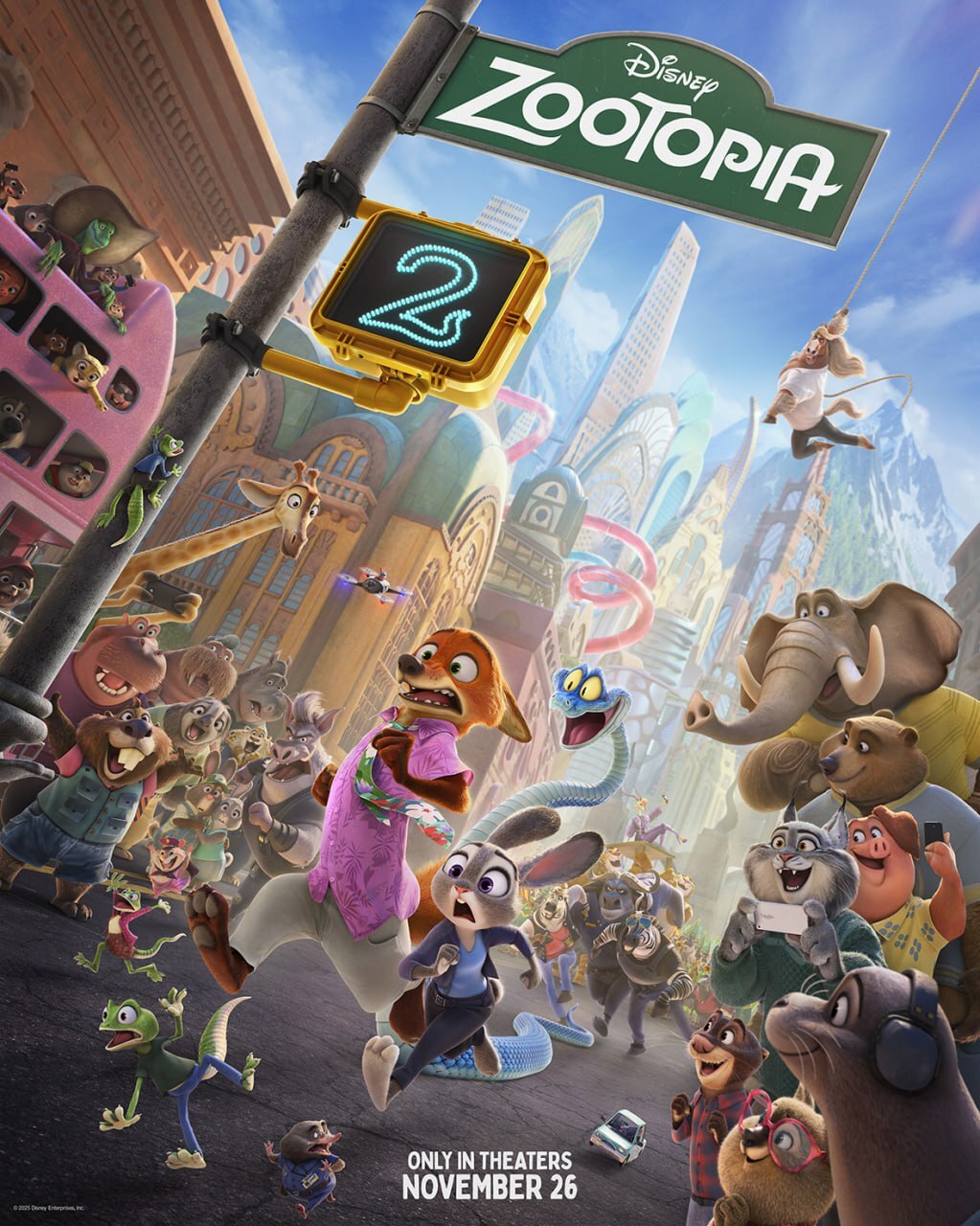
A new animated film has been released on digital platforms, which has become the highest-grossing animated film in history, made in the USA (the leader among feature-length animated films is still the Chinese 'Ne Zha Conquers the Dragon King'). 'Zootopia 2', which appeared on the big screens of North America in late November 2025, grossed $1.8 billion in three months, surpassing 'Inside Out 2', 'Frozen 2', and 'The Super Mario Bros. Movie', and also entered the top ten highest-grossing films in the world. With a budget of $150 million, the sequel about the utopian kingdom of animals collected $556 million in its opening weekend - more than any other animated film, and within two days, the film recouped 130% of its budget. We explore what makes this animated film appealing, which is a contender for an Oscar this year, and how a spectacle aimed at a child audience can captivate adult viewers.
Anthropomorphic animals have always been present in Disney animated films (both short and feature-length): from the company's main mascot Mickey Mouse to the dancing bear Baloo from 'The Jungle Book' and the underwater world of 'The Little Mermaid'.
Director Brian Howard, who also directed the animated film about a dog actor 'Bolt', had the idea in the early 2010s to create a film about animals that walk on their hind legs and dress like humans. John Lasseter, who was then head of the creative department at Pixar and Disney, was thrilled by the idea (company employees recount that Lasseter joyfully lifted Howard, “like Rafiki lifted Simba above the savanna”), and in 2013, work began on Disney's new 55th feature-length animated film. It was also decided that the film would be made using 3D technologies, and co-writer Jared Bush proposed the concept: to move the characters to one huge city that includes a desert, tundra, tropics, Chinatown, mountains, a resort island, and much more. Therefore, the creators traveled around the world during the initial phase of work: New York, Paris, Shanghai, Beijing, Dubai, and other megacities. While in the first film the division of the city into climatic zones was conditional, in the second film it becomes one of the important elements of the plot.
In addition, Brian Howard and the team specifically visited the largest reserves on the planet to observe the behavior of wild animals in their natural habitat (it is worth noting that the plot of the first animated film revolved around the sudden 'wilding' of Zootopia's inhabitants).
The trip to Kenya turned out to be particularly lengthy, as the main population of the city, created by the film's authors, consists of African animals: they are the most recognizable and simultaneously exotic creatures on the planet (dogs and cats were not considered because they are the main characters of 'The Secret Life of Pets' from the competing company Illumination, released in the same 2016 as 'Zootopia'). Moreover, jokes about grotesque giraffes, zebras, hippos (and, of course, sloths) are funnier than those about our smaller brothers that we see every day.
Disney's CGI specialists set a real record for fluffiness in 2016. If previously the number of three hundred or five hundred thousand computer hairs on animated characters was impressive, in 'Zootopia', even the least furry 'animals' have several million hairs on them. Another cool innovation in animal animation was the strict adherence to the proportions of animals. Previously, even at Disney, they did not pay much attention to this: Robin Hood's fox (who inspired one of the characters) could easily be the height of a human, while in 'Zootopia', giraffes and elephants have natural proportions compared to mice or shrews. Many details are built on this. For example, buses have several doors and entrances: for large, medium, and tiny animals.
Fun fact: in the American version, the news anchor is a moose, but for each country with Disney branches, different animals were chosen as news anchors: for China, it's a panda, in Australia - a koala, in Brazil - a jaguar, and so on (what it was in Russia is hard to remember after 10 years).
However, the main characters are simpler animals. The plot centers around Judy Hopps, a rabbit who dreams of a career as a police officer. Despite all the difficulties and prejudices that rabbits cannot become cops, Judy graduates from the police academy with honors and arrives in Zootopia, where her unofficial partner becomes a sly fox - the charming con artist and adventurer Nick Wilde. Together, they investigate a case of missing and subsequently wild animals, expose corrupt creatures, and by the end of the first film, Judy and Nick become true partners, and the fox is even accepted into the police.
Despite the fact that nine years have passed between the release of the first and second 'Zootopia', the new series begins about a week after the previous case is concluded.
The fox, his former partner the fennec, and the rabbit are once again racing through half the city, chasing a smuggler. In a box with illegal substances, Judy finds traces of reptile scales. Did you notice that there were no primates in the first part (the authors explain this by saying that primates are too similar to humans, so it was decided to leave them out) and reptiles? Well, in the second series, a new character appears - Gary the Snake, who is now being hunted.
All this takes place during the celebration of the centenary of the city's founding, where the main event is supposed to be the presentation of the diary of Zootopia's founder - the elder of the Ryshevich family. In the diary, one can find blueprints of the climate walls dividing the city, and it also hides a terrible secret. This book will become the MacGuffin - the object on which the plot hinges. Helping Judy and Nick will be a beaver blogger, who occasionally has a leaky roof due to her penchant for conspiracy theories, and a junior Ryshevich named Pubert.
The main complaint regarding 'Zootopia 2' is that the script is strikingly similar to the first film. We would argue. Firstly, it is not similar. Formally, half of the first film was spent introducing us to the characters. Secondly, yes, it is similar, but there are nuances. In the second part, as in the first, the detective structure is as follows: there is a clue, there is a mystery, there is a false lead, there is an assistant in whom we do not suspect the main villain.
But in the original, the criminal's motives are simple - to take over the entire city and, if possible, the whole world. The motives of the villain in the sequel are more serious - it is a beast that has always been in the background, which was not noticed, which has always been an outcast, and now it will show everyone... And this, agree, elevates the animated film to a more adult level.
For adult viewers, 'Zootopia' is an excellent quest for finding Easter eggs, hints, and jokes for those in the know. Both films are filled with references to cinematic classics; here you can spot quotes from films such as 'The Godfather', 'Breaking Bad', 'G.I. Jane', 'The Shining', 'Ratatouille', 'The Silence of the Lambs', and even the series 'Succession'. A separate attraction is guessing well-known brands or movie covers in the animal world (in the first part, pirate DVDs are sold on the street, and in their titles, you can see familiar names; in the second - Judy looks for something to watch in an online cinema).
In 'Zootopia' (both in the original and in the sequel), there are many more adult aspects than just guessing brands and searching for Easter eggs. For example, for many years, the residents of Zootopia have been convinced that reptiles are dangerous. This raises questions of segregation, social stratification, colonialism, rewriting history, and racial stereotypes. It is no coincidence that the creators pair the fox and the rabbit together, showing that harmony between predators and herbivores is possible, and you can interpret this message in any way you like. Now it is time to ask the question: do you still regard animated films as children's content?