
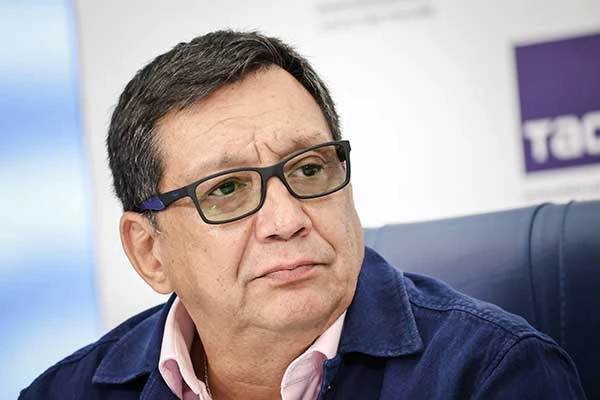
"I can’t bring myself to criticize good, kind cinema, even if it has fairy-tale characters."
It is said for a reason: how you name the boat is how it will float. Two of his films that start with "A", the first letter of the alphabet — first "Antikiller" with Gosha Kutsenko in the lead role, and recently "Aviator" with the main character Konstantin Khabensky — brought the director fame and even bathed him in the rays of glory. And now Yegor Konchalovsky talks about how he celebrated his recent 60th birthday, why series on platforms have become so popular in Russia, and cinematic fairy tales.
— Yegor, we heard something happened to your leg, and you’re not leaving the house?
— Yes, I twisted it awkwardly and became unable to go out for a while. But there’s no need to dramatize. Everything will pass, I will get back on my feet.
— You turned 60 in January. How did you celebrate your anniversary?
— With age, such round dates bring less joy. And in general, I don’t really like to celebrate my birthdays, although I don’t refuse gifts. I usually make a request to my close ones about what I want from them so that they don’t give me all sorts of nonsense.
— Online platforms made a gift to viewers on your anniversary, allowing them to watch "Aviator," which you directed based on the novel by Evgeny Vodolazkin, for free. This film is called a "modern fantasy drama." How do you define its genre?
— We would like to take a little break from "Aviator," rest, and then think about how to frame it. As for the genre, it seems to me that many films nowadays exhibit a blending of genres. To say that "Aviator" is a blockbuster would not be entirely accurate. The literary work itself obliges us to at least think about serious matters. It contains both fantasy and melodrama. One could say it’s a modern fairy tale for adults.
— By the way, about fairy tales. Why are so many being made today in our not-so-fairy-tale reality?
— We live in a time when we need an outlet; the need for this in society is great. The world is stormy, stress has become our normal state: if it’s absent, it feels like something is missing. The second thing we cannot do without is the phone. It takes up more and more time and attention; if you don’t feel it within arm's reach, panic begins. So people want to distract themselves from these two things — stress and the phone.
Honestly, I would find it a bit boring to go see "Cheburashka." People go there with their families: they take their grandchildren, son, grandmother — and off they go. That’s how they watch "The Bremen Town Musicians," "Gorynych," "Burattino."
There’s nothing wrong with this influx of fairy tales. It’s quite an ordinary, but safe story in terms of business, distribution, which is important during uncertain times. And then, I can’t bring myself to criticize good, kind cinema, even if it has fairy-tale characters. After all, "The Master and Margarita" is from the same series, fairy tales for adults.
— Let’s return to "Aviator." Did Evgeny Vodolazkin visit your filming set?
— Evgeny Germanovich is an understanding, sympathetic person, ready to listen carefully to your arguments. It’s comfortable to work with him. But it’s impossible to adapt a 500-page novel into a feature film. One can make a film based on it. I am very grateful to Evgeny Vodolazkin for being there, and we didn’t manage to stray too far into, excuse my expression, distorting the novel. That is, we accumulated this distortion in small portions. He never expressed outrage. However, I must say, such literature is not easy to adapt.
— In its time, your film "Antikiller," made in the style of an American action movie, was bought by 19 countries. For example, in Sweden, a gas station chain even placed its logo on discs of your film and successfully sold them. Where will "Aviator" fly off to under current conditions?
— 25 years ago, when we filmed "Antikiller," we were inspired not so much by American cinema as by Korean cinema. It was just being discovered then, and today it is among the most popular and in demand. It was also difficult for us to compete with "Die Hard" because our budgets are incomparable. Today, mutual isolation from Western countries has served Russian cinema well: it has made a huge leap forward — in quality, quantity, development, and professionalism within the industry. I mean not only cinema for big screen showings but also cinema on platforms. Yes, we lost markets that were important — for example, Ukraine. And Kazakhstan and Belarus are small in population and, accordingly, in audience. But we are turning towards the global southeast and opening new markets. And there are prospects there — both festival and distribution. For example, in China, there are Soviet films that are incredibly popular. They are making remakes of them.
— In recent years, films in Russia have largely been displaced by series. Are you considering getting into that as well?
— Certainly, I am thinking about it. The series being made now on platforms is an interesting story. The shameful soap operas, sitcoms not for serious people — all of that is gone, and even great artists no longer consider it shameful to create in the realm of series.
— Have you watched your father's film "Chronicles of the Russian Revolution"?
— Of course, I watched it, and with great interest, because it took a long time to make, about five or six years. It’s such a significant programmatic work of my father, a whole film novel. It was interesting to see how Andrei Sergeyevich interprets those events that incredibly changed the country, the world, and the people involved. I know that the portrayals of historical figures, primarily Lenin, evoked an ambiguous and mostly negative reaction. But it seems to me that every person, especially a great artist, has the right to create their interpretation of the character of a particular historical figure. This film is remarkable in terms of civic courage. It raises questions that are still relevant for our country today.
— Do you ever feel the desire to be an actor yourself?
— Well, I’ve already played a grandmother, and myself too. And I’m also in "Aviator," although no one will recognize me — I’m the camp chief there. I wouldn’t mind getting large, significant roles and corresponding fees. But there’s a problem: I don’t consider myself an artist at all. Maybe I should take acting courses? Although, I’m afraid it’s a bit late to think about that.
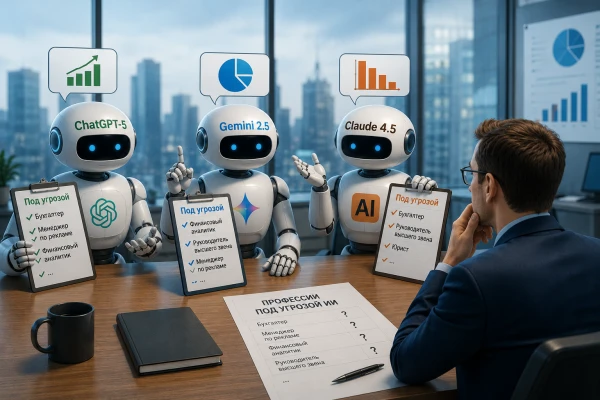
— Directors, like people in other professions, are increasingly calling on artificial intelligence for help. What is your relationship with AI?
— It’s an amazing tool, but you need to know how to use it. And for now, despite the efforts of some pioneers in our industry, it is still far from the tasks of art. After all, art implies the presence of human imperfection, paradoxicality, absurdity. Artificial intelligence cannot write like Márquez — it can write "in the style of Márquez." But it will be nothing like the original. I am not against progress and artificial intelligence, but there are many not only creative but also moral and ethical problems that need resolution. For example, if we want to revive Yuri Nikulin and shoot him in a remake of "The Diamond Arm," questions inevitably arise: would Yuri Nikulin want to act in this film? Who owns the rights? And a lot of others, for which there are no answers today. However, one thing is already clear: in principle, artificial intelligence makes fools dumber and smart people smarter.




Leave a comment