
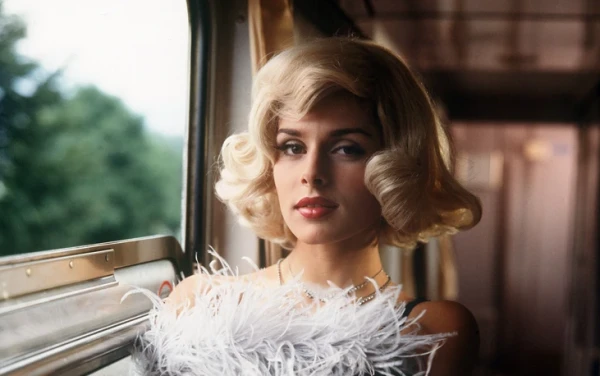
Now 65-year-old artist prefers her family.
It's sad, of course, for Nastassja. She had a stunning start in cinema in the late 1970s, was one of the major stars of the global screen in the 1980s, and by the 1990s, everything began to decline. Well, really, what is there to remember — the action movie "Extreme Speed"? The comedy "Father's Day"? The TV movies "The Ring" based on Danielle Steel and "Beautiful Mafia," which we rightly renamed "The Godmother"? Then she almost completely left cinema: from 2006 to 2022, there was just one small role. Much could have changed with "Inglourious Basterds": Tarantino dreamed of casting her in the role that Diane Kruger eventually played, but he never managed to get her consent.
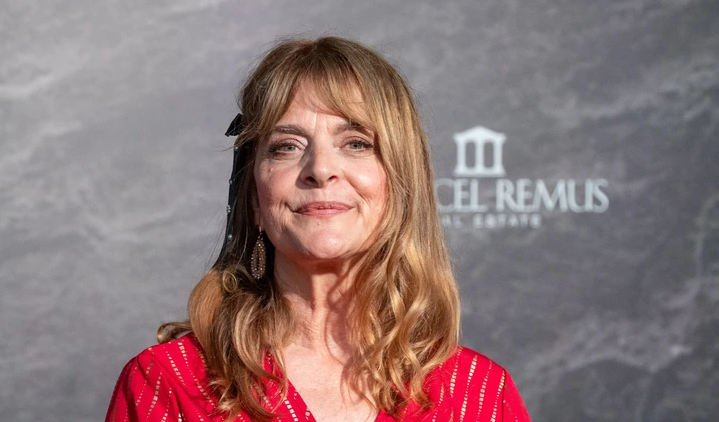
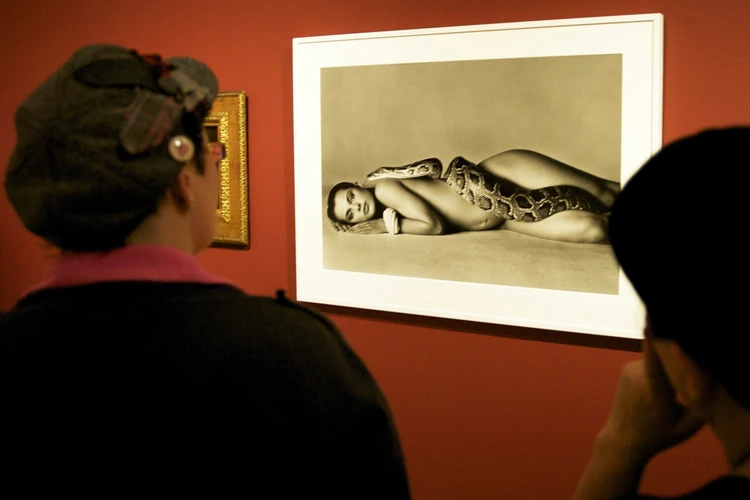
But Kinski is certainly remembered, and there are critics who call her their favorite actress of all time. Peter Sobczynski from rogerebert.com wrote: "How to explain this to those who are not very familiar with her work? Well, first of all, it’s about her incomparable physical attractiveness — she could switch between innocence and sensuality in the blink of an eye. Her appearance was timeless: she was very modern, and at the same time evoked memories of legendary screen beauties like Greta Garbo and Ingrid Bergman. (And no one has ever managed to wear a snake with such grace and elegance as she did in Richard Avedon's famous photograph!) On screen, she was both open and teasingly aloof, which sharply distinguished her from other movie stars of her era. And Kinski was a gifted actress; her performances were touching, powerful, and hypnotic."
She was born in West Berlin on January 24, 1961, to actors Klaus Kinski and Ruth Brigitte Tocki. Her full name is Nastassja Aglaia Nakszynski (it’s easy to guess that her father, half Polish — Nakszynski was his real surname — was a fan of Dostoevsky and, in particular, the novel "The Idiot").
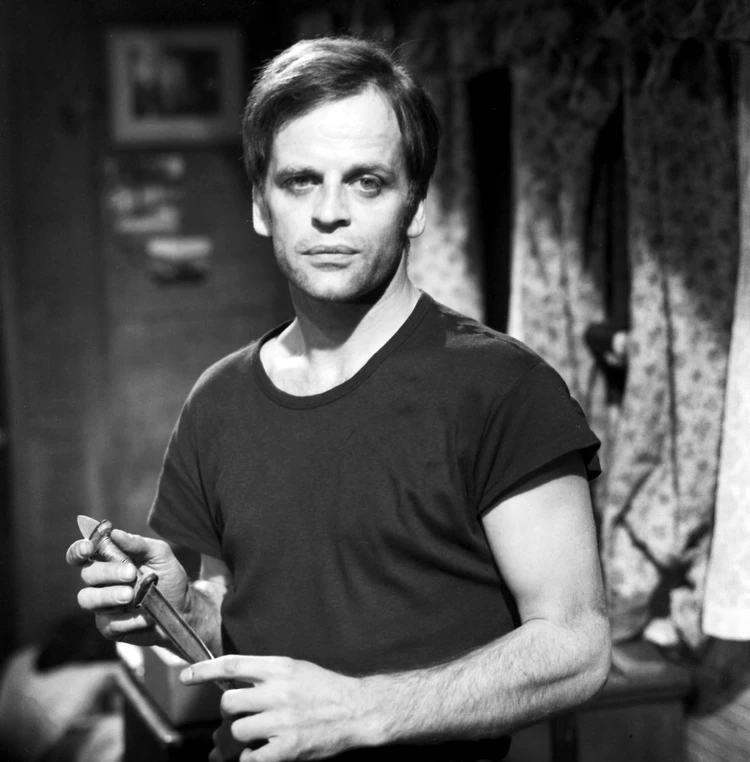
By the way, she hated her father. In 2013, she told a Bild journalist: "What kind of father was he? He wasn’t a father at all. In 99% of cases, I was terrified of him. He was completely unpredictable and constantly terrorized the family. It was impossible to predict when he would have another fit of rage. Sometimes, for no apparent reason, he would throw everything within reach against the wall and scream so loudly that I would be scared. He never hit either me or my mom, but he horribly insulted us. Mom was very unhappy most of the time; she often had nervous breakdowns, she cried a lot… We were not allowed to invite friends over or hire a housekeeper; we were always alone. I dreamed of a real family — and my father never even asked how we were doing, whether we were warm or cold, whether we were happy. He would come home and fly into a rage over the slightest thing. He was a tyrant. I hardly remember us ever eating together at the table..."
Nastassja's sister, Pola, at one point revealed that their father regularly raped her. Fortunately, this did not happen to Nastassja, but there was enough hatred as it was. When a journalist asked her, "What would you say to your father today if you had the chance?" she coldly replied: "I would do everything possible to send him to prison for life. I’m glad he’s no longer here. When he died, some people told me, 'What a pity!' I felt no pity for him."
In any case, the father left the family when Nastassja was seven years old, and after she turned ten, they almost stopped seeing each other altogether. Financially, Klaus Kinski did not help his ex-wife and daughter; they lived in poverty, and this became one of the reasons why Nastassja started working as a model. (Later she always said, "I didn’t choose the job; the job chose me!") In 1975, she made her film debut in Wim Wenders' "False Movement" (according to one version, the director's wife noticed her at some disco; according to another, Wenders himself saw her in a rock-and-roll club; and they didn’t know she was the daughter of a famous actor — Nastassja was using the surname Nakszynski). In this film, she appeared semi-nude, and later she would have to undress on screen many times — for example, in the horror film "To the Devil, a Daughter," she was completely naked.
A true breakthrough and one of her biggest successes was the role in Roman Polanski's "Tess," a three-hour adaptation of Thomas Hardy's novel "Tess of the d'Urbervilles." It was Polanski who made her take acting lessons, and he did everything to ensure she began speaking English with the appropriate British accent for her character (Nastassja had to not only study with a teacher from the National Theatre in London but also live for a long time on a farm in the English countryside). The success was enormous: she won a Golden Globe for "New Star of the Year" and instantly became regarded as one of the most interesting young actresses in Western cinema. There were rumors that she had an affair with Roman, and he claimed that yes, a relationship with Nastassja developed… while she denied it: "There was only flirting. He might have tried to seduce me, but he didn’t. He respected me."
But after "Tess," the films that followed were not as outstanding. She starred in Francis Ford Coppola's musical "One from the Heart," a crazy project that could have been made for a pittance if the director hadn’t decided to build a gigantic set imitating Las Vegas for the shoot. (The budget immediately became astronomical, and the film bombed at the box office). Then there was the erotic thriller "Cat People," directed by Paul Schrader during his passionate cocaine and other substance phase; he told journalist Peter Biskind that "everyone in the film crew was doing drugs except Nastassja," and because of this, the shoots were periodically disrupted. Under the influence of cocaine, Schrader proposed to Nastassja, although just before that he had made the same proposal to his long-time girlfriend, with whom he had lived for seven years; for some reason, Nastassja refused. But a romance developed between them, and Schrader filmed Nastassja naked (in close-up, from below). Then they had a falling out, and Schrader decided to insert those shots into the film as revenge. One can imagine the scandal that erupted.
In 1981, by the way, the most famous photograph of her was taken, as mentioned above. Photographer Richard Avedon asked what she loved, and Nastassja replied: "Snakes," and soon a live python appeared on set. It was recalled that Kinski readily agreed to undress and lay with the snake on the cold concrete floor for a long time. For two hours, the entire crew tried to get the python to crawl a few centimeters along her body, closer to her head, and when everyone had lost patience, it suddenly slithered, approached the model's ear, and stuck out its tongue, "as if preparing to kiss Eve of the 20th century."
Nastassja's fortunes alternated between successes and failures. She worked with major directors — Jean-Jacques Beineix ("Moon in the Gutter"), already well-known Wim Wenders ("Paris, Texas"), James Toback ("Exposed," where her partner was Rudolf Nureyev), Andrei Konchalovsky ("Maria's Lovers"), Jacques Deray ("Love Disease"). But there were also "Revolution" — an epic about the war for independence that became one of the biggest commercial failures of the decade, and all sorts of nonsense like the comedy "Unfaithfully Yours" or the French romantic drama "Harem" (where an Arab sheikh kidnapped Kinski's character, a Wall Street broker, and locked her in his harem, and then they fell in love with each other).
Nastassja was very loved in Russia; in 1991, she starred with Nikita Mikhalkov in Andrei Eshpay's "The Insulted and Injured." While she was working on this film, an accident happened to her daughter, who stayed at home; she suffered severe burns. And from then on, Nastassja vowed that she would never shoot far from home. Because of this, she turned down many lucrative roles.
In total, she has three children. Son Alex (it seems that the love for Dostoevsky was inherited from Klaus Kinski) from actor Vincent Spano, daughter Sonia (definitely inherited) from Egyptian director Ibrahim Moussa, and another daughter, Kenya (why not Grushenka?) from the famous composer Quincy Jones. In the 1990s, she said that her children were much more important to her than work: "When you’re filming, you leave home when they are still sleeping and return when they are already asleep. Working on a film takes all your strength. But that’s madness. At some point, I realized that I didn’t want to live like that." And it seems that at some point, she ultimately preferred family over career.









Leave a comment